
WHS Induction Programs for New Employees In Australia
Work Health and Safety (WHS) induction programs are critical for new employees in Australia. These programs ensure that employees are aware of the workplace health and safety requirements, policies, and procedures.

Work Health and Safety (WHS) induction programs are critical for new employees in Australia. These programs ensure that employees are aware of the workplace health and safety requirements, policies, and procedures.
In this article, we will discuss the importance of WHS induction programs, legal requirements, key components, development, delivery, benefits, challenges, evaluation, and best practices.
What are WHS Induction Programs?
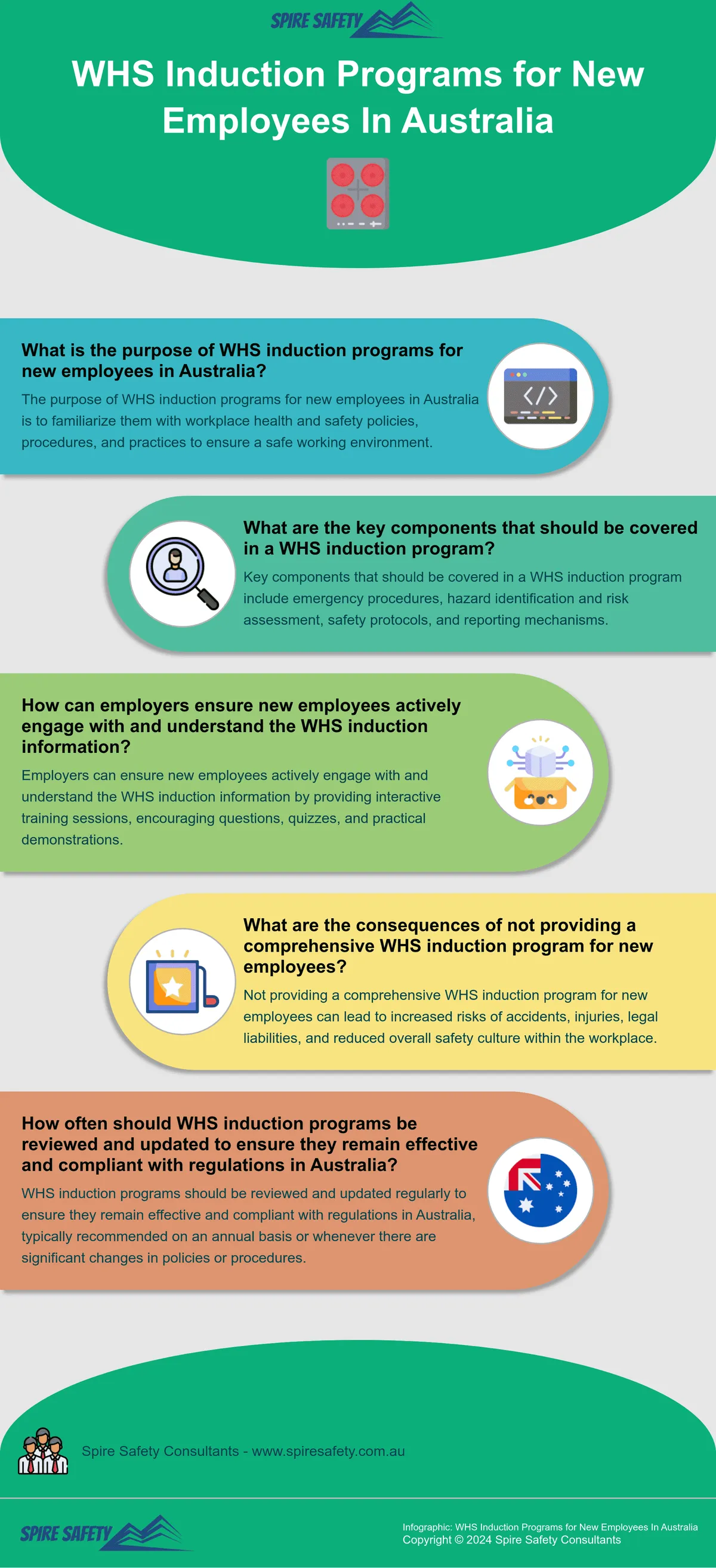
WHS induction programs are designed to familiarize new employees with the health and safety aspects of their workplace. These programs provide information on how to work safely, identify hazards, and report incidents.
Importance of WHS Induction Programs
WHS induction programs are crucial for ensuring the safety of employees. They help prevent workplace accidents and injuries by educating employees about potential hazards and how to avoid them.
Overview of WHS laws in Australia
In Australia, WHS laws are governed by the Work Health and Safety Act 2011 (WHS Act) and the Work Health and Safety Regulations 2011 (WHS Regulations). These laws aim to protect the health and safety of workers and others in the workplace.
Specific requirements for WHS induction programs
The WHS Act and Regulations require employers to provide a safe work environment and ensure that employees are adequately trained and supervised. This includes providing a comprehensive WHS induction program for new employees.
Key Components of a WHS Induction Program
A WHS induction program should cover the following key components:
Safety policies and procedures: Outline the workplace's safety policies and procedures, including reporting procedures for incidents and hazards.
Emergency procedures: Provide information on what to do in case of an emergency, such as a fire or medical emergency.
Safety equipment and its usage: Explain the use of safety equipment, such as personal protective equipment (PPE), and how to use it correctly.
Reporting procedures for incidents and hazards: Outline the procedures for reporting incidents and hazards in the workplace.
Developing an Effective WHS Induction Program
To develop an effective WHS induction program, employers should:
Assess the workplace and its hazards: Identify potential hazards in the workplace and assess the risks they pose to employees.
Tailor the program to the specific workplace: Customize the induction program to address the specific hazards and risks present in the workplace.
Involve employees in the development process: Consult with employees to ensure that the induction program meets their needs and addresses their concerns.
Delivering a WHS Induction Program
WHS induction programs can be delivered in various ways, including in-person or online. Regardless of the delivery method, it is essential to ensure that the program is engaging and that employees understand the information provided.
Benefits of Comprehensive WHS Induction Programs
Comprehensive WHS induction programs have several benefits, including:
Reduced workplace incidents and injuries: By educating employees about workplace hazards, WHS induction programs help reduce the risk of accidents and injuries.
Improved safety culture and employee morale: A comprehensive WHS induction program demonstrates an employer's commitment to safety, which can improve employee morale and create a positive safety culture.
Challenges in Implementing WHS Induction Programs
Implementing WHS induction programs can be challenging due to:
Time and resource constraints: Developing and delivering a comprehensive WHS induction program requires time and resources, which may be limited.
Keeping the content engaging and up-to-date: To ensure that the induction program remains effective, it is essential to update the content regularly and keep it engaging for employees.
Evaluating the Effectiveness of a WHS Induction Program
To evaluate the effectiveness of a WHS induction program, employers can:
Use methods such as surveys or quizzes to assess employees' knowledge of workplace hazards and safety procedures.
Continuously improve the program based on feedback and evaluation results.
Best Practices for WHS Induction Programs
Some best practices for WHS induction programs include:
Regular review and update of the program: To ensure that the program remains effective, it should be reviewed and updated regularly.
Providing ongoing training and support: Employees should receive ongoing training and support to ensure that they remain aware of workplace hazards and safety procedures.
WHS induction programs are essential for ensuring the health and safety of employees in Australia. By providing new employees with the necessary information and training, employers can create a safe work environment and reduce the risk of workplace accidents and injuries.
FAQ
What topics should be covered in a WHS induction program?
WHS induction programs should cover key areas such as:
Workplace health and safety policies,
Emergency procedures,
Hazard identification and reporting,
Use of personal protective equipment (PPE), and
Relevant legislation.
How often should WHS induction programs be reviewed?
WHS induction programs should be reviewed periodically to ensure they remain effective and address any changes in the workplace or legislation. Annual reviews are recommended, but reviews should also occur when there are changes in work practices, procedures, or WHS obligations.
Can WHS induction programs be conducted online?
Yes, WHS induction programs can be conducted online. Online inductions offer flexibility and convenience for employees to complete the training at their own pace. However, certain elements, such as site-specific training, may need to be done on-site.
Are there any penalties for not providing WHS induction programs?
Yes, there can be penalties for not providing WHS induction programs. Employers have a legal obligation to provide a safe work environment and adequate training to employees. Failure to provide WHS induction programs can result in fines and penalties for non-compliance with WHS legislation.
Articles and Further Reading
Safety, Health and Injury Management and Wellbeing Online Induction and Training
Work health and safety (WHS) inductions for new and young workers
Designing an Effective Workplace Induction Program in Australia
The Role of Supervisors in Workplace Inductions in Australia
Evaluation & Feedback of Workplace Induction Effectiveness in Australia
Share this article
Get Expert Advice
Speak with a certified WHS consultant about your workplace.
Contact Usor call 1300 156 382