
Internal Audit Programme Design Under ISO 19011: Building a 3-Year Rolling Plan
Effective internal auditing is the backbone of any resilient management system in Australia. By moving beyond a simple annual checklist and adopting a strategic three-year rolling plan, businesses

Effective internal auditing is the backbone of any resilient management system in Australia.
By moving beyond a simple annual checklist and adopting a strategic three-year rolling plan, businesses can demonstrate high-level maturity to external certification bodies.
TLDR
ISO 19011 provides the gold standard for auditing management systems across Australia.
A three-year rolling plan ensures every process is reviewed at least once during a certification cycle.
Risk-based planning allows auditors to focus more frequently on high-consequence business activities.
Strong audit programme design proves to certifiers that your organisation is committed to continuous improvement.
The Value of a Three-Year Rolling Audit Plan
Most Australian businesses operate on a three-year certification cycle for standards like ISO 9001 or ISO 45001.
Designing your audit program development ISO 19011 around this same timeframe ensures total alignment with external requirements.
A rolling plan prevents the "audit crunch" where staff scramble to check every process just before the external registrar arrives.
Instead, you distribute the workload evenly across 36 months.
This approach gives the leadership team a clearer view of long-term compliance trends.
It also provides enough time to close out actions from a previous Site Safety Audit & Plan before the next cycle begins.
Core Principles of ISO 19011
ISO 19011 provides guidance on auditing principles for internal audit programs.
The standard promotes risk-based thinking, auditor competence, and the collection of objective evidence.
When auditing management systems ISO 19011 asks you to consider internal and external issues when setting priorities.
That helps ensure audit frequency and scope match business risks and certifier expectations.
In Australia, regulators like Safe Work Australia encourage looking at data trends, such as incident reports or customer complaints.
These data points should directly influence how often you audit specific departments.
If a particular site in Melbourne has a high turnover of staff, your plan should schedule more frequent reviews there.
This targeted approach is more effective than a generic one-size-fits-all schedule when seeking certification evidence.
Building Your Internal Audit Programme Design
The first step in ISO 19011 internal audit programme design is defining the scope and objectives.
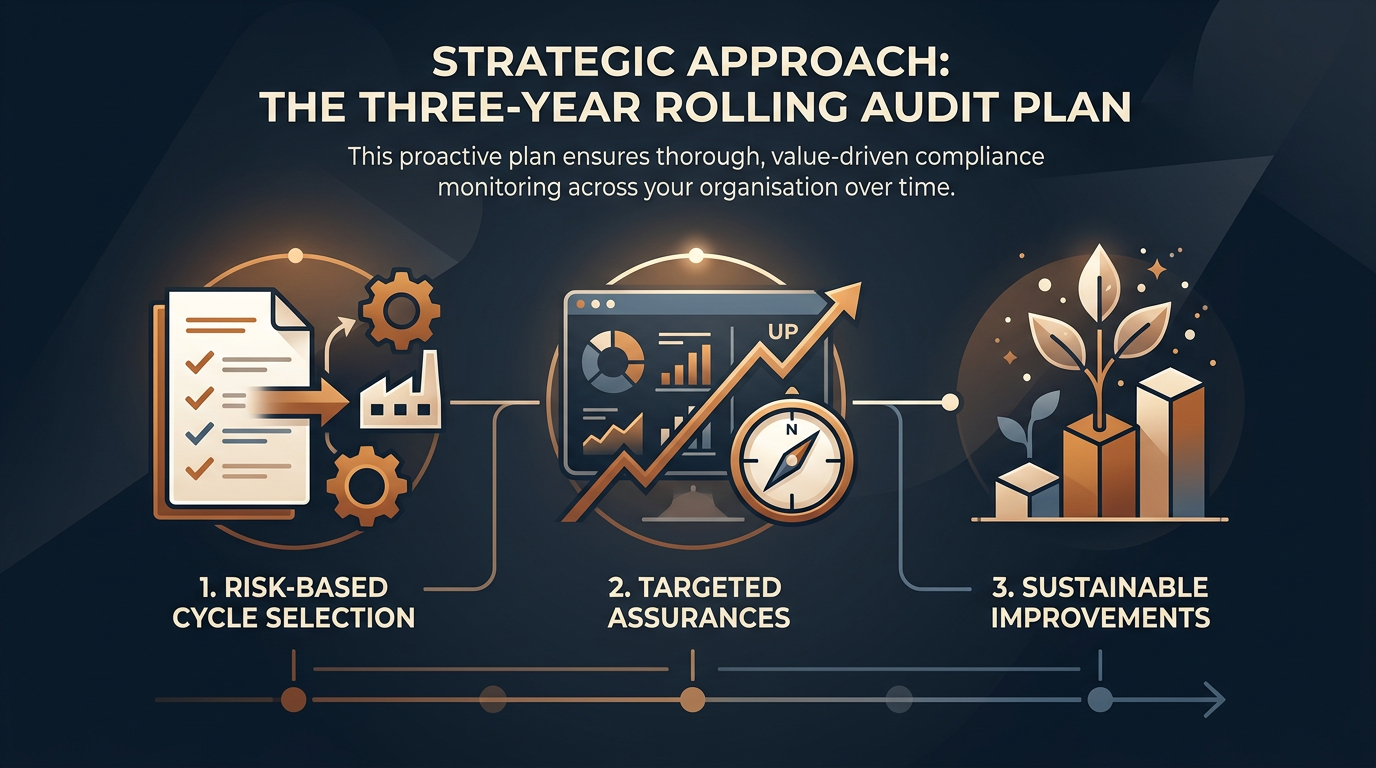
A three-year rolling audit plan enhances your ISO 19011 audit program development and consistency.
You must decide what the organisation needs to achieve, such as verifying legal compliance or improving operational efficiency.
A robust programme should include a variety of audit types.
You might combine deep-dive process audits with shorter, high-frequency site inspections.
When you are building a Safety Management system, the audit programme acts as the primary verification tool.
It confirms that the procedures you wrote are actually being followed on the workshop floor.
Determining Audit Frequency
Not every process needs to be audited every year.
High-risk activities, such as working at height or hazardous chemical management, may require more frequent checks.
Low-risk administrative processes might only need a formal audit once every three years.
This prioritisation is the hallmark of a mature conformity assessment audit programme that satisfies external auditors.
Developing a Detailed ISO 19011 Audit Plan
While the programme covers the three-year strategy, the ISO 19011 audit plan focuses on the specifics of a single audit event.
It outlines the who, what, when, and where for the upcoming site visit or document review.
Your plan should clearly identify the audit criteria, such as specific clauses of the ISO standard or internal policies.
It also needs to name the auditors and ensure they are independent of the work being checked.
For businesses preparing for a Stage 1 vs Stage 2 assessment, having these detailed plans ready is vital.
They show the external auditor that your internal team knows exactly how to verify compliance.
Managing Auditor Competence
You must ensure that your internal auditors have the right skills and mindset.
They should understand confidentiality, integrity, and evidence-based reporting.
Auditors must demonstrate competence through previous audits and training participation.
Many organisations use a mix of internal staff and external consultants in Australia to maintain objectivity.
Managing the Internal Audit Schedule
The internal audit schedule ISO 19011 is the calendar that keeps the programme on track.

Understanding the core principles of ISO 19011 is crucial for designing and managing your internal audit programme.
It should be a living document that stays visible to the management team throughout the year.
If a business unit undergoes a major restructure or a significant safety incident occurs, update the schedule.
Being flexible enough to shift resources where they are most needed shows a proactive safety culture.
Consistent scheduling helps in Handling Non-conformances From an audit by ensuring there is time for follow-up reviews.
If you find a major issue in Year 1, schedule a targeted re-audit in Year 2 to verify the fix.
Integrating Technology and Remote Auditing
ISO 19011 guidance supports the increased use of remote auditing technologies for organisations across Australia.
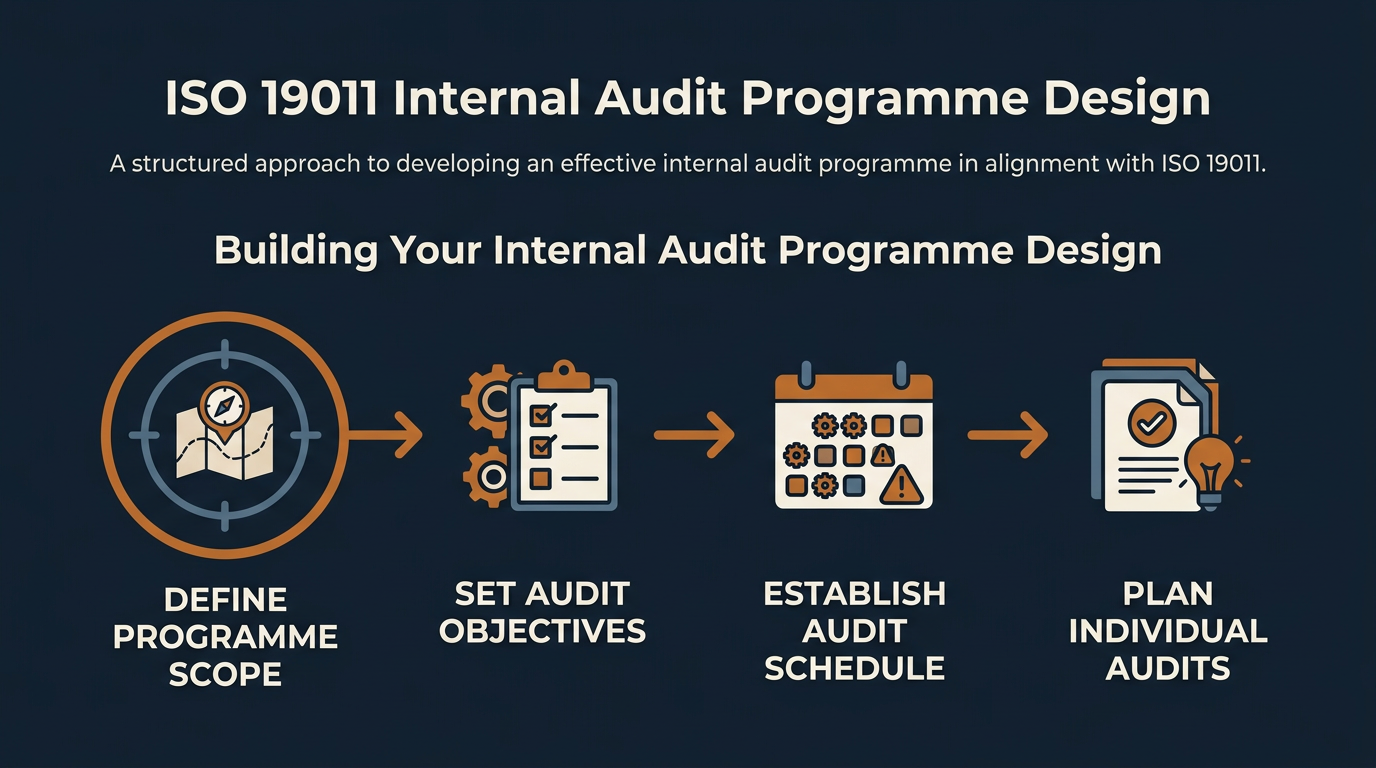
Learn to build an effective internal audit programme aligned with ISO 19011 guidelines.
Drones, wearable cameras, and cloud-based document portals can make the process more efficient.
Remote methods are particularly useful for remote sites in Western Australia or Queensland.
They allow a lead auditor based in Sydney to review evidence without the cost and time of travel.
However, certifiers expect sufficient on-site verification to capture workplace culture and practical performance.
A balance of remote and physical checks usually provides the most accurate picture of compliance.
Preparing for External Certification Success
External certifiers look for evidence that your internal audits are not just a box-ticking exercise.

Crafting a robust ISO 19011 audit plan is crucial for effective management system auditing.
They want to see that your findings lead to real changes in the business.
A three-year rolling plan provides the narrative of improvement certifiers seek.
It shows you have systematically reviewed every corner of the business over a full cycle.
If you are currently Understanding ISO 45001: A certification process, the internal audit is your best rehearsal.
It identifies gaps before they become expensive non-conformances during the official audit.
Tracking Audit Outcomes
Every audit must result in a clear report that highlights strengths and weaknesses.
These reports should be discussed at management review meetings so the leadership team is informed.
Effective WHS Gap Analysis can be used alongside your audit programme to identify missing requirements.
Combining these processes strengthens your compliance framework.
Executing the Audit and Gathering Evidence
During the audit, the focus must remain on gathering objective evidence.
This includes interviewing staff, observing tasks, and reviewing records such as maintenance logs or training files.
Auditors should look for conformity first, rather than just hunting for mistakes.
Recognising what is working well is as important as identifying what needs to change.
When designing an Effective Workplace induction, the auditor would check if new starters actually receive the information promised in the manual.
This practical verification is what makes an audit valuable to certifiers.
Finalising the Three-Year Strategy
To wrap up your programme design, ensure you have a clear process for reviewing the programme itself.
At the end of each year, ask if the audits provided the value you expected.
If you found no issues in a high-risk area, perhaps the audit wasn't deep enough.
If a department is struggling, they may need more support rather than just more auditing.
Adjust the plan for the remaining two years based on these insights.
This cycle of planning, doing, checking, and acting is the core of the Plan-Do-Check-Act philosophy and the ISO approach.
Common questions certifiers will ask
How does your three-year rolling plan ensure all processes are audited within the certification cycle?
Answer this by mapping process owners, audit frequency, and date ranges to your schedule.
How do you demonstrate auditor independence and competence to the certifier?
Answer with records of auditor selection, competence evidence, and how conflicts of interest were managed.
How do you verify that corrective actions were effective?
Answer with follow-up audits, objective evidence, and management review minutes showing closure and improvement.
FAQ
Frequently asked questions
01What's the difference between an internal audit and an external audit in Australia?
02How often should I review and update my ISO 19011 internal audit programme?
03Can I use software to manage my ISO 19011 internal audit programme and schedule?
04What qualifications should an internal auditor have under ISO 19011 in Australia?
05How does risk-based thinking apply to setting audit frequencies within an ISO 19011 programme?
Share this article
Get Expert Advice
Speak with a certified WHS consultant about your workplace.
Contact Usor call 1300 891 503