
Maintaining ISO Certification Through a Business Acquisition
Acquiring a business involves more than just absorbing assets and personnel; it also means navigating the complexities of existing management systems and certifications. Learn how to protect your ISO

Acquiring a business involves more than just absorbing assets and personnel.
For many Australian organisations, management systems and certifications represent core market value.
Protecting these credentials requires proactive planning during due diligence and integration.
Failure to manage the transition can lead to a lapse in compliance or the loss of certification.
TLDR
Notify your certification body early to avoid administrative delays or suspension.
Determine if the certificate needs a legal transfer or a completely new application.
Update the management system scope to reflect changes in operations or locations.
Consolidate management systems early to simplify the first post-acquisition audit.
Legal Ownership and ISO Certificate Transfer
When an acquisition occurs, the legal entity holding the ISO certificate often changes.
ISO certification does not automatically transfer when ownership changes (Source: certbetter.com).
You must identify whether the deal is a share purchase or an asset sale.
In a share purchase, the legal entity usually remains intact and transfer is often straightforward.
An asset sale is different because the original company may cease to exist.
If the legal entity ceases to exist, the acquired company's old certificate becomes invalid unless covered by the acquiring entity's scope (Source: certbetter.com).
A certificate transfer typically occurs when the management system itself is intact and functioning.
The certification body will usually require contract review, scope verification and formal change records before accepting a transfer.
Reach out to your JAS-ANZ Accredited Certification Body to discuss specific paperwork required.
They will likely ask for updated ASIC records and proof of management commitment from the new directors.
Managing ISO Scope Change During Acquisition
Acquisitions frequently change what the business actually does.
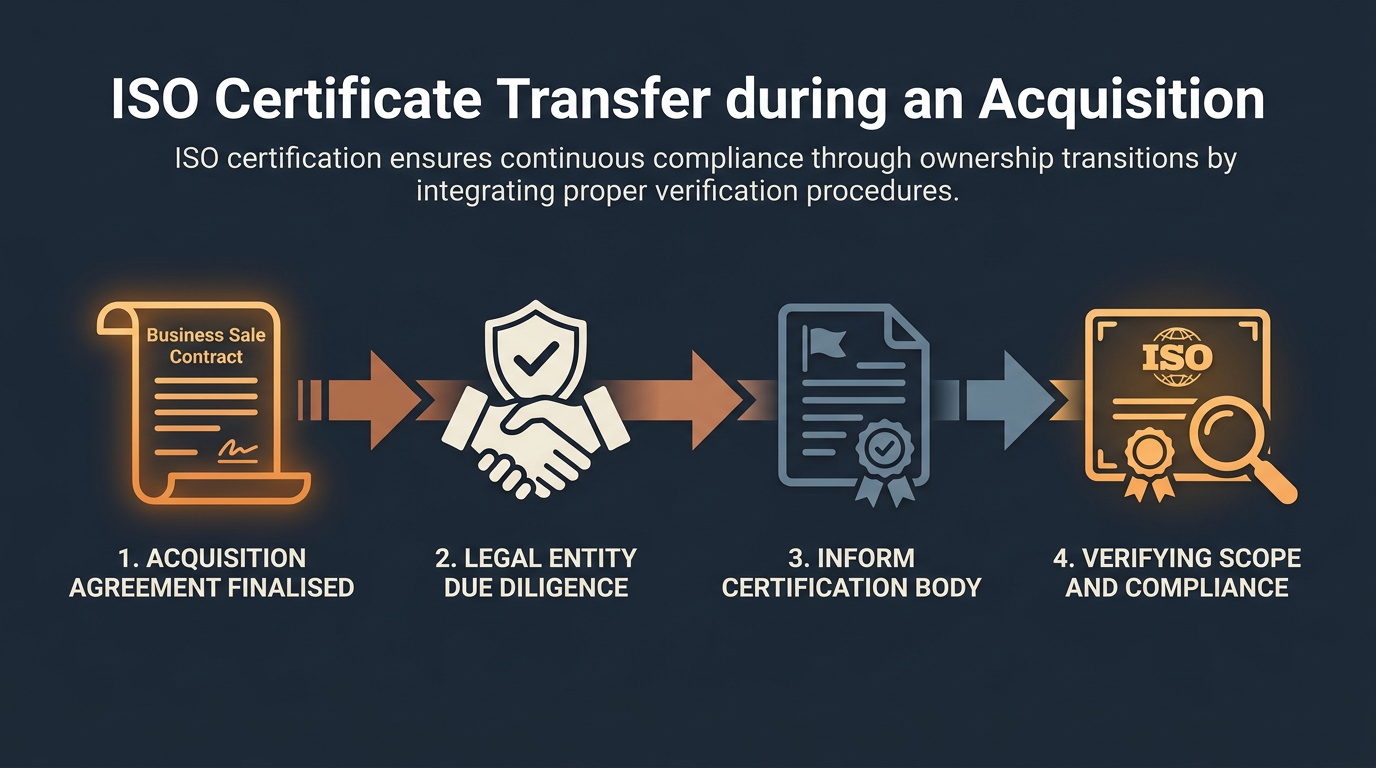
Understanding legal ownership and ISO certificate transfer when acquiring a business.
You might gain new service lines, manufacturing capabilities, or locations across Australia.
This expansion can trigger an ISO scope change requirement.
The scope defines the boundaries of the management system and what the certification covers.
If the acquired business performs activities not listed on your current certificate, the scope must be expanded.
Conversely, divestments may require scope reduction and an update to certificates.
Auditors will look for evidence that risk assessments cover the new areas.
Ensure your WHS risk assessment is updated to include hazards introduced by the acquisition.
The Critical Step of Auditor Notification
Transparency with your registrar is essential throughout the merger process.

Seamlessly integrating ISO certification during business mergers and acquisitions is crucial for ongoing compliance.
Notify the certification body as soon as significant changes are known to avoid adverse outcomes.
Most certification body contracts require notification within a defined timeframe, often 30 days (Source: certbetter.com).
Failing to notify can lead to suspension or withdrawal of the certificate according to many certification agreements (Source: certbetter.com).
Waiting until the next scheduled audit is risky because changes may be too substantial for a surveillance visit.
The registrar may require a special or additional audit to verify the new structure and scope.
Early notification allows you to schedule special audits in a way that minimises operational disruption.
Auditors will want to see leadership commitment and evidence that the management system remains effective.
ISO Integration and Business Mergers
Merging two different management systems is one of the hardest parts of an acquisition.

Navigate ISO scope adjustments and maintain certification during business acquisitions and mergers effectively.
The acquired company may have different approaches to document control and records.
An ISO integration business merger requires a clear plan for standardising processes.
Decide whether to adopt the parent company's system or create a hybrid that is auditable and consistent.
Standardisation reduces administrative burden and supports consistent internal audits across the organisation.
Use a structured internal audit programme to identify gaps in acquired units before the external registrar arrives.
Maintaining ISO Compliance Post-Acquisition
The months after a deal are often chaotic as cultures and workflows merge.
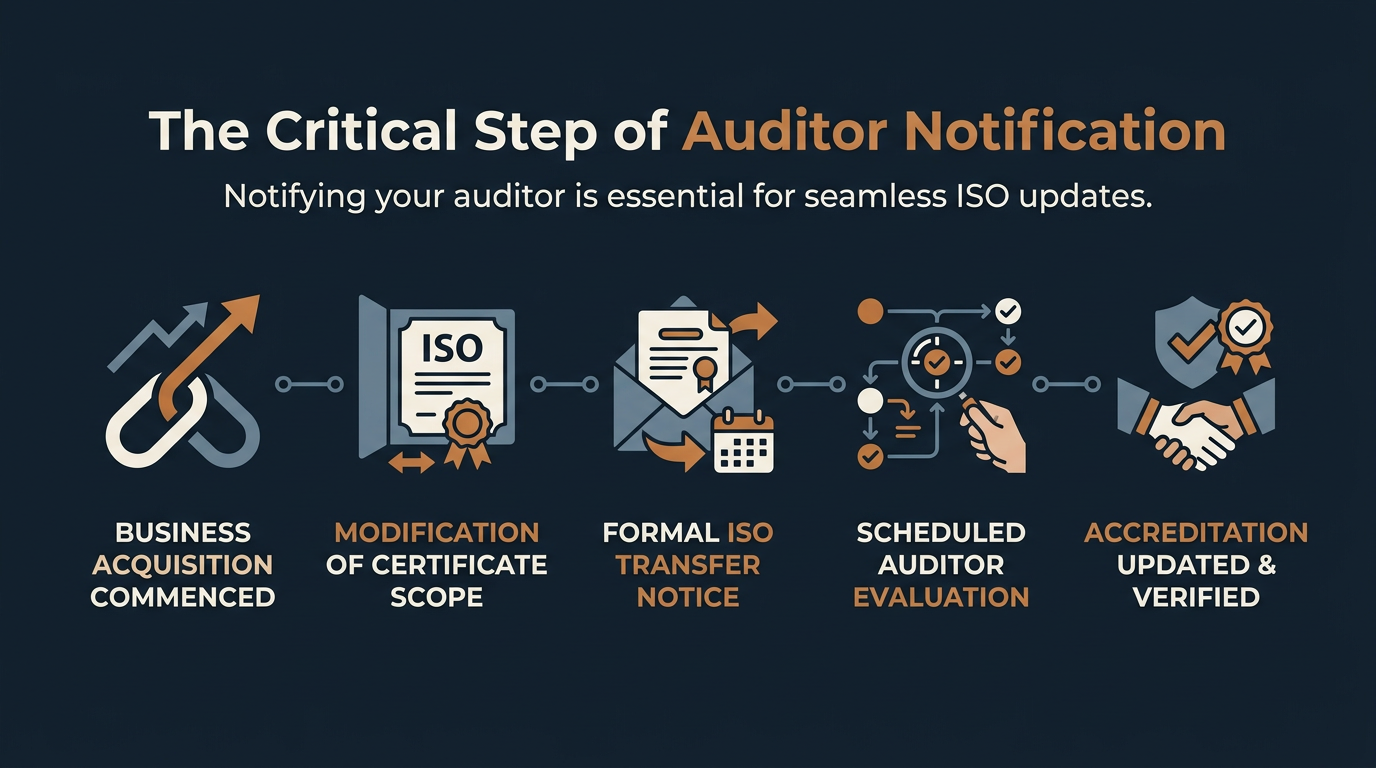
Ensuring seamless ISO certification transfer during acquisitions requires diligent auditor notification.
Maintaining ISO compliance in acquisition targets requires active monitoring of the new units.
Check that new employees understand quality, environmental or safety policies.
Update training records to show everyone is competent in their roles.
Review supplier lists and procurement processes because new vendors may not be vetted against your ISO standards.
Bringing a poorly maintained management system up to standard can take time and money (Source: certbetter.com).
If you are a smaller firm, review ISO certification guidance for small organisations to see if simplified processes apply.
Keeping the system lean makes it easier to manage during rapid growth.
Preparing for the First Post-Merger Audit
The first external audit after an acquisition is a major milestone for the new entity.
The auditor will focus on how the change was managed and how systems were merged.
They will look for evidence of management review meetings that discussed the acquisition.
They will also check that the internal audit schedule continued despite the business changes.
Conducting a WHS gap analysis before the audit allows you to fix issues before they become formal findings.
Ensure all documentation reflects new legal names and branding to demonstrate control over the system.
Steps to Secure Your Certification
To protect your ISO status, follow a logical sequence of actions during and after acquisition.
Start by reviewing the certification contract to understand obligations for change notification and transfer.
Update your organisational chart and define new roles and responsibilities clearly.
This helps the auditor identify who is accountable for the management system in the new structure.
Communicate changes to all stakeholders, including clients and regulators in Australia.
They need to know your commitment to international standards remains unchanged.
Seek experienced ISO consultants or competent external advice if the merger is complex or involves multiple certifications.
An acquiring entity should be prepared for costs similar to an initial certification audit where a full re-assessment is needed (Source: certbetter.com).
Preserve documentary evidence of all changes, including risk assessments, management review minutes and scope updates.
These records are the primary proof the registrar will use during any special or surveillance audits.
FAQ
Frequently asked questions
01What are the common pitfalls if I don't notify my certification body promptly?
02How do ISO certifications differ for public versus private company acquisitions in Australia?
03Can I integrate different ISO standards (e.g., ISO 9001 and ISO 14001) from two acquired businesses?
04What role does due diligence play specifically for ISO compliance during an acquisition?
Share this article
Get Expert Advice
Speak with a certified WHS consultant about your workplace.
Contact Usor call 1300 891 503