WHS Gap Analysis: A Step-by-Step Guide
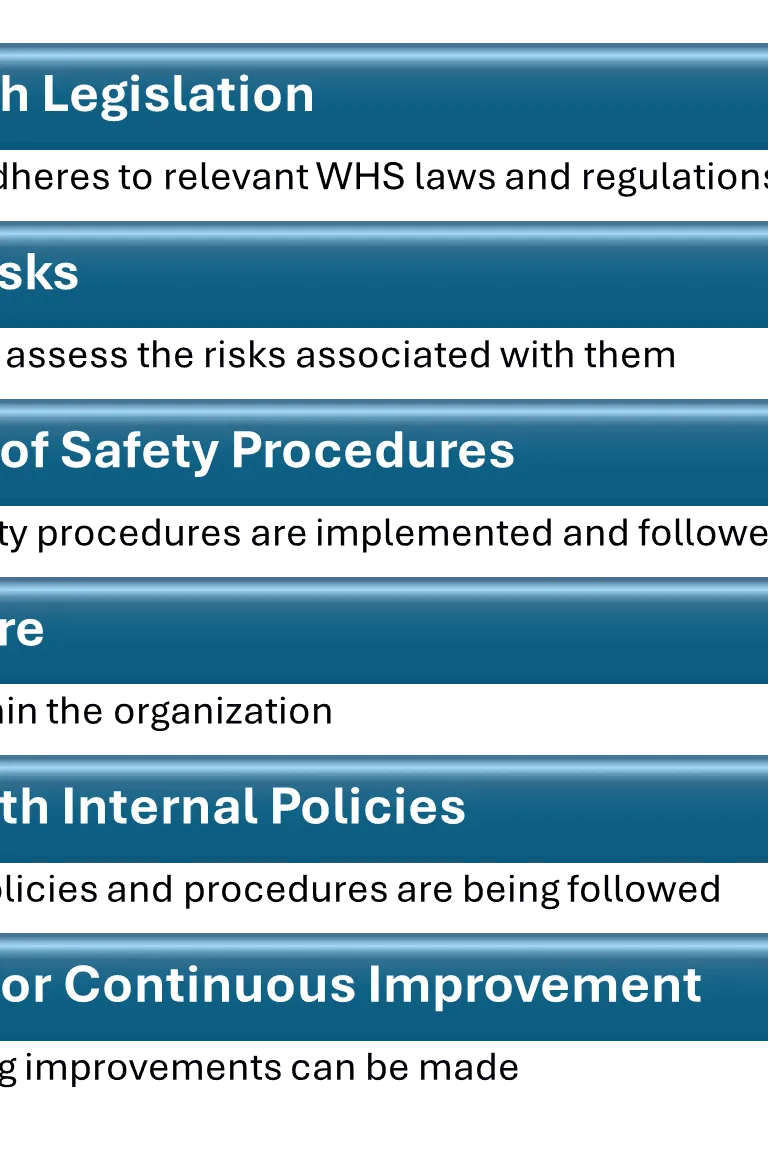
A WHS gap analysis compares your current safety management practices against a benchmark — such as legislation or an ISO standard — to identify what needs to improve. This step-by-step guide explains how to conduct one effectively.
What Is a WHS Gap Analysis?
A WHS gap analysis is a structured assessment that compares your current workplace health and safety practices, systems, and documentation against a defined benchmark. The benchmark might be Australian WHS legislation, an ISO standard such as ISO 45001, an industry code of practice, or your own internal requirements.
The output is a clear picture of where you currently stand and what you need to do to close the gaps.
When Should You Conduct a Gap Analysis?
- Before pursuing ISO 45001 certification
- After a significant incident to understand systemic weaknesses
- When taking over an existing business
- As part of an annual WHS review
- When entering a new industry sector or jurisdiction
Step 1: Define the Benchmark
Clearly define what you are measuring yourself against. This might be the Work Health and Safety Act 2011 and associated regulations, ISO 45001:2018, a specific code of practice, or a combination. Document this upfront so your findings are comparable and credible.
Step 2: Gather Evidence
Collect existing documentation including your safety policy, procedures, risk registers, training records, incident logs, and inspection reports. Review them against the benchmark requirements.
Step 3: Conduct Site Observations
Walk the workplace and observe actual work practices. Often there is a gap between documented procedures and actual practice — the gap analysis must capture both.
Step 4: Interview Key Personnel
Interview managers, supervisors, health and safety representatives, and workers. Ask about their understanding of safety responsibilities, common hazards, and how incidents are managed.
Step 5: Analyse and Report
Categorise each gap by severity (critical, major, minor) and whether it relates to documentation, implementation, or both. Prepare a report that presents findings clearly and prioritises corrective actions by risk level.
Step 6: Develop Your Improvement Plan
Convert gap analysis findings into a prioritised action plan with clear ownership, resources, and target completion dates. Review progress monthly until all critical and major gaps are closed.
Share this resource
Key Points
- •A gap analysis compares your current WHS practices against a defined benchmark
- •Common benchmarks include WHS legislation, ISO 45001, or industry codes of practice
- •Evidence gathering includes document review, site observation, and staff interviews
- •Gaps should be categorised by severity: critical, major, or minor
- •The output should be a prioritised corrective action plan with clear ownership
Filter
Categories
Most Popular
More Like This
- High Risk Construction Work vs High Risk Work: The DifferenceWHS Compliance & Legislation
- Notifiable Incidents in Australia: 4 Things You Need to KnowWHS Compliance & Legislation
- What to Include in Your WHS Audit: A Guide for EmployersWHS Compliance & Legislation
Recently Added
- ISO 45001 vs AS/NZS 4801: Key Differences Explained
- What Is a Safety Management System?
- How to Prepare for an ISO Certification Audit
- Exemplar Certification for Asbestos & Demolition (ISO 45001)
Need Help?
Our WHS consultants can help you implement this in your business. Book a free consultation today.
Book a Consultationor call 1300 891 503