
WHS for Civil Contractors: Scope-of-Works Specific Risks in 2026
Civil contractors operate in high-risk environments requiring specialized safety approaches beyond generic sites. This guide covers critical WHS risks such as trenching, live traffic, and underground
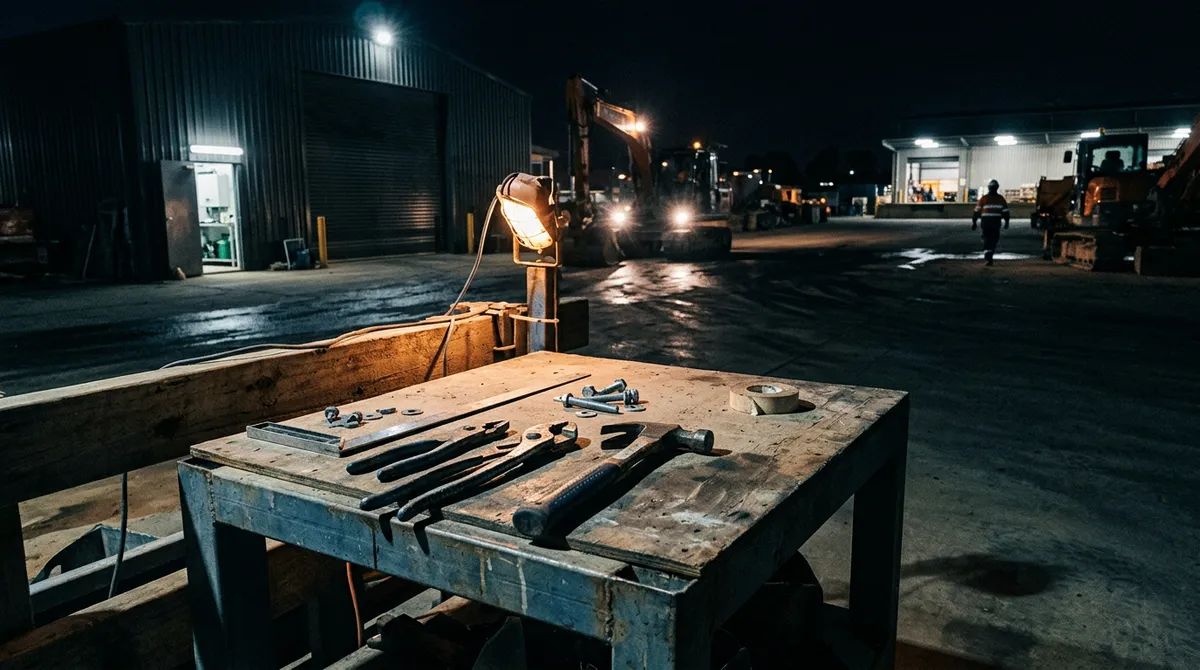
Civil contractors operate in high-risk environments where the margin for error is often measured in millimetres.
Managing safety for infrastructure projects requires a specialised approach that goes beyond generic residential building sites.
Projects involving deep excavations, high-speed traffic, and complex underground utilities demand rigorous systems to protect workers and the public.
Success in this sector depends on integrating safety into the engineering lifecycle rather than treating it as a secondary administrative task.
TLDR
Civil projects require specialised risk controls for trenching, traffic, and high-voltage underground services.
PCBU obligations extend to the rigorous oversight of subcontractors and plant operators.
Safe Work Method Statements (SWMS) must be site-specific and regularly reviewed for high-risk work.
Effective traffic management and utility location are critical for preventing catastrophic site incidents.
Defining WHS for Civil Contractors
Civil construction encompasses large-scale infrastructure including roads, bridges, dams, and utility networks.
Unlike vertical construction, these projects are often linear and interact directly with the existing public environment.
Effective WHS for civil contractors starts with a robust management system that meets Australian standards.
This system must address the dynamic nature of sites that change shape and location daily.
Consultants often help firms align their processes with ISO 45001 certification to ensure global best practice in safety.
This alignment provides a structured framework for identifying hazards unique to heavy engineering and infrastructure development.
Critical Risks in Trenching and Excavation
Excavation remains one of the most hazardous activities in the civil sector.
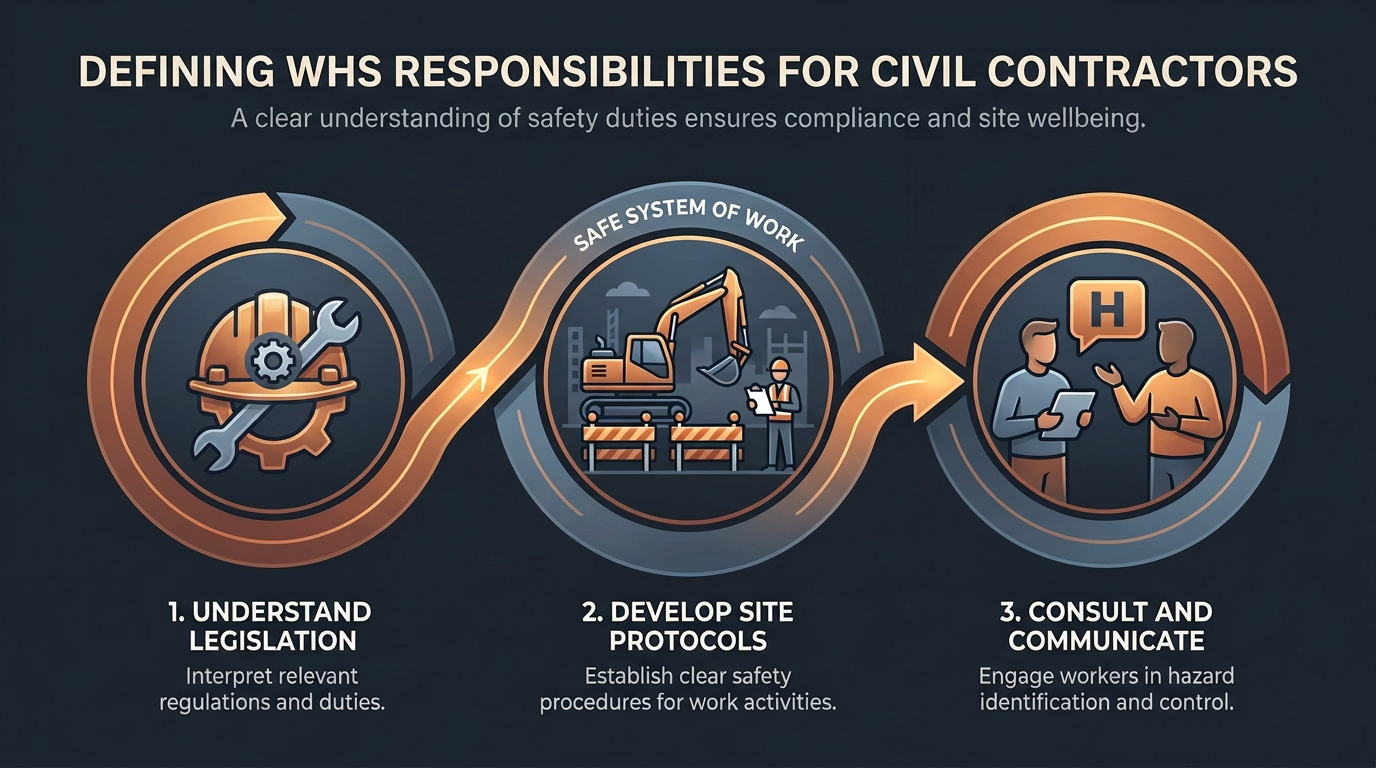
Key WHS principles and practices vital for civil contractors and civil construction safety.
A sudden trench collapse can be fatal in seconds and often gives workers no time to escape the falling earth.
For any trench or shaft deeper than 1.5 metres, Australian regulations categorise the task as high-risk construction work.
This classification triggers the mandatory requirement for a Safe Work Method Statement (SWMS).
Contractors must implement engineering controls such as shoring, shielding, or battering to prevent ground collapse.
Regular inspections by a competent person are essential, especially after rain events or significant changes in weather across the site.
Where trenching occurs adjacent to an existing carriageway, controls must also manage vehicle-induced vibration and surcharge risks.
Keep spoil, plant and stockpile materials well back from the trench edge to avoid surcharging the sidewall.
Daily pre-start verification of SWMS controls is required before high-risk work starts on civil sites where trenches are part of a moving linear project.
How deep triggers a SWMS for trenching?
Trenches deeper than 1.5 metres are typically classified as high-risk and will require a site-specific SWMS.
Navigating Underground Services
Striking an underground utility can lead to electrocution, gas explosions, or significant environmental damage.
Civil contractors must treat all services as "live" until they are proven otherwise by a qualified technician.
Before any ground penetration occurs, workers should consult current plans and engage utility location services such as Dial Before You Dig.
Utility plans are frequently indicative and may not reflect the exact position of ageing infrastructure.
Non-destructive digging, such as hydro-vac excavation, is the preferred method for exposing services safely.
Hydro-vac excavation uses high-pressure water and vacuum to remove soil without damaging the integrity of cables or pipes beneath the surface.
If a service is damaged, the site must be evacuated immediately and emergency protocols activated.
Maintaining a Safe Work Method Statement that specifically covers utility strikes is a non-negotiable requirement for modern civil sites.
What steps reduce risk when exposing services?
Use current records, electronic locators, soft excavation, and competent supervision before any intrusive digging.
Managing Live Traffic Environments
Many civil projects occur within or adjacent to existing road networks and live carriageways.
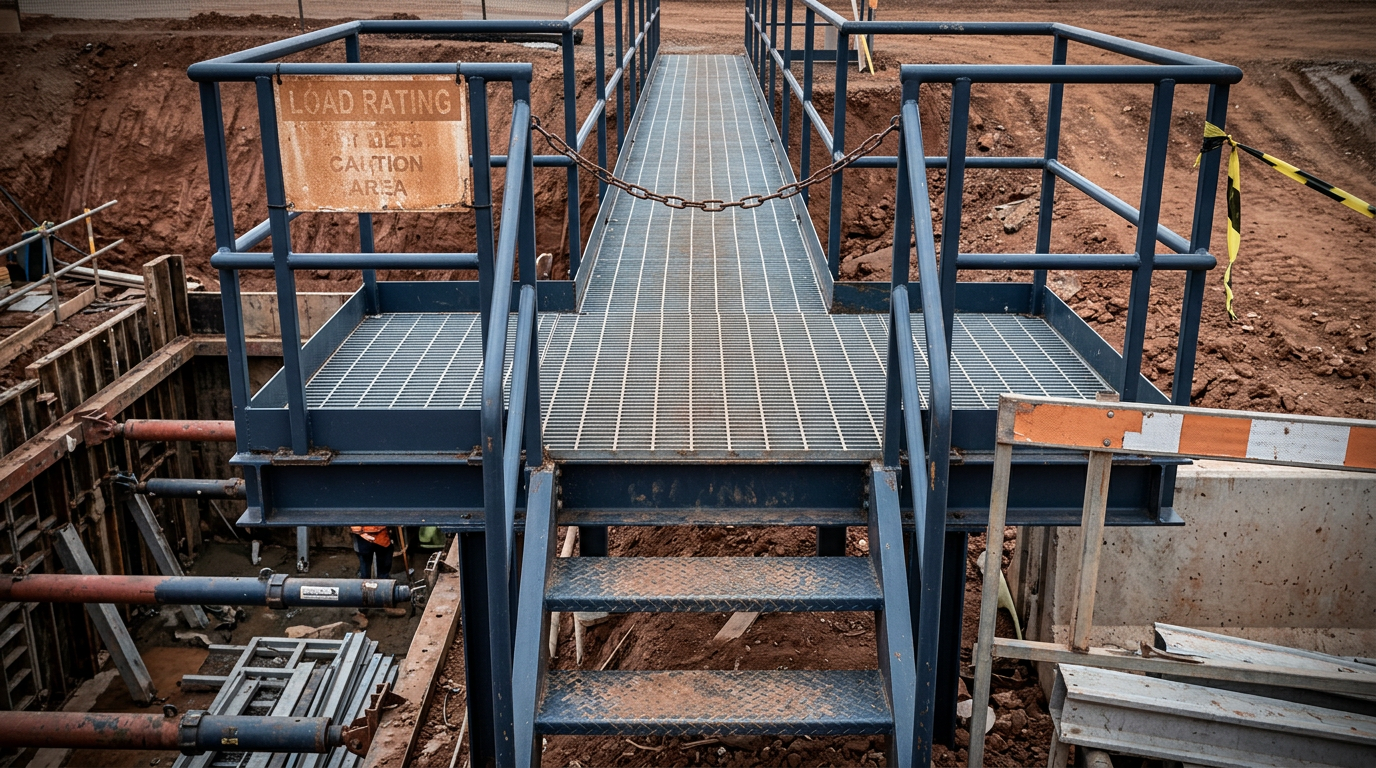
Understanding critical risks in trenching and excavation is vital for civil construction WHS compliance.
This proximity creates a dual risk: vehicles entering the workspace and workers inadvertently stepping into live traffic lanes.
A professional Traffic Management Plan (TMP) must be developed by a qualified person before work commences.
The TMP should include clear signage, physical barriers, and appropriate speed reductions to protect the workforce and road users.
Traffic controllers must be competent and operate to agreed handover protocols with plant operators during lifting and material movements.
Workers must wear high-visibility clothing that meets Australian standards for both day and night operations.
Use temporary barriers, buffer spaces and lane closures where practical to separate civil works from live traffic.
Standardised communication between traffic controllers and plant operators is vital to prevent collisions during the movement of materials.
How do you protect crews working on the roadside?
Implement a TMP, use accredited controllers, install physical separation, and schedule higher-risk tasks during low-traffic windows.
Subcontractor Management in Civil Works
Civil contractors frequently rely on a diverse range of subcontractors for specialised tasks like piling, asphalt laying, or directional drilling.
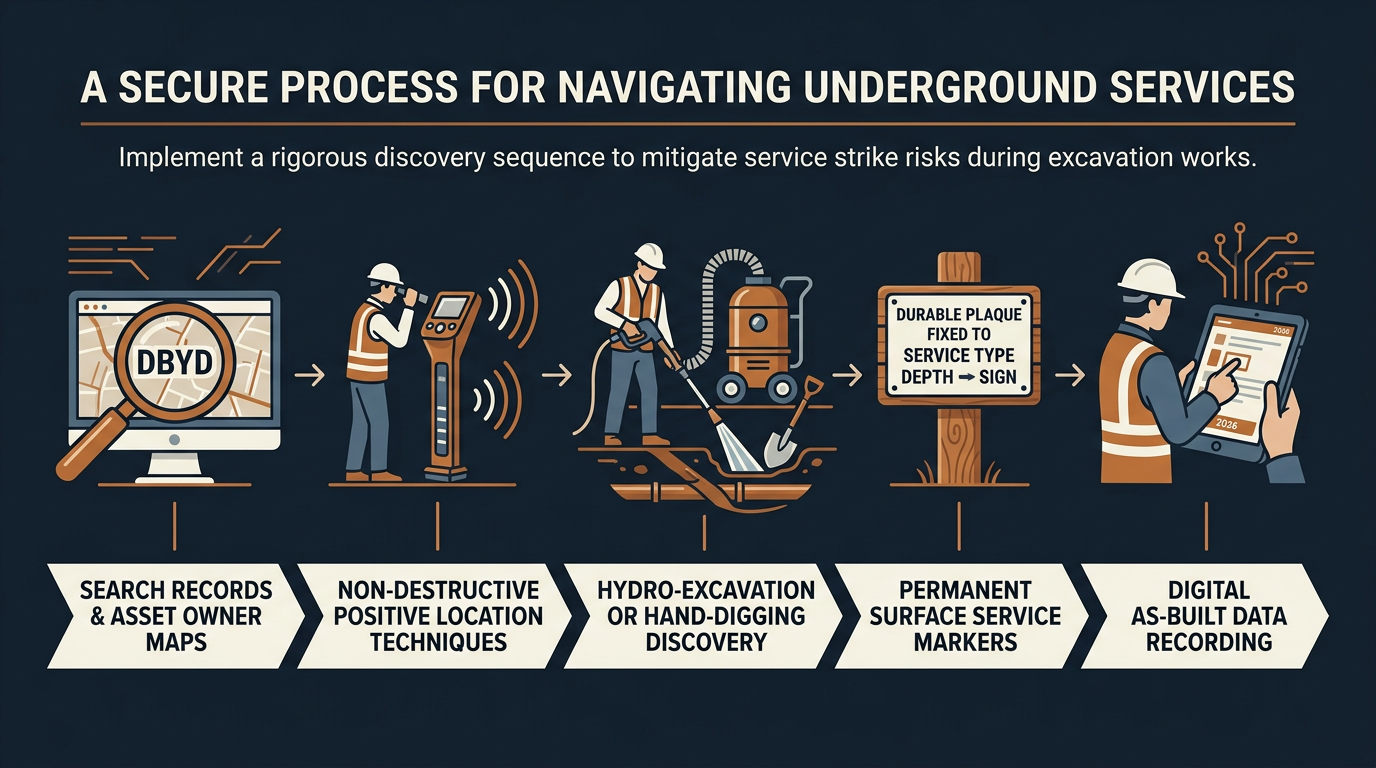
Essential WHS for civil contractors: safely identifying and managing underground services.
Under the WHS Act 2011, the principal contractor remains responsible for the safety of everyone on the site.
Engaging subcontractors does not remove the principal's responsibilities under WHS laws.
Managing "subbies" involves more than checking insurance certificates at the gate.
Verification must include evidence of their safety management system, plant competency, and relevant licences for high-risk work.
For linear civil projects, include scope-of-works alignment in subcontract tenders so overlap and interface risks are managed before mobilisation.
Conduct induction validation, observe initial mobilisation, and require daily confirmation that each subcontractor's SWMS aligns with the principal contractor's WHS Plan.
Projects over common state thresholds should prepare a WHS Management Plan before work starts and obtain SWMS for all high-risk construction work.
Regular site audits and targeted inspections should focus on how subcontractors manage traffic interfaces, trenching, and service-exposure tasks.
What should be checked on subcontractor mobilisation?
Confirm licences, plant maintenance records, SWMS alignment, induction completion, and communication protocols for traffic and utility strikes.
Plant and Equipment Safety
Heavy machinery is the backbone of civil infrastructure and presents significant risks to pedestrian workers.
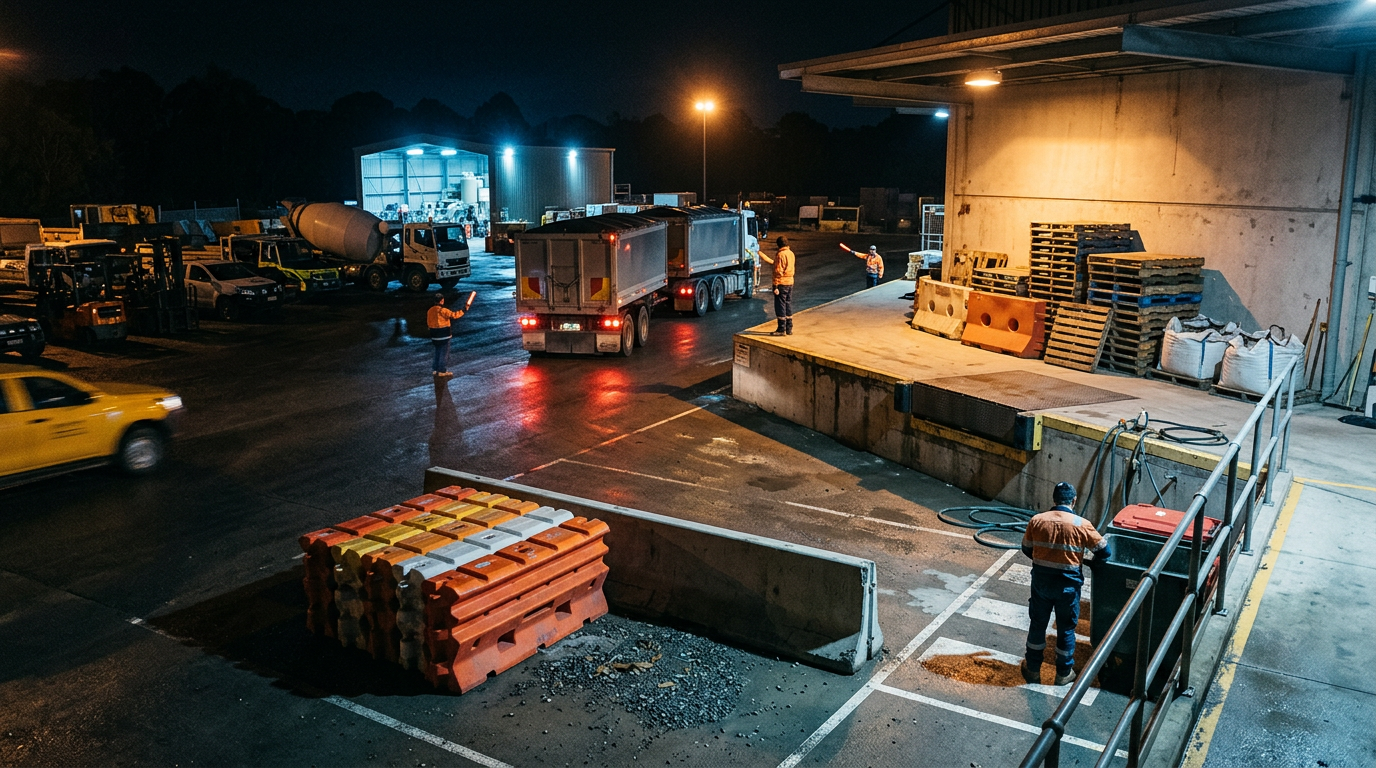
Ensuring workplace safety in live traffic environments for civil contractors is paramount.
Reversing plant, swinging excavators, and tipping trailers are common causes of serious injury in the industry.
Every piece of equipment must have a current service record and a pre-start inspection log.
Operators must hold the relevant high-risk work licences or national certificates of competency for the specific machine they operate.
Exclusion zones should be clearly marked with physical barriers or spotters to prevent unauthorised access to plant swing radii.
Implement 360-degree cameras and proximity sensors on machines as a supplementary control in congested linear work areas.
Use task-specific SWMS for plant movements near live services or live traffic to show controls for loading, unloading and reversing on public roads.
Environmental and Occupational Health Risks
Civil construction often involves long hours outdoors, exposing workers to extreme weather, UV radiation, and silica dust.
Managing these health risks is just as important as preventing immediate physical injuries.
Dust suppression techniques, such as water carts, must be used during earthworks to minimise airborne particulates.
When cutting concrete or stone, wet-cutting methods and appropriate respiratory protection are mandatory to prevent silicosis.
Heat stress is a significant concern for crews working on black-top or in deep trenches during the Australian summer.
Provide shade, hydration stations, and modify work schedules to manage the physical toll on the workforce.
From 2026, Australia transitions to Workplace Exposure Limits (WEL) for occupational airborne contaminants, which will affect civil works compliance planning.
Builders and contractors must also treat psychosocial hazards with the same diligence as physical risks where fatigue and shift patterns are managed on long linear projects.
Implementing Site-Specific Safety Controls
Generic safety templates are rarely sufficient for the complex demands of civil engineering projects.
Every site has unique geography, soil conditions, and public interactions that require a tailored risk assessment.
Safety meetings and toolbox talks should be held daily to discuss the specific tasks and hazards for that shift.
These meetings allow workers to voice concerns and suggest improvements based on their direct experience in the field.
Record-keeping is essential for demonstrating compliance during regulatory inspections or third-party audits.
Digital safety platforms can help track site inductions, incident reports, and equipment maintenance in real-time.
Use site-specific SWMS and WHS Management Plans to link civil project scopes to controls for trenching, live traffic and utility exposure.
A Free Elevated Work Platform template can assist when bridge inspections or overhead works are required.
Having the right tools for every scenario ensures that no task is performed without a structured safety review.
FAQ
Frequently asked questions
01What are the specific WHS obligations for principal contractors when managing subcontractors on civil projects?
02How do WHS regulations differ for civil projects operating near public roads or active transport corridors?
03What innovative technologies are being adopted in 2026 to improve WHS on civil construction sites?
04Beyond SWMS, what other critical documentation is required for WHS compliance on large-scale civil infrastructure projects?
Share this article
Get Expert Advice
Speak with a certified WHS consultant about your workplace.
Contact Usor call 1300 891 503