
WHS for Manufacturing SMEs: Plant Guarding, Chemical Storage & Shift Work
Manufacturing SMEs face unique operational risks requiring vigilance to prevent workplace injuries. This guide covers primary duty of care, plant guarding, chemical storage, and managing shift work
Manufacturing SMEs face unique operational risks that require constant vigilance to prevent serious workplace injuries.
Managing plant guarding, chemical storage, and the fatigue risks of shift work is essential for meeting your primary duty of care.
TLDR
Effective plant guarding is a non-negotiable requirement for machinery safety.
Correct chemical storage prevents hazardous reactions and environmental contamination.
Managing shift work fatigue is critical for high-risk manufacturing environments.
Regular internal audits ensure your safety systems remain compliant in 2026.
Understanding the Primary Duty of Care in Manufacturing
Under Australian WHS laws, every manufacturer has a primary duty of care to ensure the health and safety of workers.
This obligation extends to contractors, visitors, and anyone influenced by the business activities.
For small to medium enterprises, this means proactively identifying hazards before they cause harm.
You must provide safe systems of work and maintain a work environment without risks to health.
Recent data from 2025 suggests that SMEs often struggle with documentation despite having strong practical safety knowledge.
Maintaining a robust safety management system helps bridge this gap between site practices and legal compliance.
Plant and Machinery Guarding Requirements
Machinery is the backbone of any manufacturing facility but represents a significant source of severe trauma.
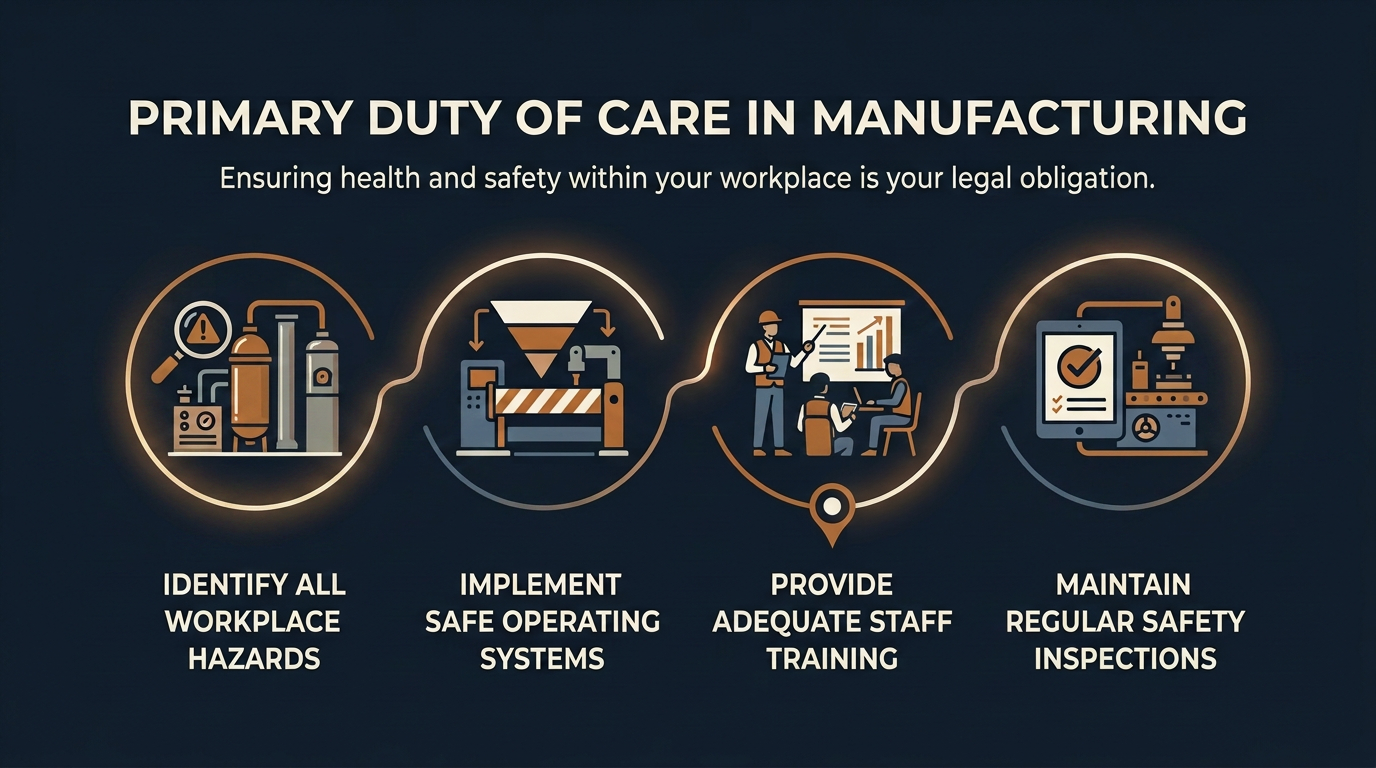
Essential guide to understanding WHS primary duty of care for Australian manufacturing SMEs.
Inadequate guarding leads to entanglements, crushing injuries, and amputations.
In 2026, regulators across Australia continue to focus on "isolation of energy" during maintenance.
You must ensure all moving parts are physically inaccessible during normal operation.
Fixed guards are the preferred method of protection whenever possible.
If access is required frequently, use interlocked physical guards that stop the machine when opened.
Lockout-Tagout procedures are central to isolation and must be documented and enforced.
These LOTO controls protect technicians and meet expectations under AS 4024 and regulator guidance.
Proactive businesses often seek advice from WHS Safety Consultants to verify that their guarding meets current Australian Standards.
Regular inspections must also check for signs of tampering or bypass attempts by operators.
Common quick checks for guarding compliance
Are guards secure and free of gaps that allow access to danger zones?
Do interlocks stop the machine immediately when opened, and are these interlocks tested regularly?
Hazardous Chemicals and Storage Protocols
Manufacturing often involves solvents, lubricants, and cleaning agents that require specific handling.
Manufacturing WHS compliance requires a complete register of every hazardous chemical used on-site.
Each chemical must have a current Safety Data Sheet (SDS) that is easily accessible to workers.
These sheets provide vital information on first aid, firefighting, and spill containment.
Storage areas must be designed to prevent incompatible chemicals from reacting with each other.
For example, never store oxidisers near flammable liquids.
Spill kits and appropriate personal protective equipment are essential components of your hazardous material strategy.
For more information on equipment standards, you can review PPE Compliance in Australia to ensure your gear is fit for purpose.
Hazardous chemicals PAA
How often should a hazardous chemical register be reviewed?
Review the register annually or whenever chemicals change.
Managing Risks Associated with Shift Work
Shift work is common in the manufacturing sector to maximise production and machine utility.
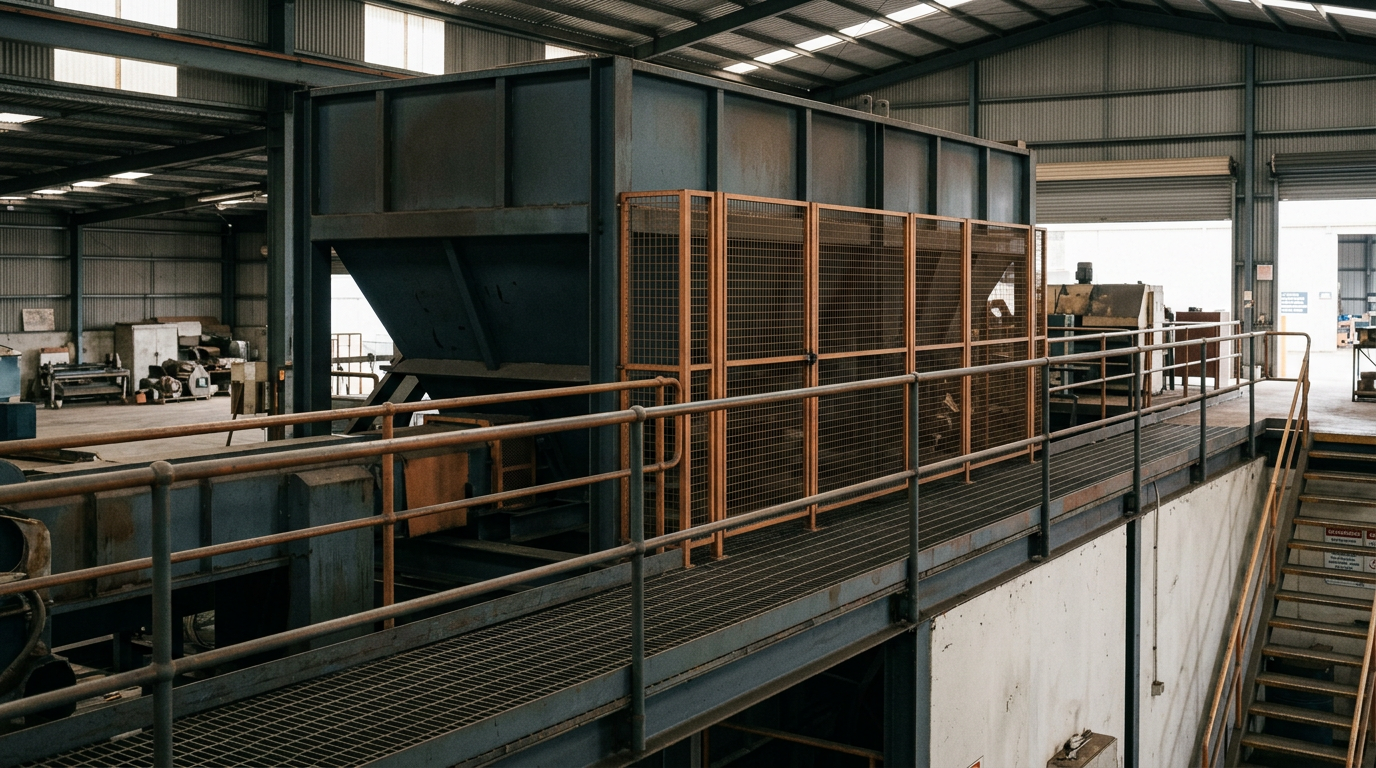
Ensuring robust plant and machinery guarding is crucial for Australian manufacturing SME WHS obligations.
However, irregular hours and night shifts significantly increase the risk of fatigue-related incidents.
Fatigue impairs cognitive function and slows reaction times, which is dangerous when operating heavy machinery.
Design rosters that allow for at least two full nights of sleep after a night shift block where practical.
Encourage a culture where workers feel safe to report fatigue without fear of losing hours.
Providing adequate lighting and temperature control can help night shift workers remain alert and focused.
Shift-work controls to consider
Use risk-based roster design, scheduled breaks, and fatigue reporting systems to manage risk.
Consider fatigue risk assessments tailored to the specific tasks and machinery in your factory.
Maintenance and Equipment Safety Checks
Broken or poorly maintained equipment is a leading cause of workplace accidents for SME workplace safety manufacturing firms.
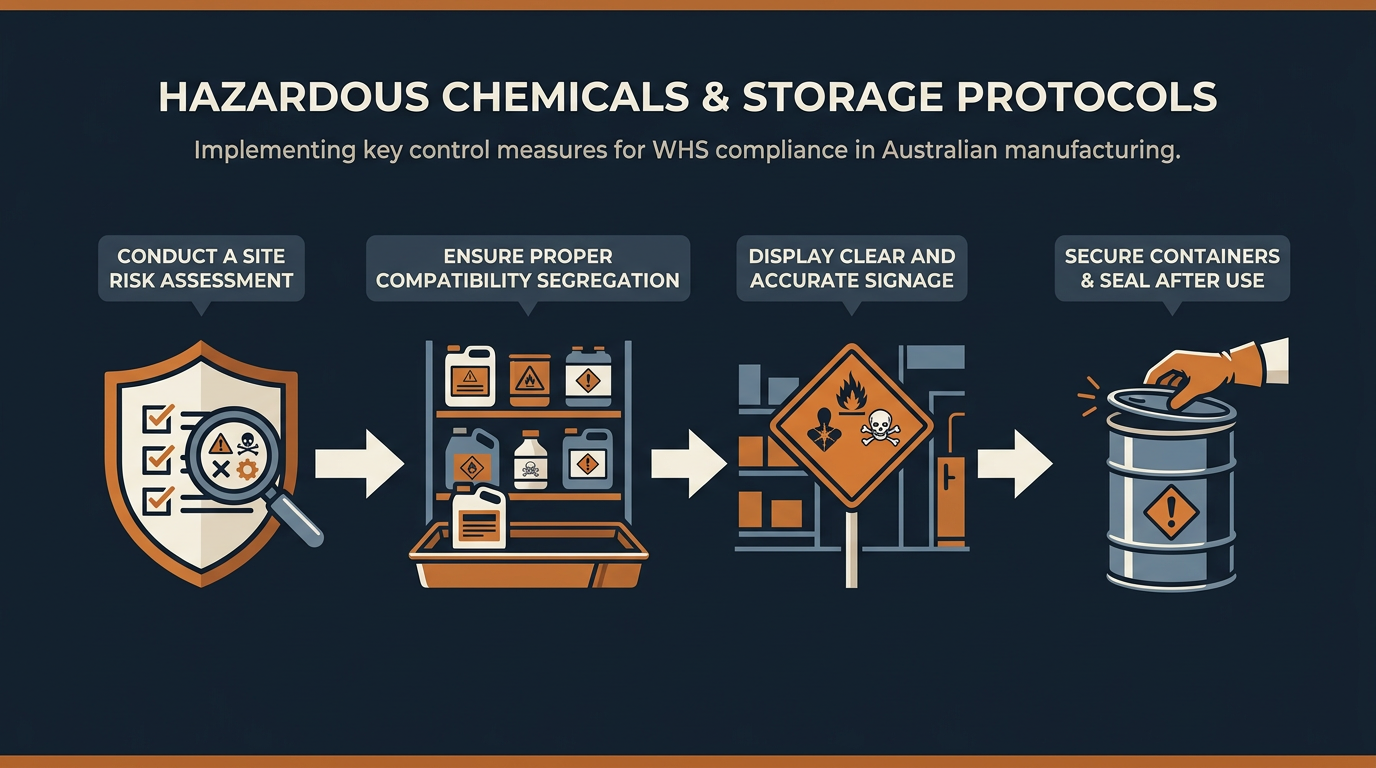
Essential protocols for safe hazardous chemical storage in Australian manufacturing workplaces to ensure WHS compliance.
A reactive "fix it when it breaks" approach is often a breach of WHS obligations.
Implementing a scheduled maintenance program ensures that safety features like emergency stops remain functional.
You must keep detailed records of all repairs and inspections for at least seven years.
Lockout-tagout (LOTO) procedures are vital whenever a machine is being serviced.
These procedures ensure the equipment cannot be accidentally restarted while a technician is working inside.
Using a structured approach like Regular Machinery Maintenance and safety checks helps prevent unexpected downtime and legal liabilities.
It also demonstrates to regulators that your business is proactive about risk management.
First Aid and Emergency Response
Manufacturing environments often involve high-risk activities that require specific first aid capabilities.

Mitigating shift work hazards is crucial for manufacturing WHS compliance in Australia.
Your first aid facilities must be tailored to the specific hazards present in your workshop.
If you handle corrosive chemicals, you must have plumbed or portable eyewash stations nearby.
For businesses using heavy machinery, trauma kits with arterial tourniquets may be necessary.
Ensure that a sufficient number of workers are trained to provide first aid during every shift.
Full first aid refresher training (HLTAID011 and HLTAID009) is typically expected every three years and CPR refreshers annually for high-risk environments (Source: nfac.edu.au).
First aid kits must be appropriate for high-risk environments and include supplies for bleeding control, burns, and eye injuries (Source: nfac.edu.au).
First aid arrangements should effectively cover all shifts and departments, especially where 24/7 operations run (Source: nfac.edu.au).
Contractor Management in the Factory
SMEs frequently engage external contractors for specialised repairs or facility upgrades.
You are legally responsible for the safety of these contractors while they are on your premises.
Before work begins, verify that contractors have the correct licences and insurance.
They should also provide a Safe Work Method Statement (SWMS) for any high-risk construction work.
A simple induction process ensures that visitors understand your site-specific hazards and emergency exits.
For more guidance on this, review Contractor Management Procedures for modern workplaces to streamline your onboarding process.
Integrating Safety into Daily Operations
WHS should not be a separate task that is only considered during an audit.
It must be integrated into every production process and toolbox talk.
Encourage staff to suggest improvements to machine layouts or handling procedures.
Workers often have the best insights into how to make a task safer and more efficient.
Using templates can simplify your documentation load without compromising on safety standards.
For instance, a FREE Crane Man Basket SOP can be adapted for businesses using lifting equipment for maintenance tasks.
FAQ
Frequently asked questions
01How often should WHS risk assessments be conducted for manufacturing SMEs in Australia?
02What are the specific training requirements for staff handling hazardous chemicals in a manufacturing SME?
03Are there grants or government assistance available for manufacturing SMEs to improve WHS compliance in 2026?
04What is the role of WHS committees in manufacturing SMEs, and are they mandatory?
05How can manufacturing SMEs effectively manage mental health risks in the workplace, particularly with shift work?
Share this article
Get Expert Advice
Speak with a certified WHS consultant about your workplace.
Contact Usor call 1300 891 503