
How to Write a Scope of Work for a WHS Consulting Engagement in 2026
Defining a clear scope of work ensures safety projects stay on budget and meet compliance goals. Without it, businesses face 'scope creep' and missed legislative requirements. Our 2026 guide prevents
Defining a clear scope of work is the most effective way to ensure a safety project stays on budget and achieves its compliance goals.
Without a precise brief, businesses often face "scope creep" where costs escalate and critical legislative requirements are missed.
TLDR
- A detailed scope prevents hidden costs and project delays.
- Specific deliverables ensure you meet legal obligations under the WHS Act.
- Including site-specific exclusions protects both the client and the consultant.
- A structured template helps standardise safety outcomes across multiple sites.
Why the Scope of Work Matters in 2026
In 2026, the Australian regulatory environment requires more than generic safety advice.
A high-quality occupational health and safety services scope defines exactly what a consultant will deliver.
It acts as a contract between your business and the specialist.
This document prevents misunderstandings about who is responsible for specific risk controls or documentation.
Standardising your WHS project brief development ensures that every consultant follows the same benchmark.
This is vital when managing high-risk activities or high-pressure environments.
The Eight Forgotten Sections of a WHS Scope
Most businesses remember to ask for "a safety audit" or "some policies."
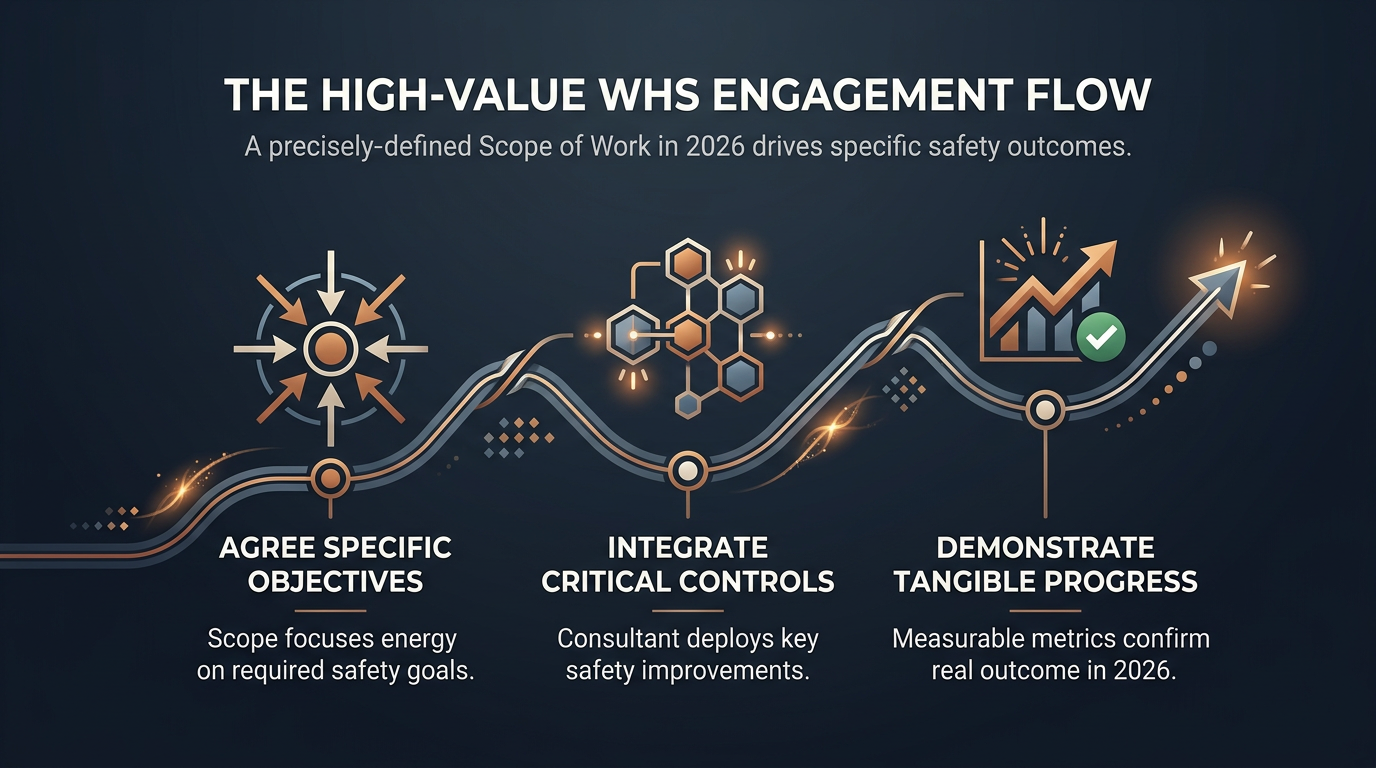
However, they often forget the finer details that determine the success of the engagement.
A robust safety consulting SOW structure must go beyond the basics.
If these eight areas are missing, you risk incomplete compliance or unexpected invoices.
1. Specific Legislative Mapping
Never assume the consultant knows exactly which regulations you want them to check.
State clearly if the work must align with the WHS Act 2011 or specific 2026 codes of practice.
2. Stakeholder Consultation Boundaries
Detail who the consultant needs to interview.
If you need them to speak with a Work Health and Safety Representative, put it in writing.
3. Equipment and Facility Access
List every site, warehouse, or vehicle the consultant must inspect.
Failing to list a satellite office might mean it gets skipped entirely or billed as an extra.
4. Software and Systems Integration
If you use a digital platform, specify that all reports must be uploaded directly.
This ensures the output is compatible with your existing safety management system without manual data entry.
5. Review and Revision Cycles
Many consultants charge extra for multiple rounds of edits.
Define how many versions of a document are included in the initial fixed fee.
6. Implementation Support vs. Advice
Specify if the consultant is just writing the plan or helping you launch it.
Many businesses struggle with building a safety management system because they only bought the advice, not the execution.
7. Exclusion of Liabilities and Services
Clearly state what the consultant is NOT doing.
For example, they might write a procedure but not provide the physical safety equipment required to follow it.
8. Final Handover and Training
Determine how the final project is "signed off."
You should require a formal handover meeting to ensure your internal team understands the new protocols.
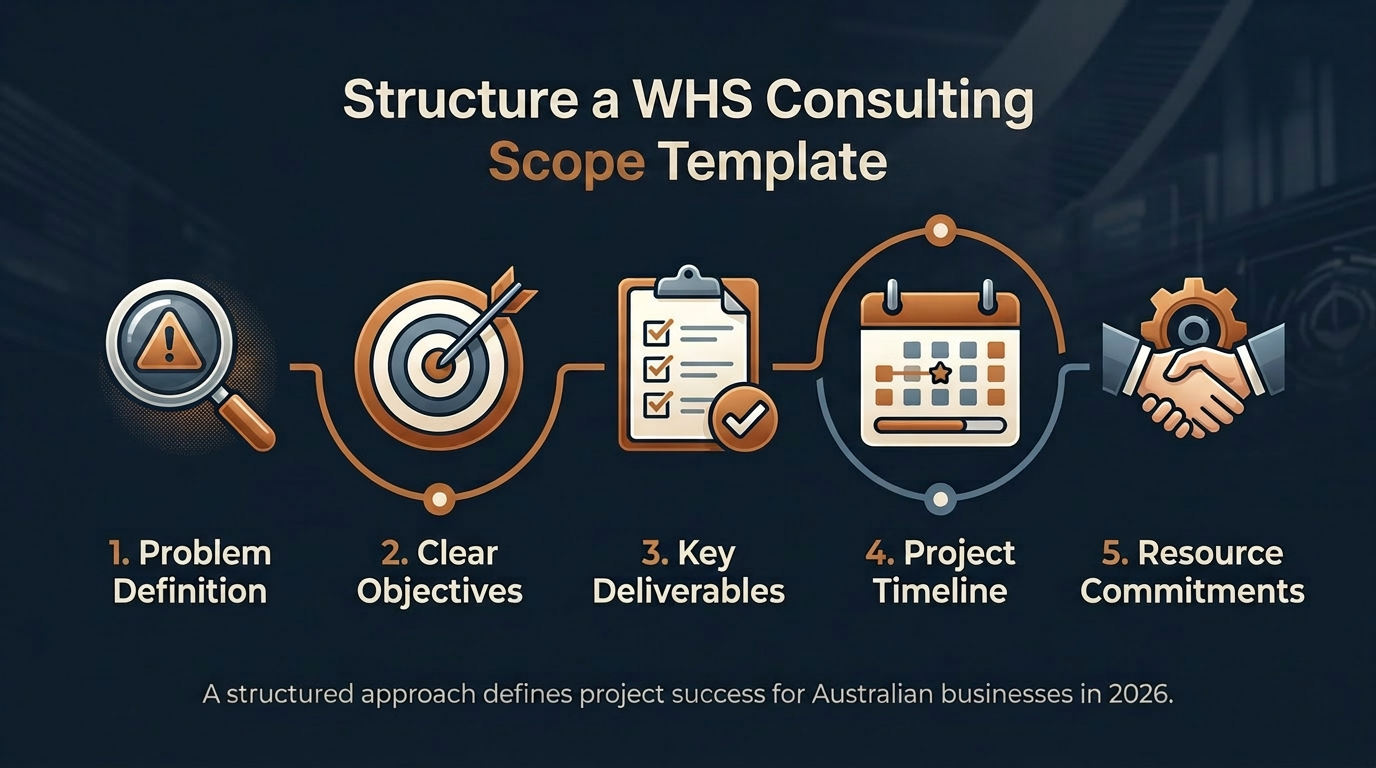
Structuring Your WHS Consulting Scope of Work Template
Using a consistent WHS consulting scope of work template helps you compare quotes fairly.

If every consultant responds to the same brief, you can see who truly understands your risks.
Start with a project overview that explains the "why" behind the engagement.
For example, you might be preparing for an ISO 45001 audit or responding to an improvement notice.
Follow the overview with a table of milestones.
Each milestone should have a fixed date and a specific, tangible deliverable like a report or a training session.
Defining Project Deliverables and Milestones
Vague deliverables lead to vague results.

Instead of "safety advice," ask for "a written gap analysis report against the 2026 WHS Regulations."
If the project involves equipment, specify the depth of the review.
You may require machinery maintenance and safety checks as part of the broader site inspection.
Break the project into phases.
Phase one could be a document review, while phase two involves on-site observations and worker interviews.
Choosing Between In-house and External Experts
Before writing your scope, decide if an external consultant is the best fit.
Sometimes an In-house Safety Manager vs an external partner depends on the technical complexity of the task.
External consultants are often better for objective audits or niche technical challenges.
In-house staff are typically better for daily operational coaching and cultural change.
Your workplace safety scope agreement should reflect this distinction.
It should focus the consultant on the high-level strategy while your team handles the daily tasks.
Managing the Consultant Engagement Scope
Success depends on active management once the consultant engagement scope is signed.
Schedule fortnightly check-ins to ensure the project stays on track.
Review the progress against your 2026 milestones.
If the consultant finds new risks that were not in the original brief, you must issue a formal variation.
Ensure the consultant has access to relevant records, such as your Training and Development Policy, early in the project.
Providing these documents late can cause delays and increase your costs.
Finalising the Workplace Safety Scope Agreement
The final stage of the workplace safety scope agreement is the formal sign-off.
Do not pay the final invoice until every deliverable in the SOW is received.
Check that the documents provided are practical and easy for your staff to use.
Technical jargon is less effective than clear, actionable instructions for your workers.
If you are just Starting a Career in safety management, look at existing government templates.
Safe Work Australia provides excellent guidance on what a compliant system looks like.
Common PAA-style questions clients ask:
How detailed should legislative mapping be in a WHS SOW?
What is a reasonable number of revision cycles to include in a fixed fee?
Does the consultant's remit include implementation support or only advisory work?
Use the downloadable scope template structure to mark each of the eight forgotten sections before you request quotes.
That small step reduces ambiguity and improves comparability across bids.
FAQ
Frequently asked questions
01What is the primary difference between a WHS Scope of Work and a WHS Management Plan?
02How can I effectively vet a WHS consultant's understanding of my proposed scope before formal engagement?
03What are common pitfalls to avoid when implementing the WHS consulting scope of work?
04Does a WHS consulting scope of work need to be legally binding?
Share this article
Get Expert Advice
Speak with a certified WHS consultant about your workplace.
Contact Usor call 1300 891 503