Contractor Management Procedures for the Australian Workplace
Oversight and coordination of contractors is vital to ensuring compliance with legal and safety standards. This guide covers contractor selection, monitoring, legal requirements, and actionable tips for Australian workplaces.
Contractor Management Procedures for the Australian Workplace
The Essence of Contractor Management
Oversight and coordination of contractors is vital to ensuring compliance with legal and safety standards.
Contractor management details how contractors are:
- Selected,
- Monitored, and
- Managed
It encompasses workplace health and safety (WHS), quality, environmental, contract negotiations, performance evaluation, and compliance with Australian laws and standards.
In this article we will focus on the WHS aspects of contractor management.
Key Takeaways:
– Determine which contractors require management
– Develop a contractor management procedure
– Consult with your contractors to optimize workplace safety
– Provide oversight through regular inspections or audits
Free Contractor Management Procedure
Use our simplified Contractor Management Procedure to develop your own business-specific procedure.
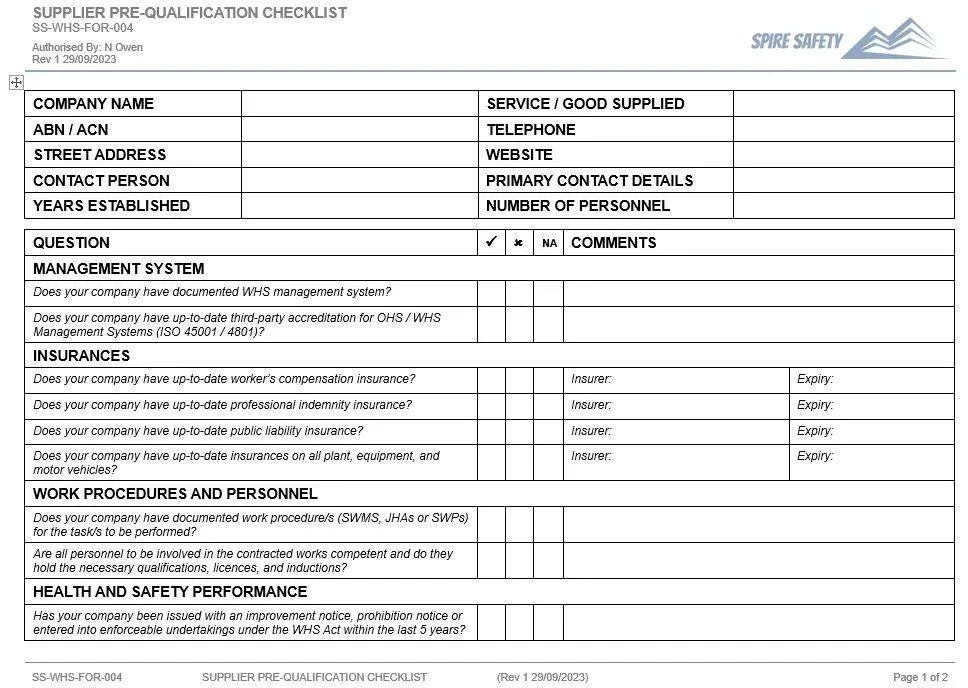
We also have a free, simplified Pre-Qualification Checklist.
These were developed for construction or industrial clients. These documents are templates only and must be customised for your business. Other aspects that may need to be considered include, but are not limited to, ensuring that:
- Relevant legal requirements have been met,
- Workplace specific risks are identified and managed, and
- Workers are consulted with during the customisation / review process.
Understanding Legal Requirements
The Model WHS Act and Ensuring Safety of Workers
The model WHS Act doesn’t have specific requirements for contractor management. The WHS Act and Regulations apply to activities completed by your subcontractor. That is, if you have influence or control over a situation, you need to ensure workplace safety as far as reasonably practicable.
You are legally responsible for the safety of subcontractors.
Ensuring Safety of Workers
S(19) of the WHS Act states that PCBUs must ensure the safety of workers. Workers includes any subcontractors you may be using.
Consultation with Workers and Other PCBUs
Consultation (i.e. information sharing / communicating) is legally required under s(46) and s(47) of the WHS Act. Ensure consultation with workers includes any subcontractors you are engaging. Consultation with other PCBUs may also be required to ensure workplace safety.
You can think of this as “Vertical” and “Horizontal” communication.
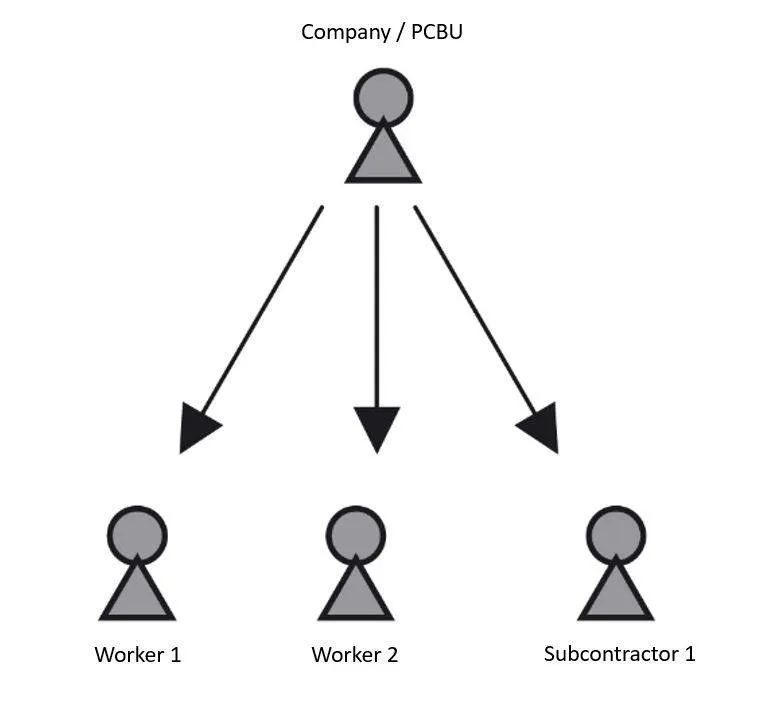
Example: Holding a daily “Pre-Start Meeting”
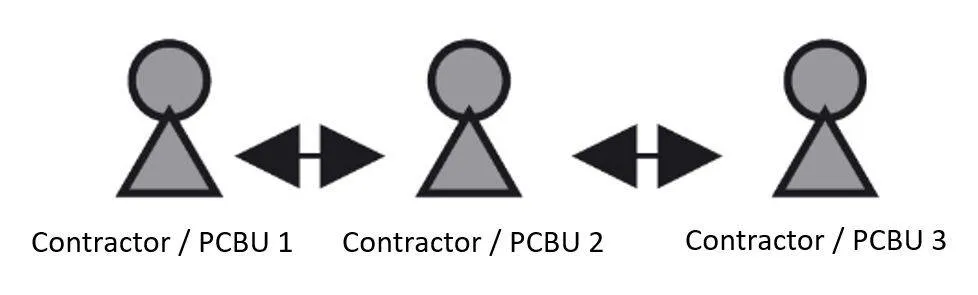
Example: Holding a project “Kick-Off” meeting where multiple companies discuss how safety will be managed.
Relying on the Expertise of Others
You may engage specialist subcontractors to complete tasks that you are not familiar with. Relying on the subcontractor’s expertise is OK, you will need to identify what factors you CAN control, and then take steps to control workplace safety.
Example: You engage a specialist Demolition Contractor. You can let them handle the demolition side of things, but you should still provide oversight (e.g. regular inspections or checking the contractor’s demolition licence).
Follow these steps:
- Ensure they have the right expertise
- Review their safety system or accreditations
- Ensure they have policies and procedures
- Consult to manage safety risks
- Provide information and instructions
Selecting the Right Contractors
Criteria for Evaluation
Your business’s integrity and performance are intimately linked with the subcontractors you choose.
The following should be considered:
- Expertise, Experience and Reputation – Contractors must have proven expertise in their field. This includes a sturdy track record of past projects similar in scope and complexity to yours.
- Safety Record – An impeccable safety record is non-negotiable. Examine their history of workplace accidents and injuries.
- Licenses and Certifications – Verification of appropriate licensing for their trade or specialty is essential.
- Compliance with Industry Standards – Contractors must adhere to all relevant Australian standards and codes of practice.
Pre-Qualification of Subcontractors
Many organisations will requires subcontractors to “pre-qualify” prior to performing any works. This process requires submission of relevant information and documentation, including:
- Certifications / Accreditations
- Incident Statistics
- Policies and Procedures
- Licences, Tickets or Qualifications
Conducting a thorough background check on your contractors’ qualifications, insurances, and licenses is part of a diligent selection process.
Ongoing Monitoring and Verification
You should monitor your contractor and ensure their ongoing compliance with legislation. This can be done via safety inspections or internal audits. This helps demonstrate due diligence!
Advice and Actionable Tips:
- Create a contractor management checklist or procedure
- Ensure all subcontractors are pre-qualified
- Implement a Contractor Induction Program
- Address and document non-compliance
- Offer regular training to contractors to keep them informed about any changes in safety regulations or company policies.
- Conduct periodic reviews with contractors to discuss challenges, opportunities, and feedback.
FAQs on Contractor Management:
Why is contractor management critical in the Australian workplace?
Contractor management is essential to ensure safety, compliance, and productivity within Australian work environments.
What is a key component of a contractor management system?
A key component is the selection process which ensures contractors are qualified and capable of fulfilling the requirements of the job.
What are the consequences of poor contractor management?
Poor contractor management can lead to workplace incidents, legal repercussions, and damage to the business’s reputation.
Article Sources & Further Reading
Share this resource
Filter
Categories
Most Popular
More Like This
- What Is a Safety Management System?Safety Management Systems
- Understanding Safe Work Method Statements (SWMS)Safety Management Systems
- Safety Management System for ConstructionSafety Management Systems
Recently Added
- WHS Gap Analysis: A Step-by-Step Guide
- ISO 45001 vs AS/NZS 4801: Key Differences Explained
- How to Prepare for an ISO Certification Audit
- What Is a Safety Management System?
- Exemplar Certification for Asbestos & Demolition (ISO 45001)
Need Help?
Our WHS consultants can help you implement this in your business. Book a free consultation today.
Book a Consultationor call 1300 891 503