
Safety Leadership: Strategies for Management For Business In Australia
In the dynamic landscape of Australian businesses, safety leadership is not just a compliance requirement but a crucial cornerstone of sustainable management.

Introduction
In the dynamic landscape of Australian businesses, safety leadership is not just a compliance requirement but a crucial cornerstone of sustainable management.
Understanding and implementing effective safety leadership strategies can set a company apart, ensuring employee welfare, productivity, and an enviable industry reputation.
Key Takeaways:
- Understand what constitutes effective safety leadership in Australian businesses.
- Learn about the latest strategies for integrating safety management into business operations.
- Discover how to engage employees and foster a culture of safety.
Safety leadership isn't just about following guidelines; it's about fostering a culture where safety is woven into the very fabric of the organization.
This deep dive explores the strategies that can make this a reality for businesses in Australia.
The Core of Safety Leadership
Safety leadership transcends basic health and safety policies. It's the art of influencing employees' attitudes to create a naturally safe working environment.
The most effective leaders in this space work tirelessly to ensure that safety becomes second nature within their teams.
Cultivating a Safety Culture
At the heart of safety excellence is a strong safety culture. A safety-first mindset must be championed from the top and practised at all levels of the organization. But how do leaders seed and grow this culture?
Effective Communication: The Safety Dialogue
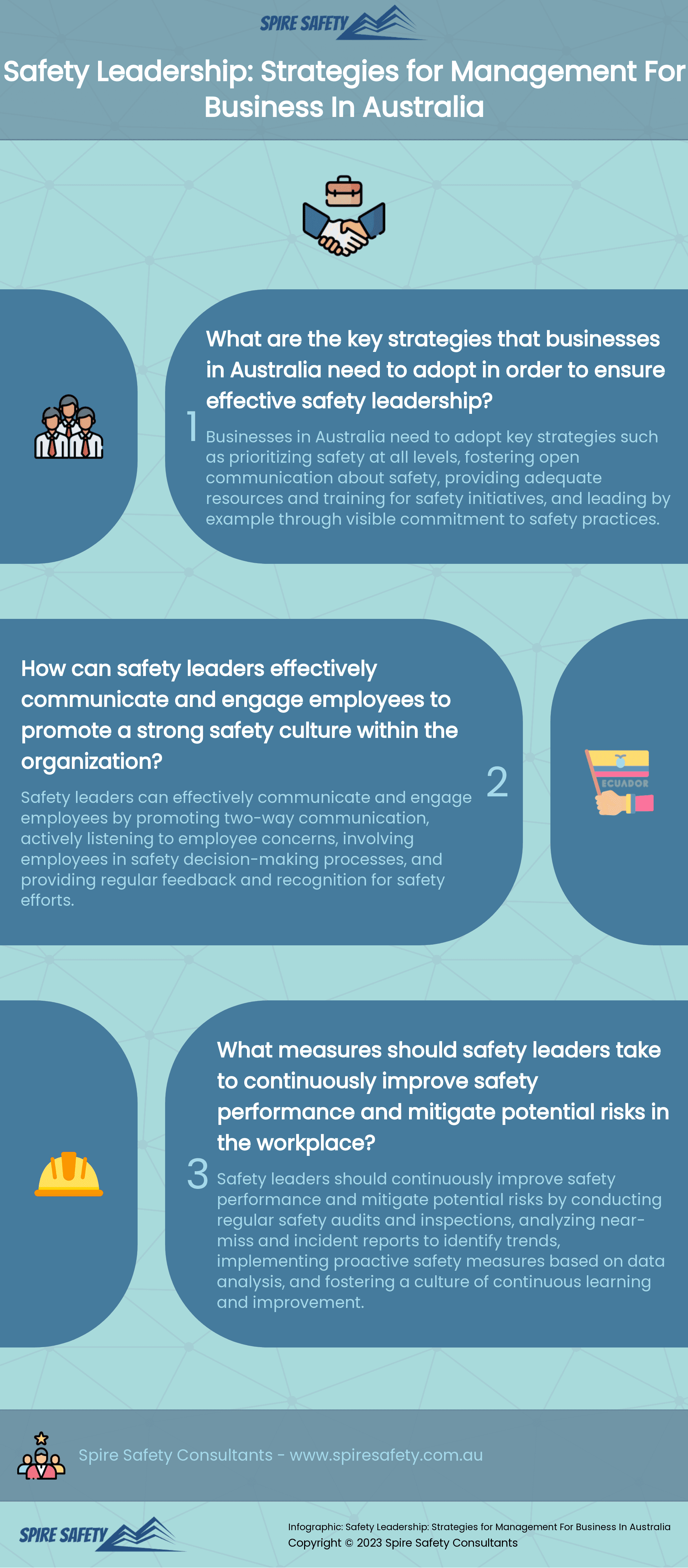
Clear, consistent, and open communication is vital. Management must communicate not only the 'how' but also the 'why' behind safety protocols. They must listen to employees' concerns and allow for a two-way conversation about safety in the workplace.
Empowering Employees: Agents of Safety
Workers who are empowered to act as agents of safety are more likely to take ownership of their work environment. Safe work practices then become the norm, not the exception.
Learning from Near Misses: Preventative Strategies
Accidents avoided are lessons learned. By reviewing near-misses, management can better understand potential risks and refine strategies accordingly.
Risk Management: Beyond the Basics
Effective safety leadership involves a proactive approach to risk management. It's not enough to respond to incidents; leadership must actively identify and mitigate risks before they become issues.
Leadership Style and Safety Performance
The attitude and actions of company leaders play a significant role in safety performance. Leaders who prioritize safety and model safe behaviour influence their teams to do the same.
Training and Development: Equipping Teams
Regular training and development initiatives ensure that team members are up-to-date with the latest safety practices and are equipped to handle emerging risks.
The Role of Feedback in Safety Assurance
An open-door policy for safety feedback encourages employees to report hazards without fear. It ensures that safety remains a dynamic and responsive process.
Engagement: The Human Aspect of Safety
Engaging with staff on a personal level increases their commitment to safety standards. Recognition programs for safe behaviour can reinforce positive practices.
Safety Leadership in Practice: Case Studies
Real-life examples showcase how some Australian businesses have developed best practices in safety leadership.
Advice & Actionable Tips
Aligning Safety with Business Goals
To genuinely integrate safety leadership, align it with broader business objectives. This unity ensures that safety is not seen as an adjunct but as a key performance indicator.
Invest in Your People
Investing in staff training and advancement fosters a positive environment where safety becomes an integral part of the company ethos.
Leading by Example
Leaders should set standards of safe behaviour. When employees see this modelled, they are more likely to follow suit.
Create Robust Reporting Systems
A streamlined process for reporting safety issues lowers the barrier for employees to contribute to a safer workplace.
Regular Review and Improvisation
Regularly review safety systems and practices to adapt to new challenges and maintain relevance.
Engagement Through Technology: The Digital Boost
Leverage the latest technologies to enhance training, track safety metrics, and streamline reporting.
Continuous Improvement: The Ongoing Journey
Safety leadership is not a box to tick — it's an ongoing process of improvement and adaptation.
The Impact of Regulation Changes
Keep abreast of changes in Australian safety regulations to ensure your business stays compliant and competitive.
Mental Health: The Invisible Safety Barrier
Recognize the importance of mental health in your safety strategy. Stress and mental illness can have a significant impact on physical safety in the workplace.
Addressing the Challenges: Overcoming Hurdles in Safety Leadership
Even the best strategies will face challenges. Learn how to anticipate and overcome these hurdles.
FAQs
How can you foster a safety-first culture in the workplace?
It starts with leadership commitment and should be reinforced through consistent practice, communication, and recognition.
What role does technology play in safety leadership?
Technology can enhance safety training, streamline reporting and compliance processes, and help track safety performance metrics effectively.
How often should safety strategies be reviewed?
Safety strategies should be reviewed regularly, at least annually, or whenever there are significant changes in operations, regulations, or after any incident.
Conclusion
Safety leadership in business management is not just a responsibility but an opportunity to exhibit real care for your team while improving operational efficiency.
It is about stewarding a culture that intrinsically values safety, an endeavour that can save lives, enhance employee morale, and position your business as a leader in industry best practices.
Article Sources & Further Reading
- Safe Work Australia Guidance on Work Health and Safety
- Australian Institute of Health and Safety
- Defining Safety Leadership In Australia
- Building a Safety Culture From The Top In Australian Businesses
- Safety Communication And Engagement In Australian Businesses.
- Accountability and Performance Measurement In Australian Businesses
Share this resource
Need Help?
Our WHS consultants can help you implement this in your business. Book a free consultation today.
Book a Consultationor call 1300 891 503