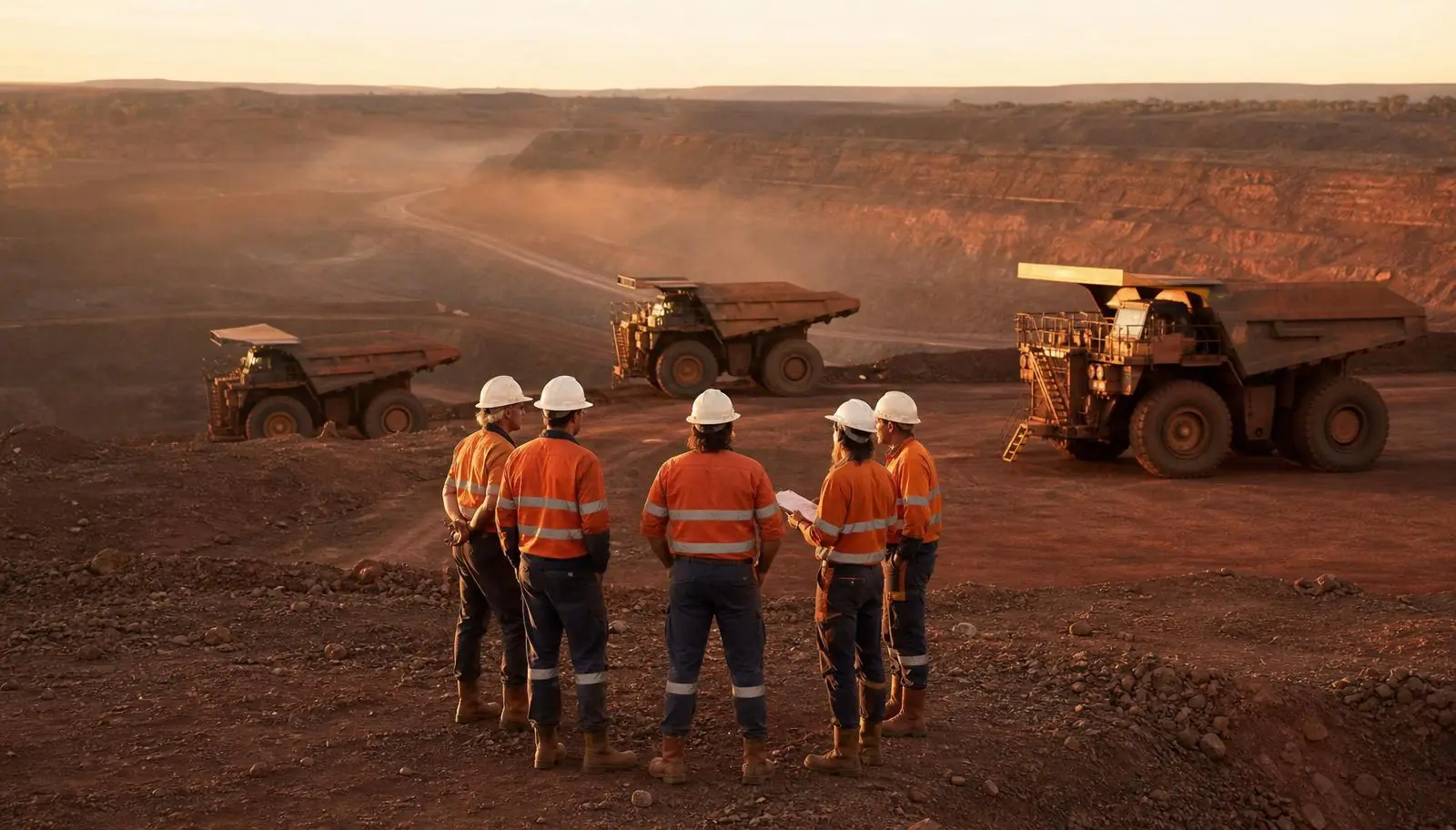
Mine Safety Management Systems Built to Your Jurisdiction's Obligations
Mining safety law is not harmonised. We build the statutory system, principal hazard plans and critical-control framework to the terminology and obligations that bind your operation.
Reviewed by Nathan Owen, Senior Safety Consultant · Updated September 2026
Overview
What a Mine Safety Management System has to do
A Mine Safety Management System (MSMS) is the documented, integrated framework a mine operator uses to identify, assess and control every foreseeable health and safety risk at the operation. In every Australian jurisdiction, an MSMS must be in place before mining operations commence — it is not a voluntary document, and it is the primary means by which a regulator judges whether a mine is being run safely.
Structurally, an MSMS brings together the mine's policies, principal hazard management plans, statutory-role responsibilities, procedures, competency records, incident data and audit evidence into one usable system. Done well, it is the framework everyone from the Site Senior Executive to a new labour-hire operator relies on to make a safe decision. Done poorly, it is a shelf full of documents nobody follows — which is exactly what an experienced inspector will detect within an hour on site.
Spire Safety builds MSMS documentation that is defensible, current, and shaped around how your operation actually runs. We work across open-cut and underground, hard-rock and coal, quarries and exploration — and we align every MSMS to ISO 45001 so an operator that later pursues certification does not have to rebuild the system.
“An MSMS is the primary evidence a regulator inspects — it has to be current, honest and used.”
What we deliver
Everything a statutory MSMS has to contain
Principal hazard management
PMHMPs / PHMPs for each principal mining hazard — ground/strata, ventilation, fire and explosion, air quality, inrush, mine roads and vehicles.
Statutory-role framework
Site Senior Executive, underground mine manager, quarry manager, ventilation officer and other statutory appointments defined and documented.
Risk management & TARPs
Risk registers, hierarchy of controls and Trigger Action Response Plans covering routine, non-routine and emergency operations.
Contractor & interaction control
Contractor management, interaction with other mines, permit-to-work systems and change-management procedures.
Competency & training
Competency frameworks, training matrices, verification of competency (VOC) and statutory ticket registers aligned to each jurisdiction.
Audit & continual improvement
Internal audit schedule, incident investigation, corrective action tracking and the three-yearly SMS review cycle required in NSW.
State-by-state framework
MSMS requirements across Australia
MSMS content requirements vary by jurisdiction. Spire builds MSMS documentation matched to the statute your operation sits under — not a generic national template.
Western Australia
WHS (Mines) Regulations 2022 · WorkSafe WA
Under regulation 622, the MSMS must identify statutory holders (Site Senior Executive and exploration manager where applicable), manage each Principal Mining Hazard through Principal Mining Hazard Management Plans (regulations 627–629), and cover risk management, worker competence, incident response, contractor control and records.
Since 30 March 2026, statutory positions must be formally appointed and notified via WorkSafe WA's Safety Regulation System (SRS), and legacy transition applications have closed.
New South Wales
WHS (Mines and Petroleum Sites) Act 2013 · Resources Regulator
The NSW framework requires a written SMS that includes a summary of the system, Principal Hazard Management Plans (PHMPs), ventilation control plans for underground operations, and documented procedures to audit and measure performance.
The SMS must be reviewed within 12 months of operations commencing and at least every three years thereafter. Workers must have access to SMS summaries and applicable PHMPs.
Queensland runs a two-Act framework. Coal operations sit under section 62 of the Coal Mining Safety and Health Act 1999; metalliferous mines and quarries sit under section 62 of the Mining and Quarrying Safety and Health Act 1999.
Both require a documented Safety and Health Management System (SHMS) with statutory-role appointments (SSE, underground mine manager, quarry manager), principal hazard control plans, and evidence-based competency management — administered by RSHQ.
South Australia
WHS (Mines) Act 1995 · SafeWork SA
South Australian mine operators must establish and implement a Safety Management System as a key work health and safety requirement, in addition to duties under the general SA WHS Act 2012 administered by SafeWork SA.
The SMS covers hazard identification, principal hazard controls, statutory-role documentation, worker training and consultation, incident response and continual improvement.
Also operating in Tasmania, the Northern Territory or Victoria? We build MSMS documentation for those jurisdictions too — talk to us about scope.
How we work
MSMS that satisfies the regulator and aligns to ISO 45001
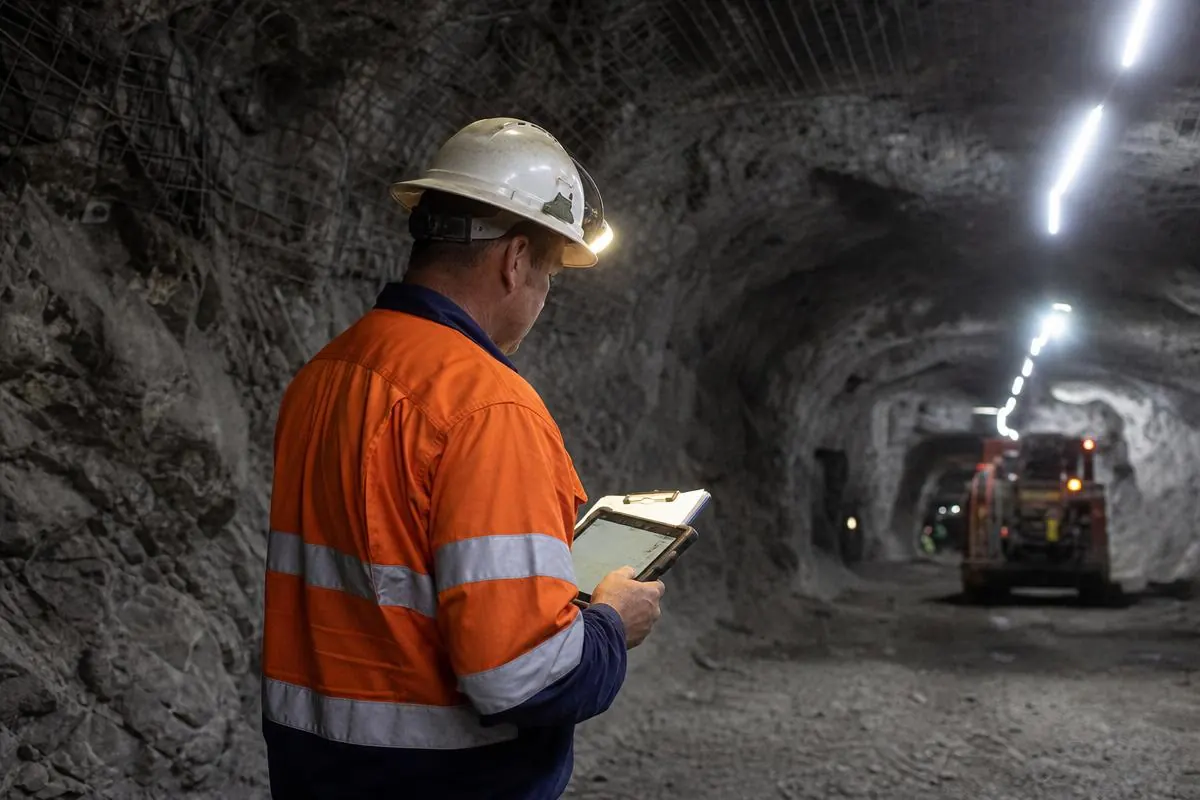
Our MSMS build starts on site. Senior consultants walk the operation, review existing procedures and registers, meet the statutory position holders, and scope exactly what the MSMS needs to contain for your jurisdiction and your operation type. We then develop the documentation — policies, PMHMPs / PHMPs, statutory-role instructions, procedures, TARPs, training matrices, audit checklists — in a structure that mirrors ISO 45001 clauses so a later certification is a smaller step, not a rebuild.
Implementation stays with your team so the system becomes something people actually use, not another binder. We support the roll-out through our WHS consulting & SWMS service, and audit the finished system through our WHS Compliance Auditing service. If you're pursuing certification, our ISO 45001 Consulting service takes the same documentation through a JAS-ANZ-accredited audit.
Safety management systems for mining — how it works
A short overview of how safety management systems are built for mining operations: principal mining hazards, statutory positions, control plans and TARPs, structured so the MSMS satisfies the regulator and aligns to ISO 45001.
Senior consultants who build mine safety management systems
Nathan Owen
Senior Safety Consultant
Masters Workplace Health and Safety · Masters Business Administration · Diploma of Vocational Education
Nathan develops principal mining hazard management plans, control plans and TARPs that satisfy the regulator and align to ISO 45001.
Jodie Rice
Safety Consultant
IMS Lead Auditor · Certificate IV WHS · Diploma Human Resources
Jodie brings lead-auditor capability to internal auditing, evidence review and corrective-action close-out across mining operations.
FAQ
Mine safety management system FAQs
01What is a Mine Safety Management System (MSMS)?
A Mine Safety Management System is the documented framework a mine operator uses to identify, assess and control all foreseeable health and safety risks at a mining operation. It integrates policies, principal hazard management plans, statutory-role responsibilities, procedures, training, records and audit — and is a legal requirement under the WHS (Mines) Regulations and equivalent state mining legislation. An MSMS must be in place before mining operations commence and reviewed regularly thereafter.
02Is an MSMS the same as ISO 45001?
No — but they overlap significantly. An MSMS is a statutory requirement under Australian mining WHS legislation and must cover principal mining hazards, statutory positions and mine-specific control plans. ISO 45001 is a voluntary international standard for occupational health and safety management. Spire builds MSMS documentation that satisfies the statutory requirement and aligns with ISO 45001 clause structure, so operators can pursue certification without a second parallel system.
03What does the WA WHS (Mines) Regulations 2022 require an MSMS to contain?
Under the WA WHS (Mines) Regulations 2022 (regulation 622) the MSMS must identify statutory holders (Site Senior Executive, exploration manager where applicable), manage each Principal Mining Hazard (PMH) via a Principal Mining Hazard Management Plan (PMHMPs, regulations 627–629), and cover risk management, worker training and competence, incident response, contractor control, communication and records. Since 30 March 2026, statutory positions must be formally appointed and notified via the WorkSafe WA Safety Regulation System (SRS), and legacy transition applications have closed.
04What does the NSW WHS (Mines and Petroleum Sites) Act 2013 require?
The NSW framework requires a written safety management system that includes a summary of the system, Principal Hazard Management Plans (PHMPs) for each principal hazard, ventilation control plans for underground mines, and procedures to audit and measure performance against standards. The SMS must be reviewed within 12 months of operations commencing and at least every three years afterwards. It is administered by the NSW Resources Regulator.
05How does Queensland's Coal Mining Safety and Health Act interact with an MSMS?
In Queensland, coal operations must have a Safety and Health Management System under section 62 of the Coal Mining Safety and Health Act 1999, and metalliferous and quarry operations must have one under section 62 of the Mining and Quarrying Safety and Health Act 1999. Both are administered by Resources Safety & Health Queensland (RSHQ) and require statutory-role appointments (site senior executive, underground mine manager, quarry manager), principal hazard control plans, and evidence-based competency management.
06Who is responsible for the MSMS on site?
Ultimately the mine operator (PCBU) is responsible. Day-to-day accountability sits with statutory positions defined in each jurisdiction — the Site Senior Executive (SSE) in QLD and WA, the Mine Operator in NSW, the Registered Manager in SA, and specialist statutory roles such as underground mine manager, ventilation officer and quarry manager where the operation warrants them. Spire's MSMS documentation defines these roles clearly so accountability is unambiguous during a regulator inspection.
07Do you cover quarries, exploration and petroleum sites as well?
Yes. Our MSMS work covers open-cut and underground mining, hard-rock and coal, quarries and extractive industry sites, and exploration operations. In NSW and WA we also work with petroleum sites where they fall under the mines/petroleum framework. Each operation gets an MSMS matched to its scope — a small quarry does not need the same documentation footprint as a coal longwall.
08How long does an MSMS build take?
For a single-site operation of moderate complexity, typically 10–16 weeks from scoping to a full documented system ready for regulator review — including PHMP/PMHMP development, statutory-role documentation, procedures, registers and audit checklists. Multi-site or greenfield operations take longer and are scoped up front so the operator knows the cost and timeline before work begins.
Tell us your jurisdiction, operation type (open-cut, underground, quarry or exploration) and what prompted the work. A senior consultant will confirm the statutory requirements and a defined scope.