
Emergency Plans for Australian Businesses
For Australian businesses, being prepared for the unexpected is not just a good idea – it's a necessity. Whether it's a natural disaster, a health crisis, or a security threat, having a robust emergency plan in place can make all the difference.

For Australian businesses, being prepared for the unexpected is not just a good idea – it is a necessity. Whether it is a natural disaster, a health crisis, or a security threat, having a robust emergency plan in place can make all the difference.
Safe Work Australia provide a free Emergency plan template.

Key Takeaways:
- PCBUs (companies or business owners) have a legal duty to prepare and implement an emergency plan.
- Section 43 of the harmonised WHS Regulations outlines the requirements for emergency plans.
- Periodic emergency drills are vital to ensure emergency plans are effective.
Legislative Requirements (WHS Regulations Section 43)
Under the harmonised WHS Regulations, PCBUs have a legal duty to prepare, maintain and implement an emergency plan that covers the below.
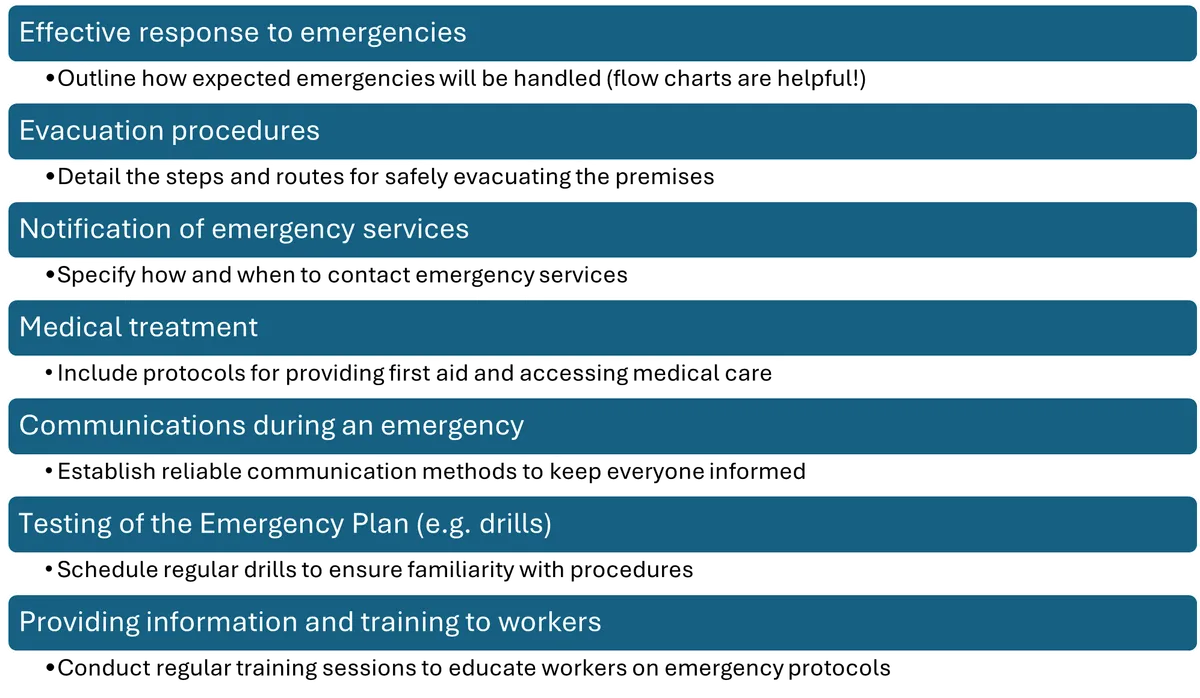
S(43) of the Regulations state that the Emergency Plan must ensure:
- Effective response to emergencies
- Evacuation procedures
- Notification of emergency services
- Medical treatment
- Communications during an emergency
- Testing of the Emergency Plan (e.g. drills)
- Providing information and training to workers
To check whether these regulations in apply in your jurisdiction, check with your local regulator:
- QLD – Work health and safety laws
- NSW – Legislation
- ACT – Acts and regulations
- SA – Legislation
- WA – Work health and safety legislation
- NT – The legislative framework
- TAS – Acts and Regulations
- VIC – OHS Act and regulations
Developing an Emergency Response Plan
Identifying Potential Emergencies
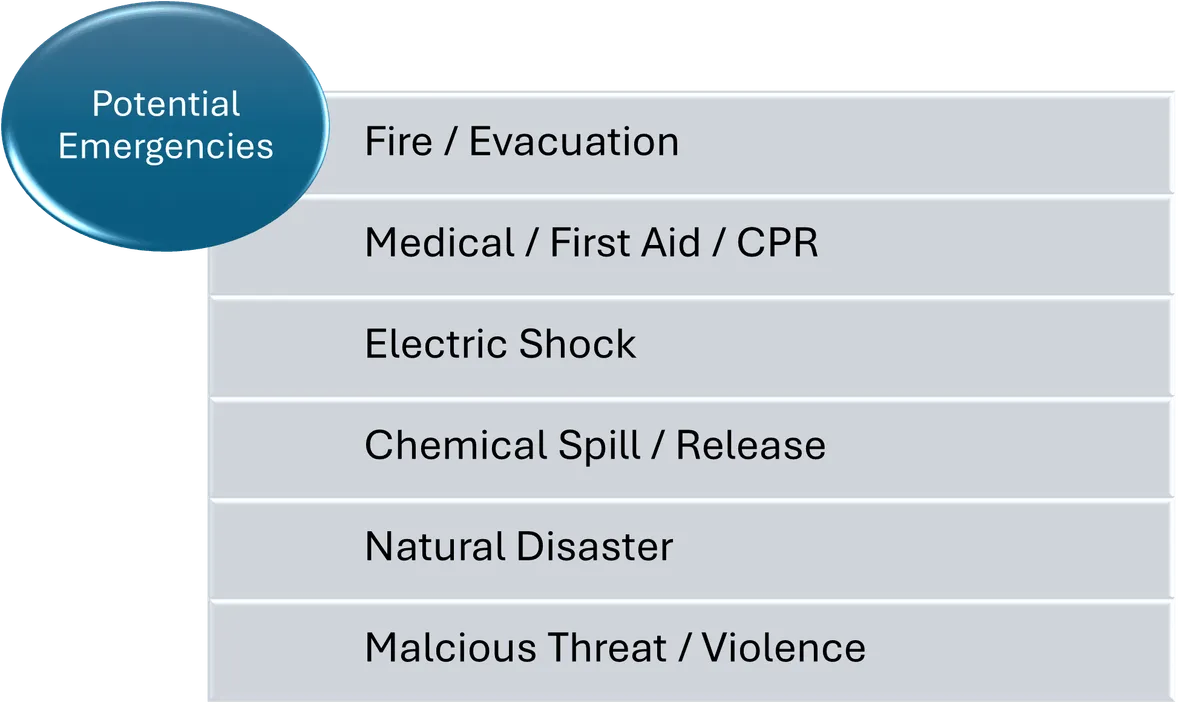
The first step is to identify the potential emergencies that may effect the business. Some emergencies are universally applicable, for example fire and evacuation. However, other emergencies may only apply to certain businesses, e.g. a chemical spill.
Develop Emergency Plan Procedures
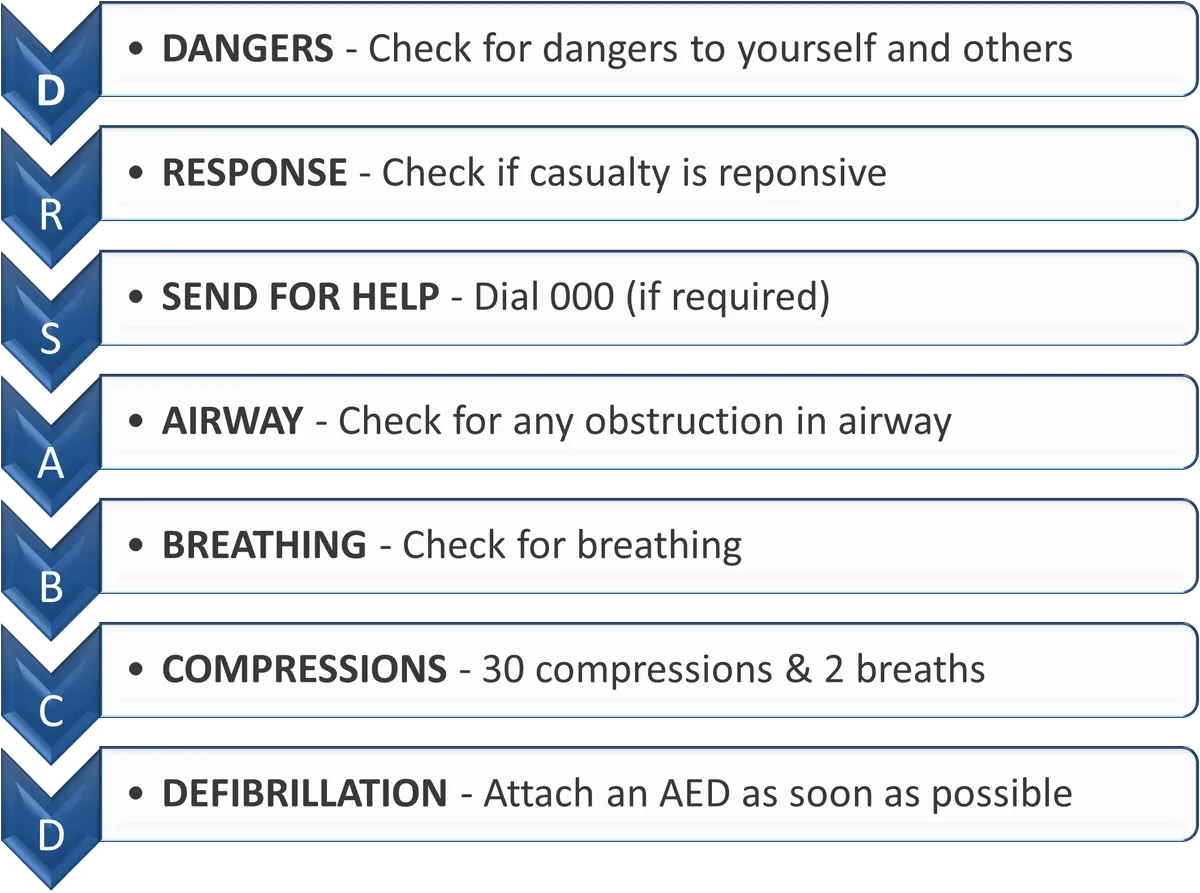
Create detailed steps for different types of emergencies and ensure these procedures are clear and accessible to all employees. An example of a medical emergency procedure is outlined below (Drs ABCD).
Outline Responsibilities and Communication Protocols
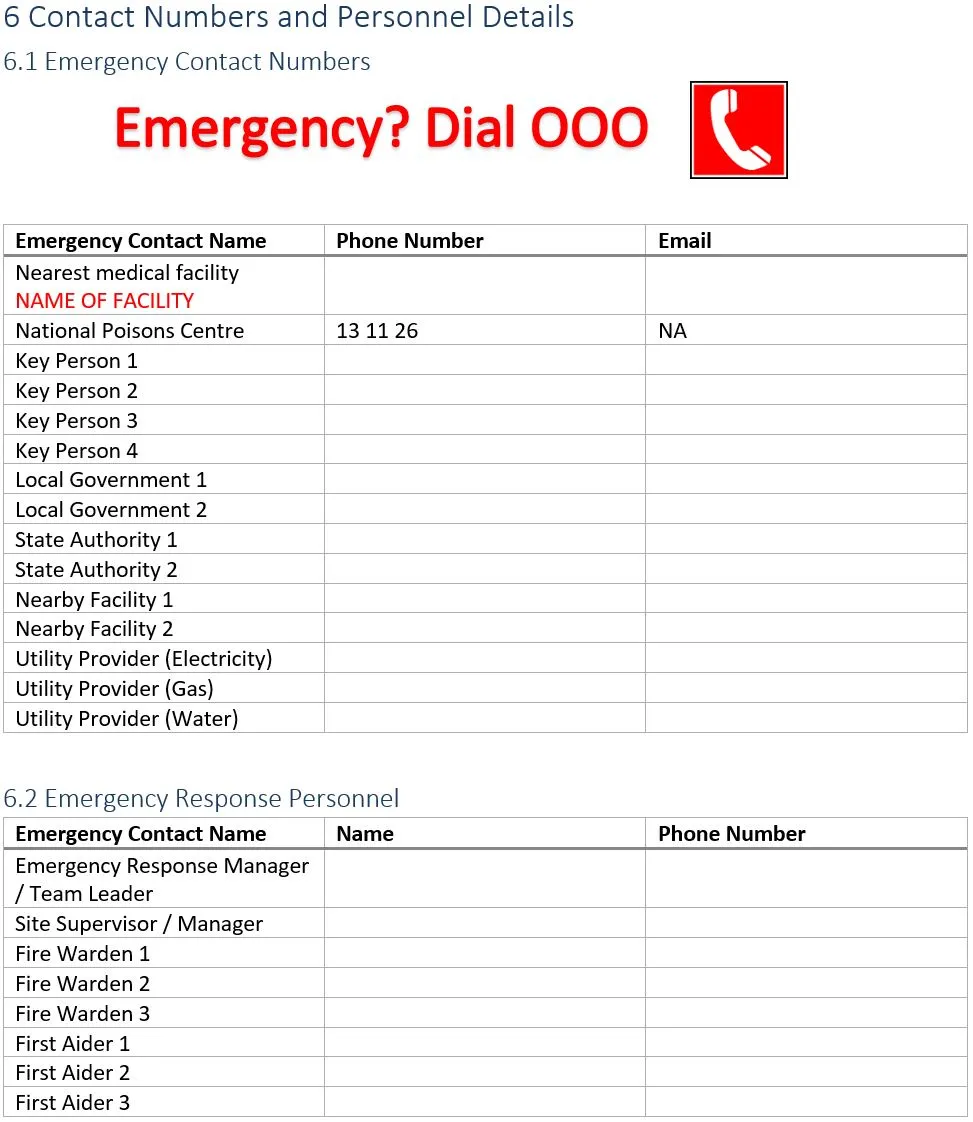
Assign specific roles to staff members for emergency situations and establish clear communication channels for effective coordination. Some examples are:
- First aider/s – Provide immediate medical assistance to injured individuals until professional help arrives.
- Fire warden/s – Guide employees to designated evacuation routes and assembly points, ensuring everyone exits safely.
- Emergency coordinator/s – Oversees the entire emergency response, ensures procedures are followed, and coordinates with external emergency services.
An emergency plan contact list is also a good idea, see below.
Identify Equipment Requirements
Most workplaces will need fire extinguishers and first aid kits as a minimum. Other types of emergency equipment are outlined below.
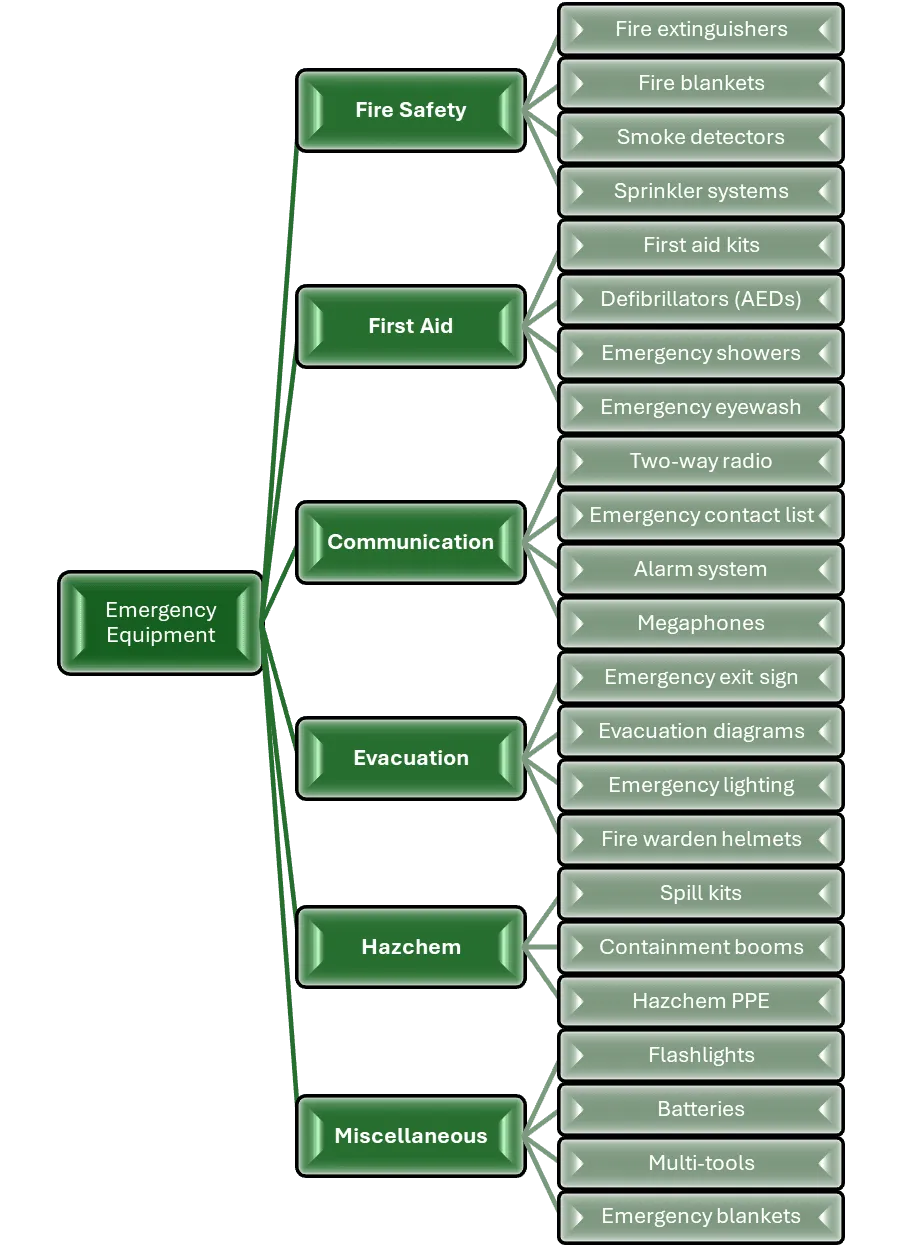
Outline Training and Drill Requirements
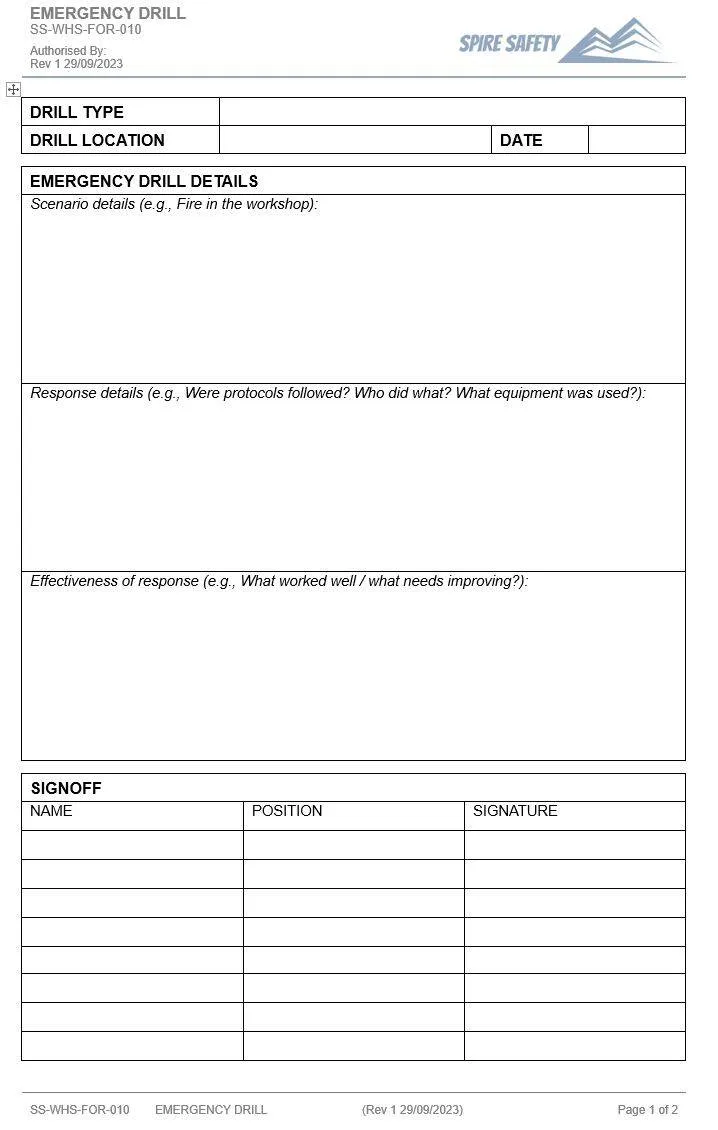
Ensure periodic training and emergency drills are conducted. This includes ensuring new staff are informed of the emergency plan procedures as part of their onboarding or induction. An example emergency plan drill (or emergency drill) is below.
Evacuation Diagrams
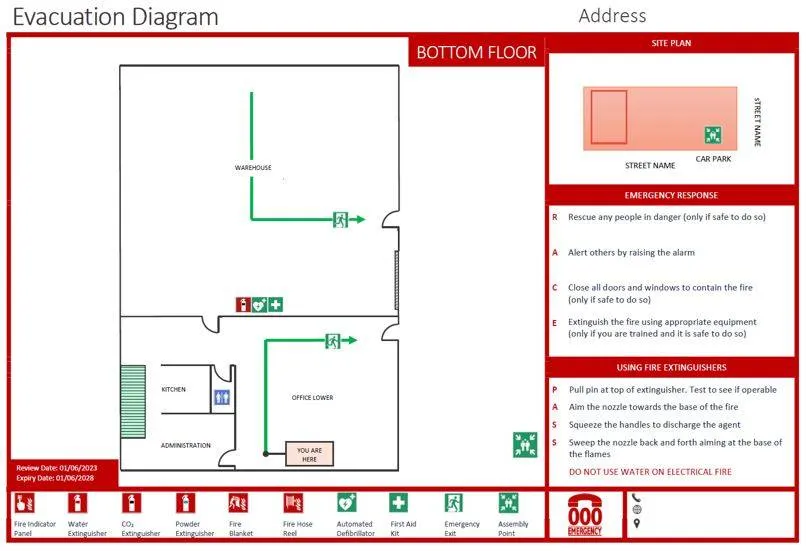
Most emergency plans should include the provision of Evacuation Diagrams. An example is below.
FAQ
What is a workplace emergency plan?
A workplace emergency plan is a comprehensive document that outlines procedures and responsibilities to ensure the safety of employees during various types of emergencies, such as fires, natural disasters, or medical incidents.
What types of emergencies should a workplace emergency plan cover?
The plan should cover a wide range of emergencies, including fires, floods, chemical spills, medical emergencies, power outages, and security threats.
How often should emergency drills be held?
Generally, emergency drills should be held at least annually, however this is largely dependent on the workplace and the type and scope of expected emergencies.
How often should the emergency plan be reviewed and updated?
The emergency plan should be reviewed and updated at least annually or whenever there are significant changes in the workplace, such as new equipment, processes, or personnel.
What should be done after an emergency occurs?
Conduct a debrief to evaluate the response, identify areas for improvement, provide support to affected employees, and update the emergency plan based on lessons learned.
Did You Know?
Following the tragic Triangle Shirtwaist Factory fire in 1911, which claimed the lives of 146 workers in New York City, significant reforms were introduced to improve workplace safety. This disaster highlighted the critical need for organized evacuation procedures and emergency preparedness, leading to the development of modern emergency response plans that we rely on today.
Article Sources and Further Reading
- Model Code of Practice: Managing the work environment and facilities – Safe Work Australia
- Emergency preparation for transport and logistics businesses – Business Queensland
Share this resource
Need Help?
Our WHS consultants can help you implement this in your business. Book a free consultation today.
Book a Consultationor call 1300 156 382