
Crane and Lifting Operations Safety Toolbox Talk Template
Download our Crane and Lifting Operations Safety Toolbox Talk Template. A free, customisable resource to enhance WHS in your workplace. Get started today!
Crane and Lifting Operations Safety Toolbox Talk Template
DOCX • 137 KB + PDF
Updated Oct 2026
No signup required
Purpose of this document
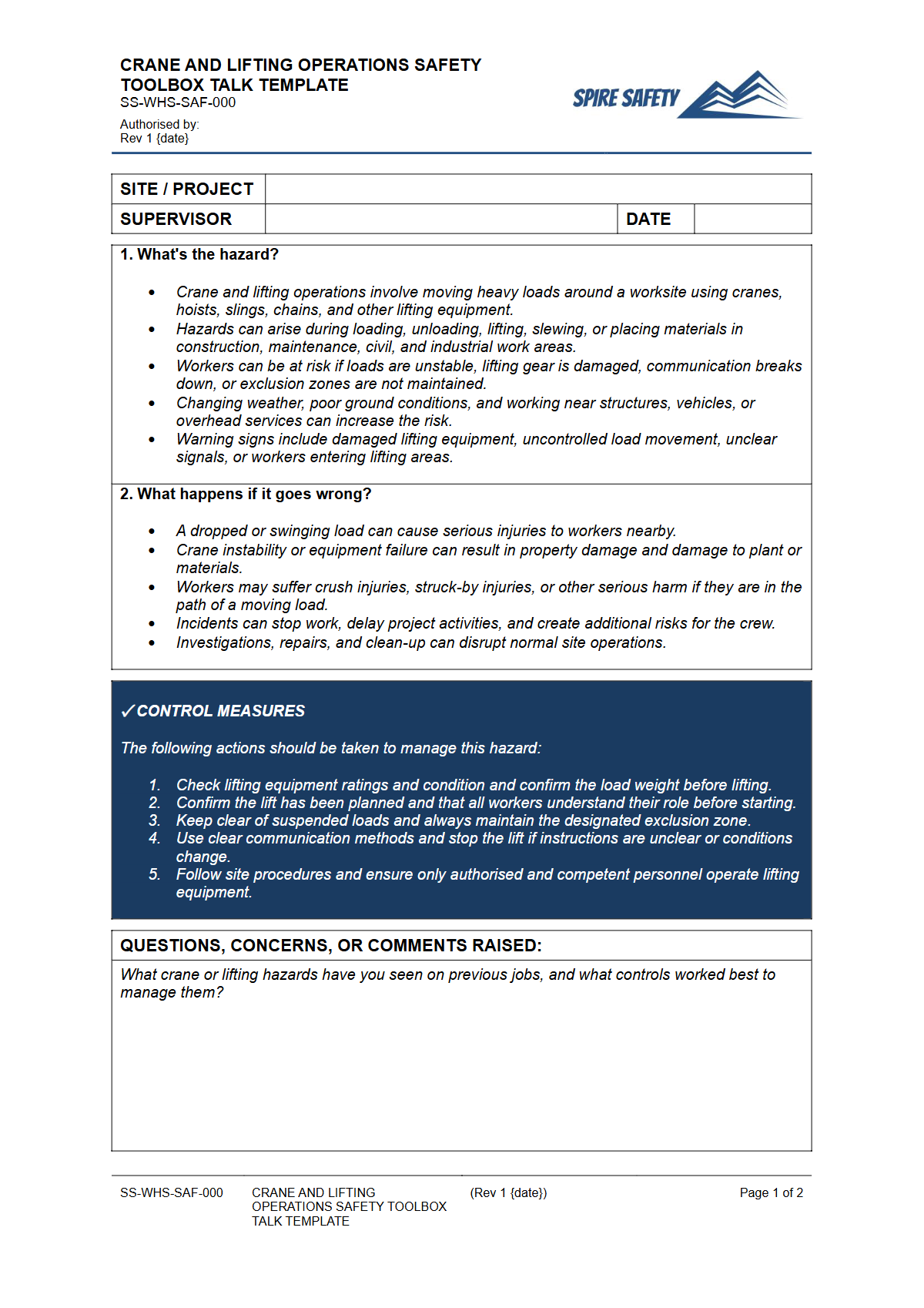
This Crane and Lifting Operations Safety Toolbox Talk Template is designed to facilitate crucial safety discussions within your workplace. It serves as a structured guide for supervisors and team leaders to address the inherent risks associated with crane use and lifting operations, promoting a proactive safety culture. Regular toolbox talks are an effective way to reinforce safe work practices, discuss recent incidents or near misses, and ensure all workers are aware of their responsibilities when operating or working near lifting equipment. Utilisation of this template helps organisations meet their WHS obligations by consistently communicating vital safety information and fostering a shared understanding of best practices in lifting operations.
Video walkthrough
How to use this Toolbox Talk Topic
Our Crane and Lifting Operations Safety Toolbox Talk Template is provided as both a DOCX and PDF download, offering flexibility for your needs. The DOCX version is fully editable, allowing you to tailor the content specifically to the plant, procedures, and hazards present at your worksite. This template must be customised to your workplace’s specific operations, equipment, and WHS management systems before use. We recommend adding details such as specific crane models, site-specific lifting plans, emergency procedures, and contact information relevant to your organisation. The PDF version is ideal for quick reference or distribution once customisation is complete. Integrate these talks into your regular safety meetings to maintain continuity and reinforce key messages. Document attendance and any points raised to demonstrate your commitment to ongoing WHS training.
When to use it
This template should be used regularly, ideally as part of a scheduled safety programme, particularly before shifts involving lifting operations, at the commencement of new projects, or when new equipment is introduced. It is also highly effective following any incident, near miss, or observation related to crane and lifting work, allowing for immediate discussion and reinforcement of safe behaviours. Furthermore, consider its use when new workers join the team or when existing workers undertake new roles involving lifting tasks. Consistent application ensures that safety remains front of mind for all personnel involved in or affected by crane and lifting activities.
Who should use it
This Crane and Lifting Operations Safety Toolbox Talk Template is primarily intended for supervisors, team leaders, and WHS officers responsible for overseeing or conducting work involving cranes and lifting equipment. It is designed to be delivered to all workers who operate, dog, rig, spot, or work in the vicinity of lifting operations. This includes crane operators, doggers, riggers, maintenance personnel, site managers, and any other staff whose activities could impact or be impacted by lifting tasks. The template provides a foundational structure for anyone tasked with communicating critical safety information to their team, supporting the overall effectiveness of your WHS management systems and ensuring a safe working environment. For more valuable resources like this, explore our free WHS resources library.
Common mistakes
Common mistakes to avoid
- Failing to conduct a pre-lift meeting or brief before each lifting operation.
- Not verifying worker competency and certification for specific lifting tasks.
- Ignoring weather conditions (e.g., wind) that can impact crane stability and load control.
- Using uncertified or damaged lifting equipment and accessories.
Legal references
Legal considerations
The following legal requirements may be relevant to this type of work.
- Work Health and Safety Act (Harmonised) — Provides the primary duties for protecting workers and other people from work health and safety risks.
- Work Health and Safety Regulations (Harmonised) — Sets out requirements supporting the management of workplace hazards and risks.
The following codes may be relevant to this type of work.
- Managing WHS Risks Code of Practice — Provides practical guidance on identifying hazards, assessing risks and applying effective controls.
- Work Health and Safety Consultation, Cooperation and Coordination Code of Practice — Provides practical guidance on consulting workers and coordinating with other duty holders.
- Managing the Work Environment and Facilities Code of Practice — Provides practical guidance on safe work environments, workplace facilities and related controls.
Did you know
Impact of poor planning
Over 50% of crane-related incidents are attributed to inadequate planning or communication prior to the lift, highlighting the importance of thorough preparation and effective toolbox talks.
FAQ
Frequently asked questions
01What is a toolbox talk for crane and lifting operations?
02How often should crane safety toolbox talks be conducted?
03Who needs to attend a crane and lifting operations toolbox talk?
04Can this template be used for various types of cranes?
Share this resource
Crane and Lifting Operations Safety Toolbox Talk Template
Browse Categories
How To Use It
- 1Download and open in Word or PDF.
- 2Replace the placeholders with your business details.
- 3Get it reviewed by a WHS specialist before rollout.
Need it customised?
Our WHS consultants can adapt this template to your site, run a gap analysis, or audit what you already have in place.
Book a Free Consultation WHS consulting servicesor call 1300 156 382