
Distraction and Inattention Toolbox Talk Template
Download our free Distraction and Inattention Toolbox Talk template. A structured starting point for discussing workplace focus and safety with your team.
Distraction and Inattention Toolbox Talk Template
DOCX • 142 KB + PDF
Updated Oct 2026
No signup required
Purpose of this document
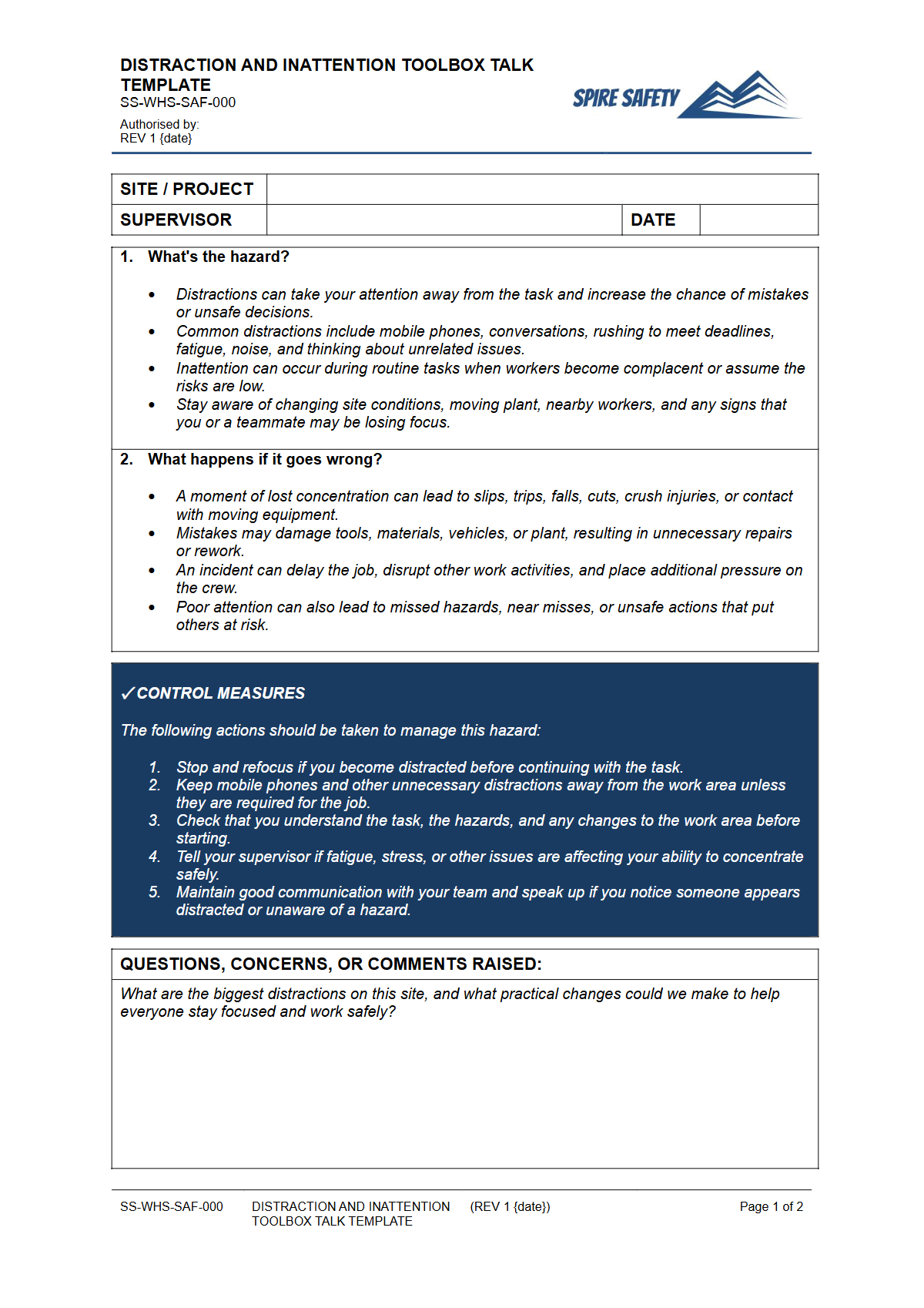
This Distraction and Inattention Toolbox Talk Template is designed to facilitate discussions within your team about the prevalent risks associated with distraction and inattention in the workplace. It provides a structured format to address how lapses in concentration can lead to incidents, injuries, and reduced productivity.
By using this template, organisations can proactively raise awareness, encourage open dialogue, and collaboratively identify practical strategies to minimise these risks. It aims to foster a culture where workers recognise the importance of focus and are empowered to manage distractions effectively, ultimately contributing to a safer and more efficient work environment.
This resource acts as a foundational tool for promoting better focus and hazard recognition, aligning with Australian WHS practice regarding worker engagement and risk management. It encourages teams to think critically about their own work habits and the environmental factors that might contribute to distraction.
Video walkthrough
How to use this Toolbox Talk
This Distraction and Inattention Toolbox Talk template is provided in both DOCX and PDF formats for your convenience. The DOCX version is fully editable, allowing you to tailor the content precisely to your workplace's specific operations, hazards, and team dynamics.
It is crucial that this template is customised to your workplace; we cannot stress this enough. Generic advice can be insufficient; your specific context dictates the most effective controls and discussion points. Before delivering the toolbox talk, review the template thoroughly and add specific examples relevant to your industry, site, or recent incidents.
Use the provided sections as prompts to guide a productive discussion rather than just reading through them. Encourage two-way communication, asking questions and soliciting input from your team members.
Document attendance and any actions or suggestions raised during the talk for your records. For guidance on integrating such tools, consider our WHS management systems consulting services.
When to use it
This Toolbox Talk is particularly valuable:
- Before commencing tasks known to require high levels of concentration or when there’s a risk of complacency.
- As part of induction for new workers, highlighting the importance of focus from the outset.
- Following any near-misses or incidents where distraction or inattention was identified as a contributing factor.
- During periods of high workload, tight deadlines, or significant change, which can increase stress and reduce focus.
- As a regular agenda item in team meetings to reinforce safe work practices.
- When reviewing work procedures or introducing new equipment where unfamiliarity could lead to inattention.
Who should use it
This Distraction and Inattention Toolbox Talk template is suitable for:
- Supervisors and team leaders responsible for conducting regular safety briefings.
- Health and Safety Representatives (HSRs) looking to promote safety awareness among their work groups.
- WHS managers and officers seeking to provide practical resources for frontline leaders.
- Site managers responsible for overall site safety culture.
- Any individual responsible for delivering safety information and fostering a proactive safety culture within their organisation.
Organisations committed to continuous improvement in WHS often find great value in consistently using resources like this. For further support in establishing robust safety frameworks, explore Spire Safety's WHS consulting options.
Common mistakes
Common mistakes to avoid
- Not customising the template to specific workplace hazards or roles.
- Delivering the talk as a lecture rather than an interactive discussion.
- Failing to document attendance and any actions arising from the talk.
- Not following up on actions or suggestions raised by workers during the talk.
Legal references
Legal considerations
The following legal requirements may be relevant to this type of work.
- Work Health and Safety Act (Harmonised) — Provides the primary duties for protecting workers and other people from work health and safety risks.
- Work Health and Safety Regulations (Harmonised) — Sets out requirements supporting the management of workplace hazards and risks.
The following codes may be relevant to this type of work.
- Managing WHS Risks Code of Practice — Provides practical guidance on identifying hazards, assessing risks and applying effective controls.
- Work Health and Safety Consultation, Cooperation and Coordination Code of Practice — Provides practical guidance on consulting workers and coordinating with other duty holders.
- Managing the Work Environment and Facilities Code of Practice — Provides practical guidance on safe work environments, workplace facilities and related controls.
Did you know
Impact on Productivity
Beyond safety, research indicates that workers recovering from distractions can take up to 23 minutes to return to their original task, significantly impacting productivity.
Common Distractions
Common workplace distractions include mobile phones, colleague interruptions, email notifications, and personal worries, all of which demand conscious management to mitigate risk.
FAQ
Frequently asked questions
01What is the primary goal of a Distraction and Inattention Toolbox Talk?
02How often should we hold Toolbox Talks on topics like distraction?
03Can this template be used for all industries?
04What is the difference between distraction and inattention?
Share this resource
Distraction and Inattention Toolbox Talk Template
Browse Categories
How To Use It
- 1Download and open in Word or PDF.
- 2Replace the placeholders with your business details.
- 3Get it reviewed by a WHS specialist before rollout.
Need it customised?
Our WHS consultants can adapt this template to your site, run a gap analysis, or audit what you already have in place.
Book a Free Consultation WHS consulting servicesor call 1300 156 382