
Food Safety Awareness Toolbox Talk Template
Improve workplace hygiene with our Food Safety Awareness Toolbox Talk Template. A structured starting point for critical WHS discussions. Download today!
Food Safety Awareness Toolbox Talk Template
DOCX • 142 KB + PDF
Updated Oct 2026
No signup required
Purpose of this document
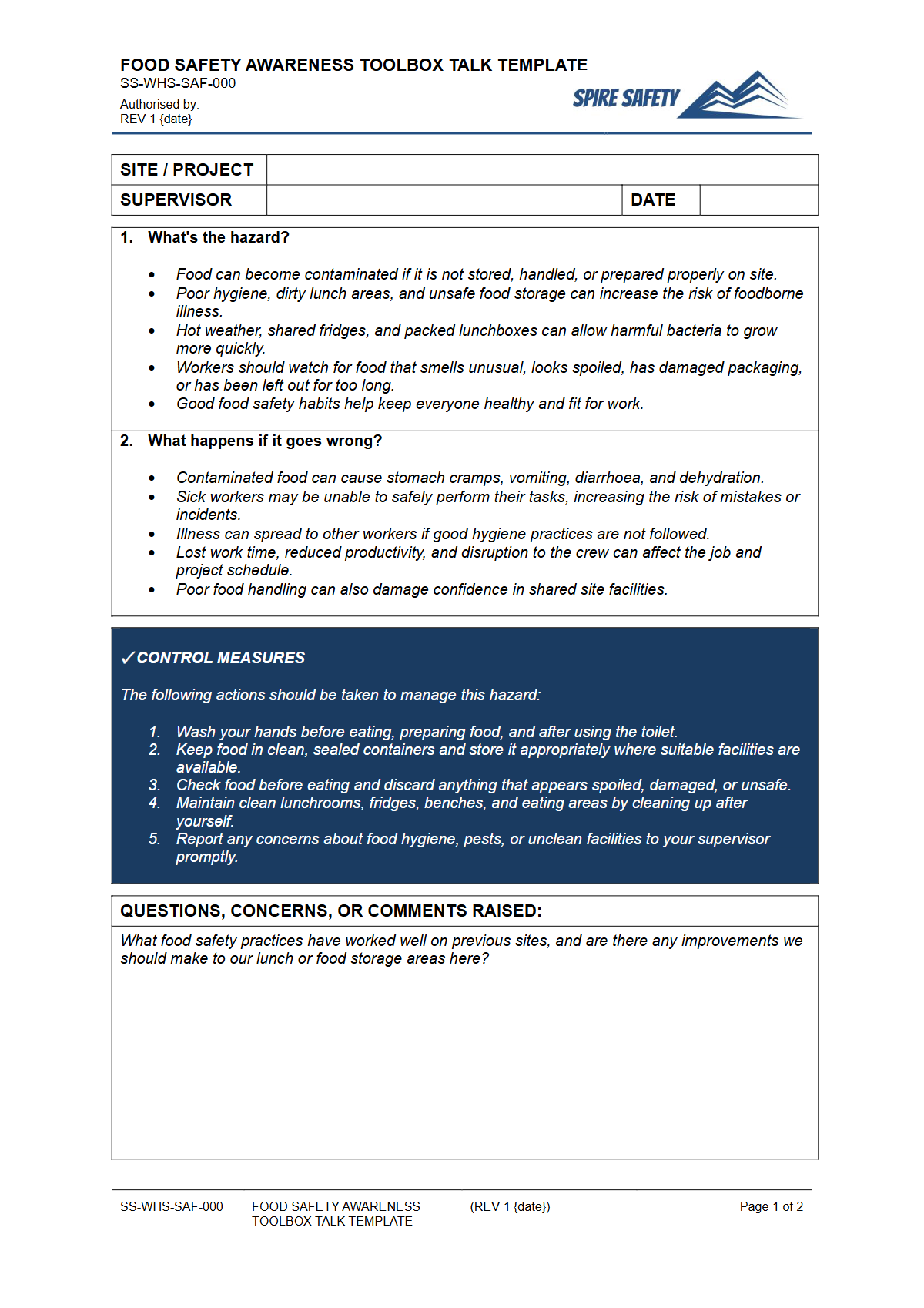
This Food Safety Awareness Toolbox Talk Template provides a structured framework for conducting essential discussions within your workplace. Its primary purpose is to enhance understanding and promote best practices related to food safety, hygiene, and the prevention of foodborne illness.
Effective food safety awareness is crucial in any workplace where food is prepared, stored, or consumed, recognising that poor practices can lead to health risks for workers and visitors.
The template is designed to facilitate consistent communication on key food safety principles, from proper food handling to recognising potential hazards. By regularly discussing these topics, organisations can foster a culture of vigilance and minimise risks associated with food contamination.
It serves as a practical tool for supervisors and team leaders to deliver clear, concise, and engaging safety messages.
Video walkthrough
How to use this Toolbox Talk
Our Food Safety Awareness Toolbox Talk Template is provided as a downloadable resource to assist you in conducting effective team discussions. Simply download the DOCX or PDF file.
The template outlines discussion points, suggested activities, and a space to record attendees and actions. Before each session, review the content and consider how it applies directly to your specific work environment and the types of food-related activities undertaken.
It is crucial to note that this template is a general guide and must be customised to your workplace’s specific food safety hazards, control measures, and operational procedures. Add site-specific examples, discuss real-world scenarios relevant to your team, and incorporate photos or demonstrations where appropriate. Encourage open dialogue, questions, and worker participation to ensure the information is understood and practical.
Following the toolbox talk, file the completed record as part of your WHS documentation, aligning with good WHS management systems practice. For further assistance in tailoring WHS documentation, consider our WHS consulting services.
When to use it
This Food Safety Awareness Toolbox Talk Template should be used regularly, especially in workplaces where food is handled, prepared, or consumed. It is ideal for:
- Inductions for new staff who will be involved in food handling.
- Refresher training for all staff, particularly after incidents or near misses related to food safety.
- Following changes to workplace procedures, equipment, or ingredients that impact food safety practices.
- As part of routine safety meetings to maintain a high level of awareness and reinforce safe behaviours.
- When introducing new food items or catering arrangements to the workplace.
Who should use it
This template is primarily intended for:
- Supervisors, team leaders, and managers responsible for the health and safety of their teams.
- WHS officers and safety committees who conduct regular safety briefings.
- Employees with specific responsibilities for food preparation, storage, or communal kitchen areas.
- Anyone facilitating discussions on workplace hygiene and food safety protocols.
Common mistakes
Common mistakes to avoid
- Not washing hands thoroughly before and after handling food.
- Storing raw and cooked foods together, leading to cross-contamination.
- Ignoring use-by dates or consuming visibly spoiled food.
- Not cleaning and sanitising food preparation surfaces and equipment regularly.
Legal references
Legal considerations
The following legal requirements may be relevant to this type of work.
- Work Health and Safety Act (Harmonised) — Provides the primary duties for protecting workers and other people from work health and safety risks.
- Work Health and Safety Regulations (Harmonised) — Sets out requirements supporting the management of workplace hazards and risks.
The following codes may be relevant to this type of work.
- Managing WHS Risks Code of Practice — Provides practical guidance on identifying hazards, assessing risks and applying effective controls.
- Work Health and Safety Consultation, Cooperation and Coordination Code of Practice — Provides practical guidance on consulting workers and coordinating with other duty holders.
- Managing the Work Environment and Facilities Code of Practice — Provides practical guidance on safe work environments, workplace facilities and related controls.
Did you know
Temperature Danger Zone
Did you know that potentially hazardous foods should be kept out of the temperature danger zone (5°C to 60°C) as much as possible? This range allows bacteria to multiply rapidly, increasing the risk of foodborne illness.
FAQ
Frequently asked questions
01What is a Toolbox Talk?
02Why is food safety awareness important in the workplace?
03Can this template be used for commercial kitchens?
04How often should food safety Toolbox Talks be conducted?
Share this resource
Food Safety Awareness Toolbox Talk Template
Browse Categories
How To Use It
- 1Download and open in Word or PDF.
- 2Replace the placeholders with your business details.
- 3Get it reviewed by a WHS specialist before rollout.
Need it customised?
Our WHS consultants can adapt this template to your site, run a gap analysis, or audit what you already have in place.
Book a Free Consultation WHS consulting servicesor call 1300 156 382