
Free Pre-Start Checklist (Meat Slicer) Template
Download our free Pre-Start Checklist for Meat Slicers. This DOCX & PDF template helps formalise equipment safety checks and manage risks.
Free Pre-Start Checklist (Meat Slicer) Template
DOCX • 125 KB + PDF
Updated Oct 2026
No signup required
Purpose of the Free Pre-Start Checklist (Meat Slicer) Template
Using a commercial meat slicer involves significant risks, including severe lacerations and amputations. A systematic inspection before use is a critical control measure to ensure the machine is safe to operate.
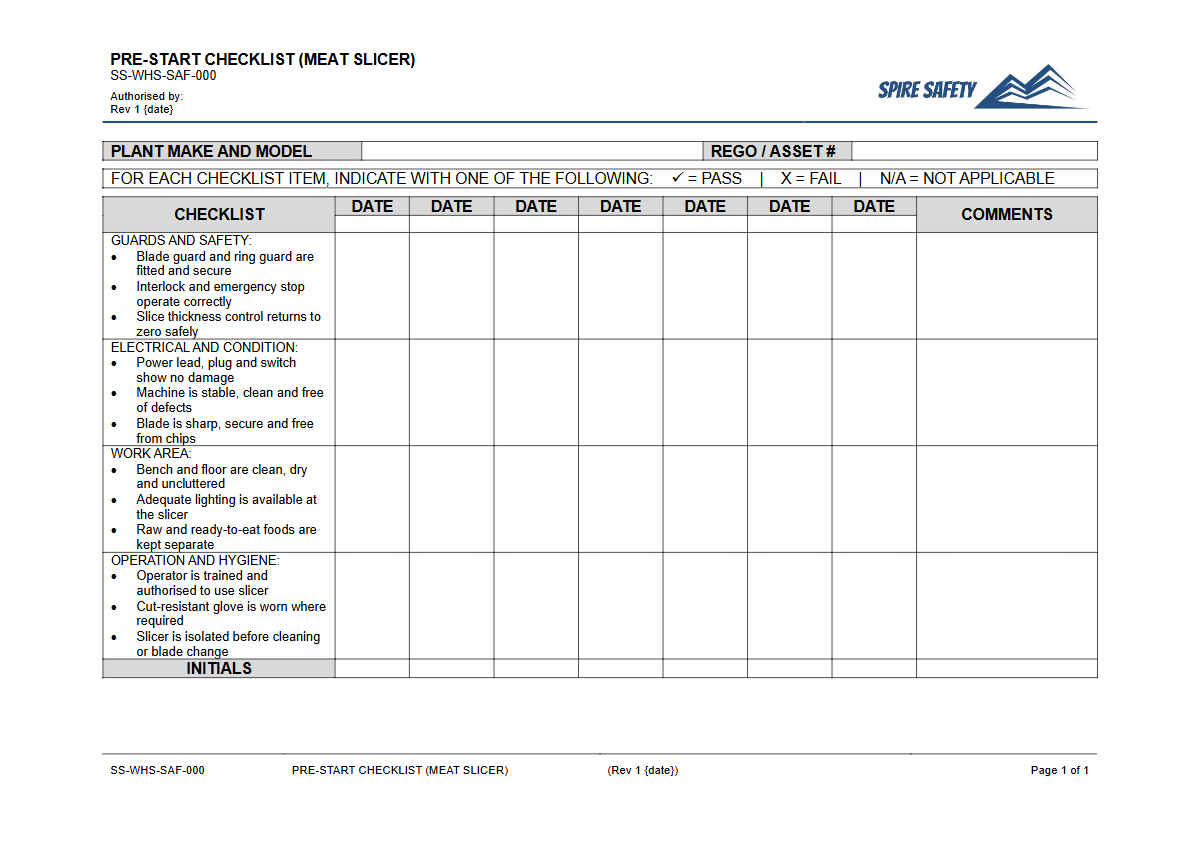
This Free Pre-Start Checklist (Meat Slicer) Template provides a structured format for operators to verify key safety components and functions, helping your organisation meet its duty of care. By formalising this process, you create a consistent record that hazards have been identified and managed before work commences.
Implementing regular checks helps prevent incidents by catching potential issues like a loose blade guard, a malfunctioning emergency stop, or a damaged power cord. It also reinforces safe work practices and demonstrates a commitment to safety within your team.
Integrating such checklists is a fundamental part of effective WHS management systems, ensuring that plant and equipment are maintained in a safe condition.
Video walkthrough
How to use the Free Pre-Start Checklist (Meat Slicer) Template
This template is a starting point designed to be adapted to your specific equipment and workplace. Follow these steps for effective implementation:
Customise the Checklist
Download the DOCX file and review its contents against the make and model of the meat slicer(s) in use at your site. Add, remove, or modify checklist items to align with the manufacturer’s instructions and any site-specific risks you have identified through risk assessments.
Important: This is a template, not a finished document. We cannot guarantee it covers every hazard unique to your workplace.
You must customise it to reflect your specific equipment, procedures, and operational environment to ensure it is fit for purpose.
Train Your Workers
Ensure all operators are thoroughly trained not only on how to use the meat slicer safely but also on how to complete the pre-start checklist correctly. Training should cover what each checkpoint means, how to identify a fault, and the exact procedure for reporting issues and taking faulty equipment out of service.
If you require assistance developing these procedures, our WHS consulting services can provide expert guidance.
Implement and Monitor
Integrate the checklist into your daily operational routine. Store completed checklists in a designated location for record-keeping and review.
Supervisors should periodically monitor the process to ensure checks are being completed diligently and not just treated as a paper-filling exercise.
When to use it
A meat slicer pre-start check should be conducted at the beginning of each shift or before the first use of the day. If multiple operators use the same machine during a shift, a handover check is also good practice to ensure the equipment remains in a safe condition.
These routine inspections are a core component of proactive equipment safety and are often a key topic in safety meetings. You can use our Pre-Start Checks and Plant Maintenance Toolbox Talk to brief your team on the importance of this process.
The checklist should also be used after cleaning and maintenance have been performed to verify that all guards have been replaced correctly and the machine is safe to return to service. This helps prevent common incidents where interlocks are inadvertently left disengaged.
For daily team briefings on safety tasks, a free Pre-Start Meeting Template can help structure communication effectively.
Who should use it
The pre-start checklist should be completed by the person operating the meat slicer. This must be a worker who has been deemed competent and has received specific training on the machine’s operation, cleaning, and safety features.
Placing this responsibility on the operator empowers them to take ownership of their safety.
Supervisors, kitchen managers, and health and safety representatives also have a role. They are responsible for ensuring the pre-start system is working, reviewing completed checklists for recurring faults, and taking action to rectify mechanical issues.
These records are valuable evidence during WHS compliance auditing, demonstrating that proactive safety measures are in place and being followed. For a wider selection of safety documentation, browse our free WHS resources library.
Common mistakes
Common mistakes to avoid
- Operating the slicer with the blade guard removed, bypassed, or otherwise disabled.
- Skipping the pre-start check process entirely, especially during busy periods.
- Failing to unplug the machine before cleaning or clearing food jams from the blade area.
- Not formally documenting the completed checks, leaving no record of the equipment's condition.
Legal references
Legal considerations
The following legal requirements may be relevant to this type of work.
- Work Health and Safety Act (Harmonised) — Provides the primary duties for protecting workers and other people from work health and safety risks.
- Work Health and Safety Regulations (Harmonised) — Sets out requirements supporting the management of workplace hazards and risks.
The following codes may be relevant to this type of work.
- Managing WHS Risks Code of Practice — Provides practical guidance on identifying hazards, assessing risks and applying effective controls.
- Work Health and Safety Consultation, Cooperation and Coordination Code of Practice — Provides practical guidance on consulting workers and coordinating with other duty holders.
- Managing the Work Environment and Facilities Code of Practice — Provides practical guidance on safe work environments, workplace facilities and related controls.
Did you know
A Leading Cause of Injury
Lacerations from meat slicers are one of the most common and severe injuries in commercial kitchens and delicatessens, often resulting in amputations.
Cleaning Risks
A significant number of meat slicer injuries occur not during operation, but during cleaning when blade guards and other safety features have been removed.
FAQ
Frequently asked questions
01What are the most critical safety checks for a meat slicer?
02How often should a meat slicer pre-start check be done?
03Is specific training required to complete a meat slicer checklist?
04What should an operator do if they find a fault during a pre-start check?
Share this resource
Free Pre-Start Checklist (Meat Slicer) Template
Browse Categories
How To Use It
- 1Download and open in Word or PDF.
- 2Replace the placeholders with your business details.
- 3Get it reviewed by a WHS specialist before rollout.
Need it customised?
Our WHS consultants can adapt this template to your site, run a gap analysis, or audit what you already have in place.
Book a Free Consultation WHS consulting servicesor call 1300 156 382