
Pool and Aquatic Safety Toolbox Talk Template
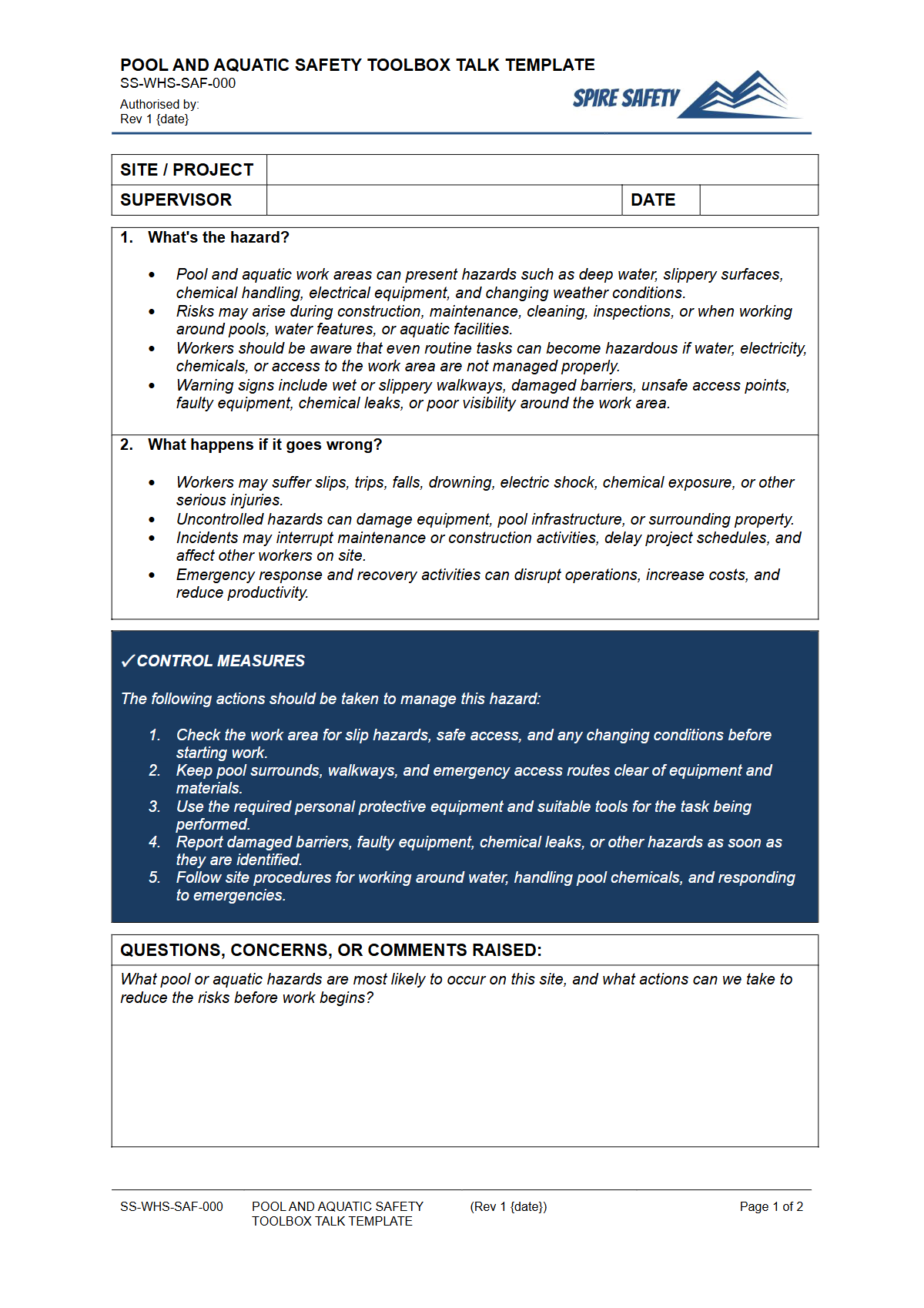
Download our free Pool and Aquatic Safety Toolbox Talk template (DOCX/PDF) to reinforce critical safety practices for aquatic environments in your workplace.
Pool and Aquatic Safety Toolbox Talk Template
DOCX • 138 KB + PDF
Updated Oct 2026
No signup required
Purpose of this document
This Pool and Aquatic Safety Toolbox Talk Template is designed to provide a structured starting point for discussions on hazard identification and risk control in aquatic environments. It aims to help organisations effectively communicate essential safety information to workers involved in, or exposed to, operations near or within pools and other aquatic settings.
Using this template can help reinforce a positive safety culture and ensure that all personnel understand their responsibilities in maintaining a safe aquatic workplace.
Regular toolbox talks are a critical component of strong WHS management systems. They facilitate open dialogue about site-specific risks and how to manage them, reducing the likelihood of incidents and injuries. This specific template focuses on commonly encountered hazards in aquatic environments, from slip and trip risks to chemical handling and emergency procedures.
Video walkthrough
How to use this Toolbox Talk
Download the Pool and Aquatic Safety Toolbox Talk Template in either DOCX or PDF format. The DOCX version is fully editable, allowing you to tailor the content to your specific workplace conditions, equipment, and operational procedures.
Conduct the toolbox talk in a suitable environment where all participants can engage without distraction. Encourage active participation, questions, and discussion.
This template is a guide only and must be customised to your workplace's unique risks and WHS requirements. It should be used as part of your broader WHS strategy, which may include comprehensive risk assessments and the development of site-specific safe work procedures.
After the session, ensure all attendees sign the attendance record to document their participation and understanding. Review any actions or follow-ups identified during the talk, and integrate the insights gained into your ongoing WHS consulting efforts.
Consider holding future toolbox talks on other relevant topics from our free WHS resources library to maintain safety awareness.
When to use it
This Pool and Aquatic Safety Toolbox Talk Template is ideal for use during inductions for new workers, before commencing new tasks involving aquatic environments, as part of routine safety meetings, or following any incidents or near misses related to aquatic safety. It's particularly useful when introducing new plant or equipment, changing work procedures, or addressing specific seasonal hazards associated with pools and water bodies.
Regular, proactive use helps to embed safety continually into daily operations.
Who should use it
This template is primarily for supervisors, team leaders, WHS officers, and managers responsible for overseeing operations in or around pools and aquatic areas. It is also highly beneficial for all workers whose duties involve working near water, maintaining aquatic facilities, or interacting with plant, chemicals, or the public in these environments.
Subcontractors and visitors requiring WHS briefings related to aquatic safety can also benefit from the information presented.
Common mistakes
Common mistakes to avoid
- Not customising the template to specific site conditions and risks.
- Failing to encourage worker participation and feedback during the talk.
- Neglecting to record attendance and follow up on identified actions.
- Treating the toolbox talk as a compliance checkbox rather than a genuine safety discussion.
Legal references
Legal considerations
The following legal requirements may be relevant to this type of work.
- Work Health and Safety Act (Harmonised) — Provides the primary duties for protecting workers and other people from work health and safety risks.
- Work Health and Safety Regulations (Harmonised) — Sets out requirements supporting the management of workplace hazards and risks.
The following codes may be relevant to this type of work.
- Managing WHS Risks Code of Practice — Provides practical guidance on identifying hazards, assessing risks and applying effective controls.
- Work Health and Safety Consultation, Cooperation and Coordination Code of Practice — Provides practical guidance on consulting workers and coordinating with other duty holders.
- Managing the Work Environment and Facilities Code of Practice — Provides practical guidance on safe work environments, workplace facilities and related controls.
Did you know
Slips and Trips
Slips, trips, and falls are among the most common causes of injury in aquatic environments, often intensified by wet surfaces and foot traffic.
Chemical Management
Proper storage, handling, and PPE use for pool chemicals are vital to prevent exposure incidents, which can have severe health consequences for workers.
FAQ
Frequently asked questions
01What is a Pool and Aquatic Safety Toolbox Talk Template?
02How often should aquatic safety toolbox talks be conducted?
03Can this template be used for all types of aquatic workplaces?
04Is customisation of the Pool and Aquatic Safety Toolbox Talk Template necessary?
Share this resource
Pool and Aquatic Safety Toolbox Talk Template
Browse Categories
How To Use It
- 1Download and open in Word or PDF.
- 2Replace the placeholders with your business details.
- 3Get it reviewed by a WHS specialist before rollout.
Need it customised?
Our WHS consultants can adapt this template to your site, run a gap analysis, or audit what you already have in place.
Book a Free Consultation WHS consulting servicesor call 1300 156 382