
First Aid Awareness Toolbox Talk Template
Download your free First Aid Awareness Toolbox Talk template. A structured starting point to discuss critical first aid topics with your team. Customise today!
First Aid Awareness Toolbox Talk Template
DOCX • 142 KB + PDF
Updated Oct 2026
No signup required
Purpose of this document
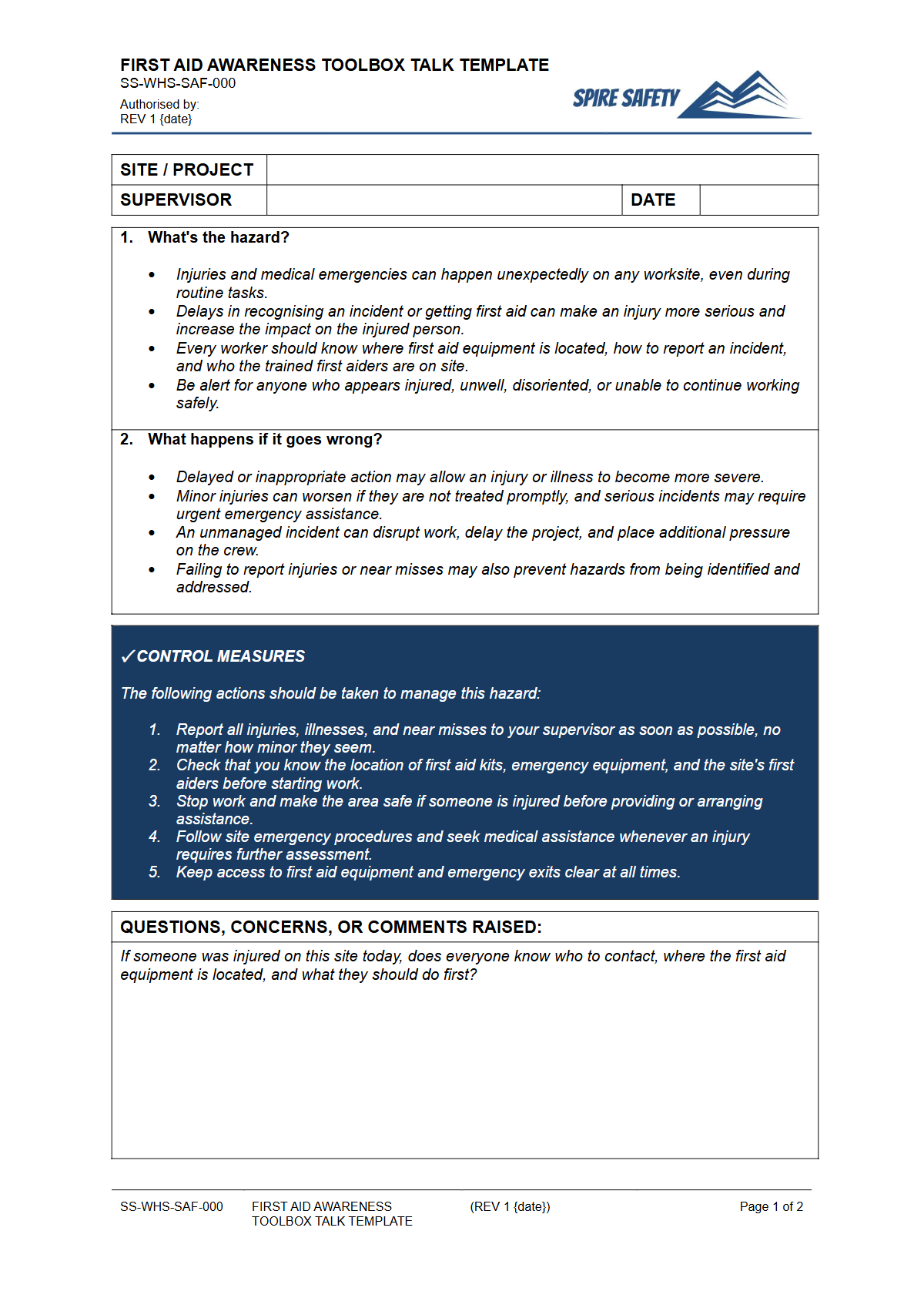
This First Aid Awareness Toolbox Talk template provides a foundational framework for conducting essential discussions on first aid preparedness and response within your workplace. This structured resource aims to enhance your team's understanding of first aid principles, promote a proactive safety culture, and ensure immediate and effective responses to workplace injuries or medical emergencies.
It is designed to be a clear and concise guide for supervisors and managers to facilitate engaging and informative safety briefings.
By utilising this template, organisations can better recognise common workplace hazards that may necessitate first aid, understand the importance of accessible first aid facilities, and clarify individual responsibilities in an emergency. It supports the ongoing effort to maintain a safe working environment and aligns with Australian WHS practice regarding worker information and instruction.
Video walkthrough
How to use this Toolbox Talk
Our First Aid Awareness Toolbox Talk template is provided in an editable DOCX format, making it easy to adapt to your specific workplace needs. To effectively use this document, download the template and review its contents.
You must customise this template to your workplace's specific risks, first aid provisions, and personnel. Consider adding details about the location of your first aid kits, who your designated first aid officers are, and your specific emergency contact procedures. Tailor the discussion points to reflect incidents or concerns relevant to your industry and operational environment.
Encourage open dialogue, questions, and shared experiences during the toolbox talk to maximise engagement and learning. After customisation and delivery, retain a record of the toolbox talk, including attendees and any actions raised, as part of your WHS management system documentation.
For comprehensive support in developing your WHS documentation, explore our WHS management systems consulting services.
When to use it
This First Aid Awareness Toolbox Talk template is ideal for regular safety meetings, particularly at the start of a new project, in response to specific incidents, or as part of an ongoing safety training schedule. It is also highly recommended for induction processes for new employees to ensure they are immediately aware of workplace first aid arrangements and expectations.
Use it whenever there is a change in work procedures, new equipment is introduced, or a review of emergency response plans is required. Regular discussion of first aid awareness helps to keep safety at the forefront of everyone's minds and reinforces the critical nature of timely and appropriate emergency response. It's a valuable tool to use in conjunction with other resources from our free WHS resources library.
Who should use it
This template is primarily intended for supervisors, team leaders, WHS officers, and anyone responsible for conducting safety briefings or delivering instruction to workers. It's also beneficial for site managers and small business owners who need an efficient and effective way to communicate vital first aid information.
While designed for those leading the discussion, the content is relevant to all workers, as everyone plays a role in workplace safety and understanding first aid procedures. It serves as a practical guide for ensuring all personnel are informed and prepared to act correctly in a first aid emergency, thereby contributing to a safer work environment for all.
Common mistakes
Common mistakes to avoid
- Not customising generic toolbox talk content to specific workplace risks.
- Failing to regularly check and restock first aid kits, leading to expired or missing items.
- Not clearly communicating the location of first aid facilities and contact details for first aid officers.
- Neglecting to record attendance and actions from toolbox talks for WHS documentation purposes.
Legal references
Legal considerations
The following legal requirements may be relevant to this type of work.
- Work Health and Safety Act (Harmonised) — Provides the primary duties for protecting workers and other people from work health and safety risks.
- Work Health and Safety Regulations (Harmonised) — Sets out requirements supporting the management of workplace hazards and risks.
The following codes may be relevant to this type of work.
- Managing WHS Risks Code of Practice — Provides practical guidance on identifying hazards, assessing risks and applying effective controls.
- Work Health and Safety Consultation, Cooperation and Coordination Code of Practice — Provides practical guidance on consulting workers and coordinating with other duty holders.
- Managing the Work Environment and Facilities Code of Practice — Provides practical guidance on safe work environments, workplace facilities and related controls.
Did you know
Chain of Survival
Recognising an emergency and calling for help immediately are the first critical links in the 'Chain of Survival,' significantly increasing the chances of positive outcomes in medical emergencies.
Psychosocial First Aid
In addition to physical first aid, understanding basic psychosocial first aid can help support workers experiencing mental health distress or the psychological impact of critical incidents.
FAQ
Frequently asked questions
01What should a basic workplace first aid kit contain?
02How often should first aid training be refreshed in a workplace?
03What is the primary role of a designated first aid officer?
04Are there specific WHS requirements for first aid facilities?
Share this resource
First Aid Awareness Toolbox Talk Template
Browse Categories
How To Use It
- 1Download and open in Word or PDF.
- 2Replace the placeholders with your business details.
- 3Get it reviewed by a WHS specialist before rollout.
Need it customised?
Our WHS consultants can adapt this template to your site, run a gap analysis, or audit what you already have in place.
Book a Free Consultation WHS consulting servicesor call 1300 156 382