
Free Pre-Start Checklist (Boom Irrigator) Template
Download our free Pre-Start Checklist (Boom Irrigator) Template.
Free Pre-Start Checklist (Boom Irrigator) Template
DOCX • 125 KB + PDF
Updated Oct 2026
No signup required
Purpose of the Free Pre-Start Checklist (Boom Irrigator) Template
Operating large agricultural machinery like a boom irrigator carries significant risk. A systematic pre-start inspection is a fundamental safety control to ensure the equipment is in safe working order before operation.
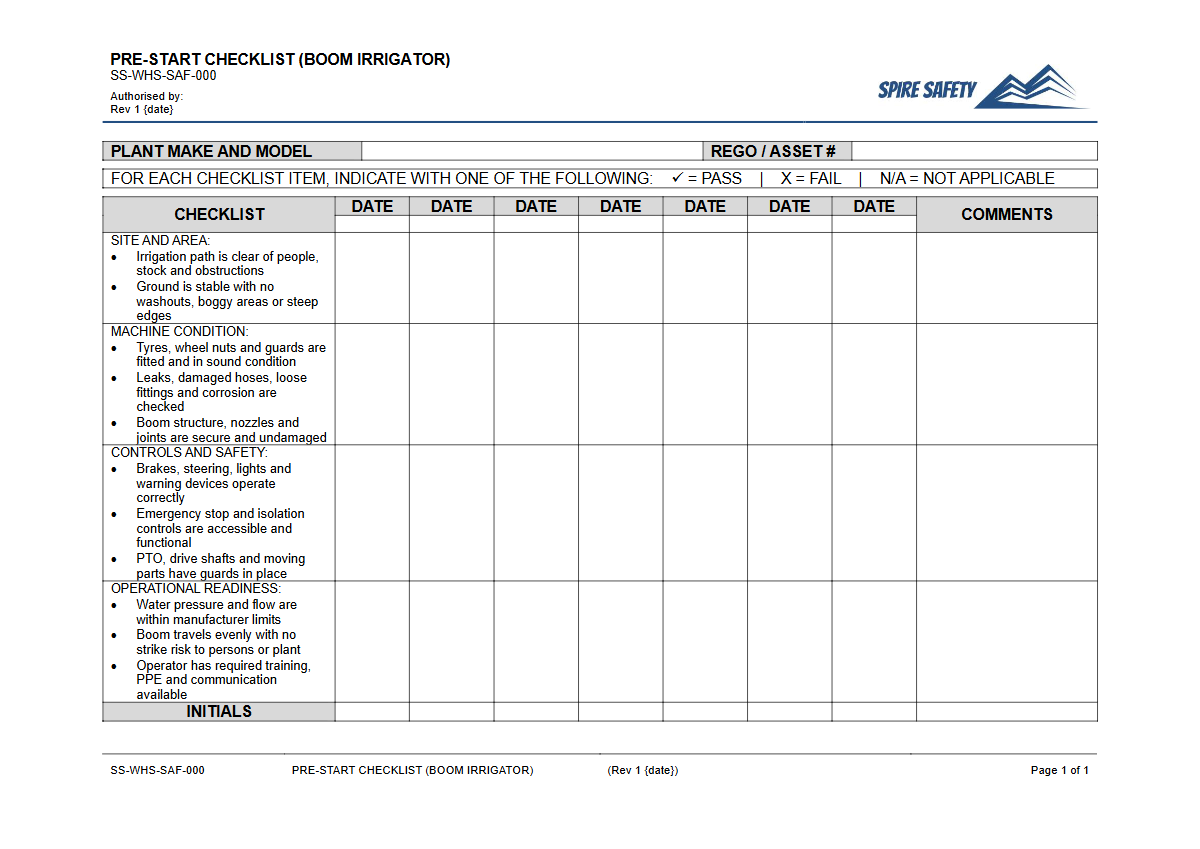
This free Pre-Start Checklist (Boom Irrigator) Template provides a structured format for operators to verify the condition of critical components, identify potential defects, and prevent incidents before they happen.
Regularly completing these checks helps your organisation meet its duty of care under Australian WHS laws by proactively managing risks associated with mobile plant. It creates a documented record of inspections, which is a crucial part of a robust pre-start check and maintenance routine. Using this template helps minimise the risk of mechanical failure, property damage, and serious injury to workers.
Video walkthrough
How to use the Free Pre-Start Checklist (Boom Irrigator) Template
This template is designed for practical use in agricultural settings. Follow these steps to implement it effectively:
- Download: Choose your preferred format, DOCX for easy editing or PDF for straightforward printing.
- Customise: Adapt the checklist to suit the specific make, model, and configuration of your boom irrigator. Add or remove items to reflect your machine's unique features, such as specific hydraulic systems, GPS guidance, or end guns.
- Train: Ensure all operators are trained on how to properly conduct each check. They must understand what they are looking for and recognise the difference between safe and unsafe conditions.
- Implement: Integrate the checklist into your daily operational workflow. Make it a non-negotiable step before any irrigator is started for a shift.
- Review: Supervisors should periodically review completed checklists to ensure they are being filled out correctly and to identify recurring faults that may indicate a need for scheduled maintenance or component replacement.
IMPORTANT: This document is a template and must be customised to your workplace. We are not responsible for your safety outcomes.
It is essential that you tailor this Pre-Start Checklist to the specific machinery in use, the environment it operates in, and the unique risks present at your site.
What to Inspect
A thorough pre-start check for a boom irrigator should cover several key areas. While your customised list will be more detailed, typical inspection points include:
- General Condition: Check for visible structural damage, corrosion, or missing components.
- Wheels and Tyres: Inspect for correct inflation, wear, and any signs of damage to rims or hubs.
- Guards and Shields: Ensure all safety guards for drive shafts, belts, and other moving parts are secure and in good condition.
- Hydraulic System: Look for leaks in hoses, fittings, and cylinders. Check hydraulic oil levels.
- Electrical System: Inspect wiring for damage, ensure connections are secure, and check the function of control panels and safety cut-offs.
- Sprinklers and Nozzles: Check for blockages or damage that could affect water distribution or create pressure hazards.
- Towing Hitch and Connection Points: Verify the integrity of the tow point, safety chains, and any connecting pins or latches.
Integrating this checklist into your farm's WHS management system helps create a holistic approach to agricultural safety, ensuring checks are not just a task but part of a larger safety culture.
When to use it
A pre-start checklist for a boom irrigator should be completed by the operator before the start of every shift or before its first use each day. It should also be used after any significant maintenance event or if the machine has been idle for an extended period.
The goal is to catch any issues that may have developed overnight or during previous use before the equipment is put back into service. These checks are similar in principle to those for other large agricultural equipment like those outlined in our free Pre-Start Checklist for Air Seeders.
Who should use it
The pre-start checklist should be completed by a person who is competent to operate the boom irrigator. This means they have received the necessary information, training, and instruction to use the machine safely and to identify potential hazards during an inspection.
Supervisors or farm managers are responsible for ensuring these checks are being performed consistently and for actioning any reported defects. Documented inspections are valuable records for internal reviews and formal WHS compliance audits, demonstrating a commitment to proactive risk management.
By ensuring operators are trained on relevant procedures, such as safe operating procedures for boom equipment, you reinforce the importance of both operational and mechanical safety. For more downloadable templates and safety resources, browse our complete free WHS resources library.
Common mistakes
Common mistakes to avoid
- Using a generic checklist that doesn't match the specific irrigator model.
- "Pencil-whipping" the form without physically or visually inspecting each item.
- Failing to report, document, and tag out faulty equipment identified during the check.
- Not reviewing completed checklists over time to identify recurring maintenance issues or trends.
Legal references
Legal considerations
The following legal requirements may be relevant to this type of work.
- Work Health and Safety Act (Harmonised) — Provides the primary duties for protecting workers and other people from work health and safety risks.
- Work Health and Safety Regulations (Harmonised) — Sets out requirements supporting the management of workplace hazards and risks.
The following codes may be relevant to this type of work.
- Managing WHS Risks Code of Practice — Provides practical guidance on identifying hazards, assessing risks and applying effective controls.
- Work Health and Safety Consultation, Cooperation and Coordination Code of Practice — Provides practical guidance on consulting workers and coordinating with other duty holders.
- Managing the Work Environment and Facilities Code of Practice — Provides practical guidance on safe work environments, workplace facilities and related controls.
Did you know
Water Pressure Hazards
Centre pivot and boom irrigators can operate at high pressures, posing significant risks from ruptured hoses or pipes. A thorough pre-start inspection is critical to identify wear and tear before it leads to a high-pressure incident.
Electrical Risks
Many modern irrigators have complex electrical systems for control, guidance, and monitoring. Damaged wiring or water ingress can create serious electrocution or fire hazards, highlighting the importance of electrical checks.
FAQ
Frequently asked questions
01What should be included in a boom irrigator pre-start check?
02How often should boom irrigator pre-start checks be done?
03Who is responsible for completing a boom irrigator pre-start checklist?
04Why is it important to customise a pre-start checklist template?
Share this resource
Free Pre-Start Checklist (Boom Irrigator) Template
Browse Categories
How To Use It
- 1Download and open in Word or PDF.
- 2Replace the placeholders with your business details.
- 3Get it reviewed by a WHS specialist before rollout.
Need it customised?
Our WHS consultants can adapt this template to your site, run a gap analysis, or audit what you already have in place.
Book a Free Consultation WHS consulting servicesor call 1300 156 382