
Free Pre-Start Checklist (Bottle Warmer) Template
Download our free Pre-Start Checklist (Bottle Warmer) Template. This structured Word & PDF document helps formalise daily equipment safety inspections.
Free Pre-Start Checklist (Bottle Warmer) Template
DOCX • 125 KB + PDF
Updated Oct 2026
No signup required
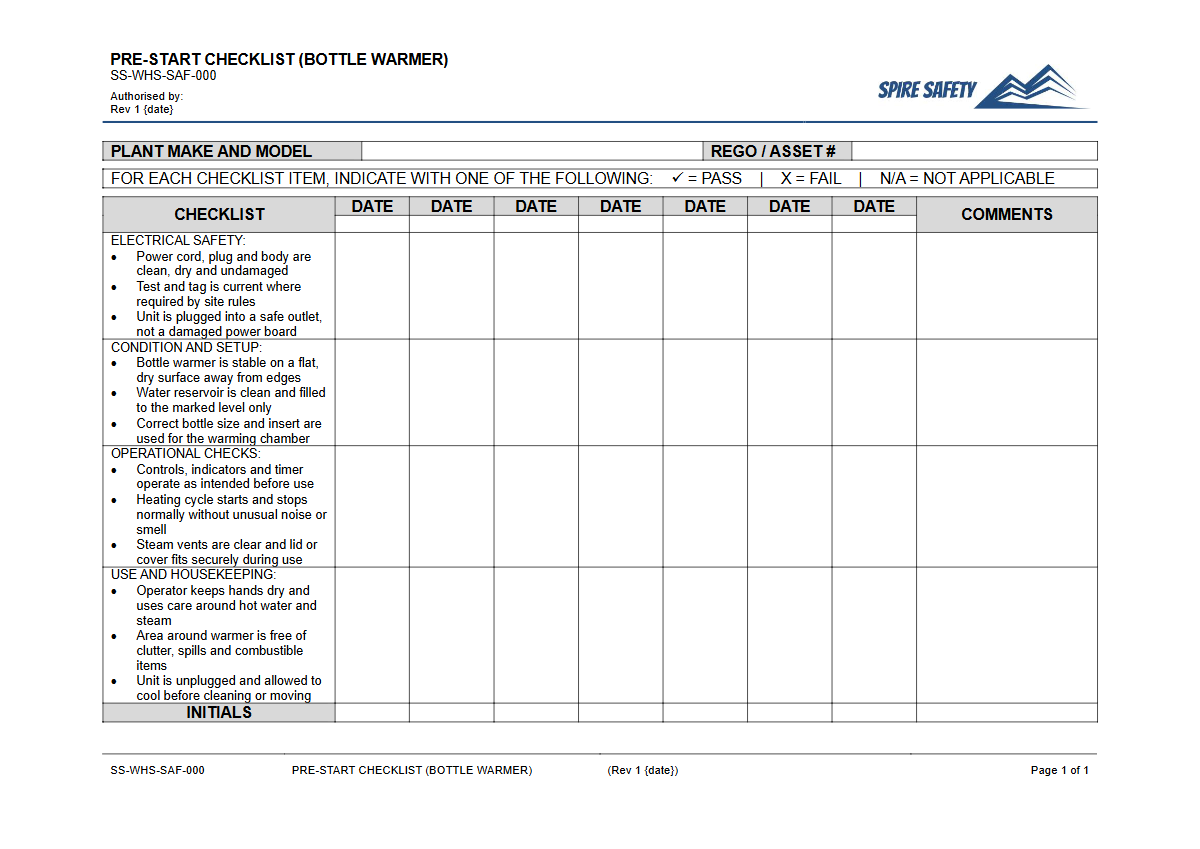
Formalise your daily safety inspections and minimise risks associated with workplace appliances by using our Free Pre-Start Checklist (Bottle Warmer) Template. This downloadable resource provides a structured starting point for operators to verify that equipment is safe to use before beginning a shift, helping to prevent electrical faults, burns, and other potential incidents. It is available in both DOCX and PDF formats for your convenience.
Video walkthrough
Purpose of the Free Pre-Start Checklist (Bottle Warmer) Template
The primary purpose of this checklist is to guide workers through a consistent and thorough inspection of a bottle warmer before it is used. By systematically checking key safety and operational components, you can proactively identify potential hazards such as frayed cords, malfunctioning thermostats, or damaged casings.
Documenting these checks not only promotes a stronger safety culture but also forms a critical part of a comprehensive WHS management system, demonstrating due diligence in maintaining plant and equipment.
How to use the Free Pre-Start Checklist (Bottle Warmer) Template
To get started, simply download the template in your preferred format. The DOCX version is fully editable, allowing you to tailor the checklist to your specific needs.
Important: This document is a template, not a finished safety procedure. We have provided a structured starting point aligned with Australian WHS principles, but you must customise it to reflect the specific make and model of your bottle warmer, the environment it's used in (e.g., childcare, hospital), and the unique risks your organisation has identified.
Always consult the manufacturer's operating manual when adapting the checklist.
Once customised, train your team on the procedure and the importance of each check. This training can be effectively reinforced with regular short safety meetings, such as a pre-start checks and plant maintenance toolbox talk.
When to use it
The pre-start checklist should be completed at the beginning of each day or shift, before the bottle warmer is used for the first time. This routine ensures that any damage or faults that may have occurred overnight or since the last use are identified before the equipment poses a risk to an operator or others.
It is also good practice to complete the checklist after the equipment has been moved, cleaned, or serviced.
Who should use it
This checklist is designed for the person operating the equipment. This could include childcare educators, healthcare workers, hospitality staff, or anyone else tasked with using a bottle warmer as part of their duties.
Supervisors and managers should also be familiar with the checklist to ensure it is being completed correctly and to review the records as part of their safety oversight responsibilities. Completed checklists are valuable records that can be reviewed during internal or external WHS compliance audits.
Key Safety Checks for a Bottle Warmer
While your customised checklist will be more detailed, it should always cover these fundamental areas:
- Electrical Safety: Inspect the power cord and plug for any signs of fraying, cracking, or exposed wires. Ensure the plug fits securely into the power outlet.
- Physical Condition: Check the casing for cracks, heat damage, or other defects. Ensure the heating chamber and any water reservoirs are clean and intact.
- Functionality: Test that all controls, switches, and indicator lights are working as intended. If the unit has an adjustable thermostat, confirm it appears to be responding correctly.
- Cleanliness: Verify the unit is clean and free from milk residue or mineral scale build-up, which can affect performance and hygiene.
- Location and Environment: Confirm the bottle warmer is placed on a stable, level surface away from the edge of a counter. Ensure it is not near sinks or other water sources and that the surrounding area is clear of flammable materials. In environments with vulnerable people, applying specific safety protocols is vital, a topic covered in our aged care manual handling toolbox talk.
For more templates and safety documents to support your WHS framework, browse our complete free WHS resources library.
Common mistakes
Common mistakes to avoid
- Failing to customise the template for the specific model of bottle warmer used.
- "Ticking and flicking" the checklist without physically performing each inspection.
- Not removing faulty equipment from service immediately after a defect is identified.
- Storing completed checklists poorly, making them difficult to retrieve for audits or incident investigations.
Legal references
Legal considerations
The following legal requirements may be relevant to this type of work.
- Work Health and Safety Act (Harmonised) — Provides the primary duties for protecting workers and other people from work health and safety risks.
- Work Health and Safety Regulations (Harmonised) — Sets out requirements supporting the management of workplace hazards and risks.
The following codes may be relevant to this type of work.
- Managing WHS Risks Code of Practice — Provides practical guidance on identifying hazards, assessing risks and applying effective controls.
- Work Health and Safety Consultation, Cooperation and Coordination Code of Practice — Provides practical guidance on consulting workers and coordinating with other duty holders.
- Managing the Work Environment and Facilities Code of Practice — Provides practical guidance on safe work environments, workplace facilities and related controls.
Did you know
Scald Prevention
Hot liquids are a leading cause of serious burns in young children. A properly functioning bottle warmer ensures milk is heated to a safe, consistent temperature, reducing the risk of accidental scalds.
Electrical Appliance Standards
In Australia, electrical appliances must meet specific safety standards (AS/NZS standards) and be marked accordingly. Checking for a valid compliance mark is a key part of ensuring an appliance is safe to use.
FAQ
Frequently asked questions
01Why do I need a pre-start checklist for a simple appliance like a bottle warmer?
02Is this bottle warmer checklist a legal document?
03How often should a bottle warmer pre-start check be done?
04What should I do if a fault is found during the pre-start check?
Share this resource
Free Pre-Start Checklist (Bottle Warmer) Template
Browse Categories
How To Use It
- 1Download and open in Word or PDF.
- 2Replace the placeholders with your business details.
- 3Get it reviewed by a WHS specialist before rollout.
Need it customised?
Our WHS consultants can adapt this template to your site, run a gap analysis, or audit what you already have in place.
Book a Free Consultation WHS consulting servicesor call 1300 156 382