
Free Pre-Start Checklist (Bread Proofer) Template
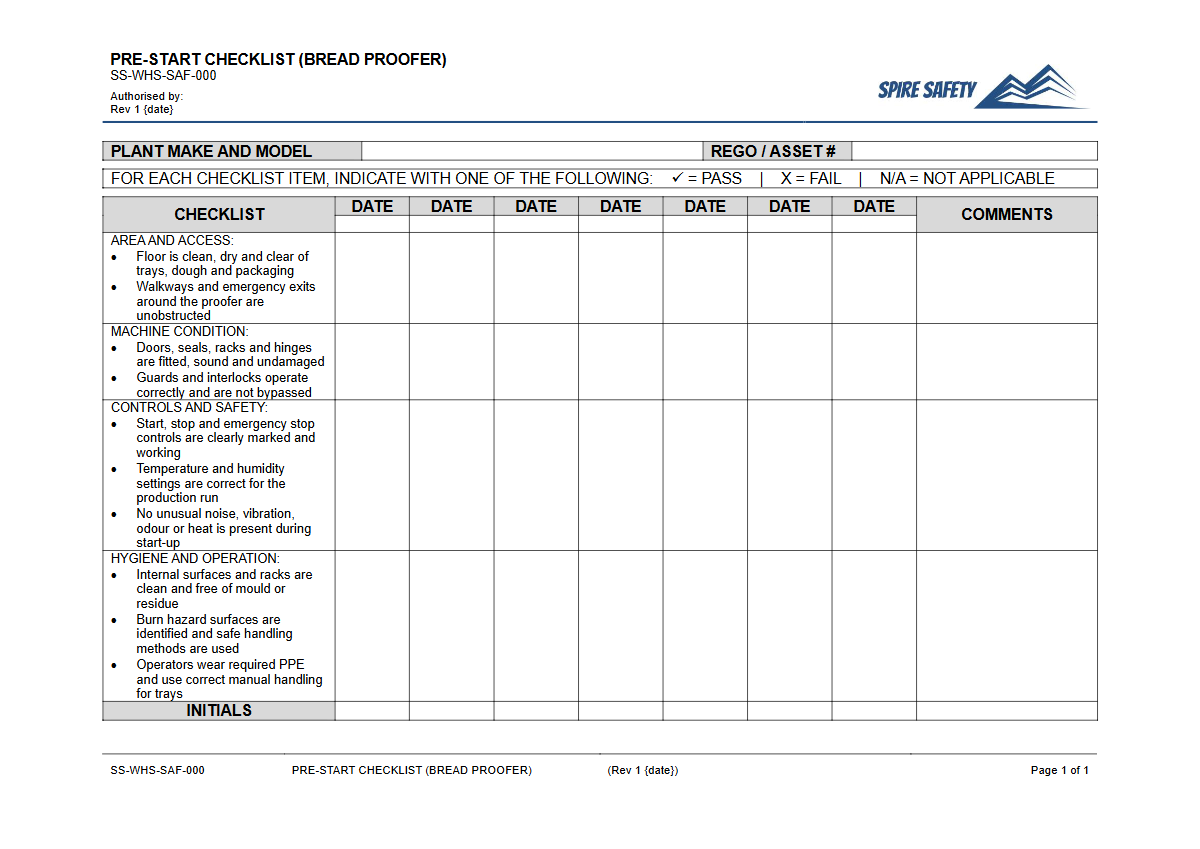
Download our free Pre-Start Checklist (Bread Proofer) Template. This structured Word and PDF document helps formalise bakery equipment safety inspections.
Free Pre-Start Checklist (Bread Proofer) Template
DOCX • 125 KB + PDF
Updated Oct 2026
No signup required
Purpose of the Free Pre-Start Checklist (Bread Proofer) Template
A bread proofer, essential in bakeries and commercial kitchens, combines heat, humidity, and moving parts, creating a unique set of workplace hazards. This free Pre-Start Checklist (Bread Proofer) Template provides a structured starting point for formalising daily equipment inspections.
By systematically checking the equipment before operation, workers can identify and control risks such as burns from hot surfaces, electric shock from faulty wiring, or injuries from malfunctioning components. Regular use of this checklist helps a Person Conducting a Business or Undertaking (PCBU) meet their primary duty of care under Australian WHS laws.
Integrating this checklist into your daily procedures is a practical step towards building a robust safety culture. It serves as documented evidence that safety checks are being performed, which is a key component of effective WHS management systems. It encourages operators to be actively involved in maintaining a safe work environment by making them the first line of defence against equipment-related incidents.
Video walkthrough
How to use the Free Pre-Start Checklist (Bread Proofer) Template
Using this template effectively involves more than just downloading and printing. To ensure it aligns with your specific operational needs, follow these steps:
- Download and Customise: The checklist is available in both DOCX and PDF formats. The DOCX file is fully editable, allowing you to add, remove, or modify checks to suit the exact make and model of your bread proofer and its operating environment.
- Consult and Finalise: Work with operators and maintenance staff to refine the checklist. Their hands-on experience is invaluable for identifying specific risks and practical inspection points.
- Train Your Team: Ensure all operators are trained not only on how to use the bread proofer safely but also on the importance and procedure of completing the pre-start check. A brief training session or toolbox talk can ensure consistency. Our Pre-Start Checks and Plant Maintenance Toolbox Talk Template can help structure this training.
- Integrate and Implement: Make the pre-start check a non-negotiable step before the first use of the equipment each day or shift. Store completed checklists in a designated location for record-keeping and review.
Important Note on Customisation
This document is a template, not a finished product. It is essential that you customise it to reflect the specific hazards of your workplace and equipment.
We have provided a comprehensive starting point aligned with general safety principles, but you must review, adapt, and approve each checklist item to ensure it is fit for purpose at your site.
When to use it
A pre-start checklist for a bread proofer should be completed at the following times:
- Before the first use of each day or shift: This is the most common and critical time to perform the check.
- After a prolonged period of non-use: If the proofer has been idle for an extended time, a full check is prudent before restarting it.
- Following maintenance or repairs: Ensure the equipment has been returned to a safe operational state.
- If an operator suspects a fault: If any unusual noise, smell, or performance issue is noticed, a check should be performed before continuing use.
Regular reviews of completed checklists can highlight recurring faults, indicating a need for preventative maintenance or further investigation. This data is invaluable during a WHS compliance auditing process, demonstrating proactive risk management.
Who should use it
The pre-start checklist should be completed by a worker who is trained, competent, and authorised to operate the bread proofer. This typically includes bakers, pastry chefs, and trained kitchen staff.
Responsibility should be clearly assigned, and workers must be empowered to tag the equipment out of service if they identify a safety-critical fault. Supervisors or managers should periodically review completed checklists to ensure they are being filled out correctly and that any reported issues are being addressed promptly.
While this checklist is specific to a bread proofer, the safety principles are universal across various types of plant and equipment. Whether checking industrial food processors or other machinery, the process of pre-start inspection remains a cornerstone of workplace safety.
For example, our Free Pre-Start Checklist (Agitator) Template applies a similar methodology to different equipment within a food production setting.
The fundamental process of a documented pre-start safety check is transferable across industries. While the specific items differ greatly, the structured approach seen in a resource like our Free Pre-Start Checklist (Artic Loader) Template shares the same goal: identifying hazards before they cause harm.
You can explore our entire free WHS resources library for more templates to support your safety management system.
Common mistakes
Common mistakes to avoid
- Using a generic, non-customised checklist that doesn't match the specific proofer model.
- 'Pencil-whipping' the form without physically inspecting the equipment items.
- Failing to tag out and report faulty equipment identified during the check.
- Not retaining completed checklists for safety records and trend analysis.
Legal references
Legal considerations
The following legal requirements may be relevant to this type of work.
- Work Health and Safety Act (Harmonised) — Provides the primary duties for protecting workers and other people from work health and safety risks.
- Work Health and Safety Regulations (Harmonised) — Sets out requirements supporting the management of workplace hazards and risks.
The following codes may be relevant to this type of work.
- Managing WHS Risks Code of Practice — Provides practical guidance on identifying hazards, assessing risks and applying effective controls.
- Work Health and Safety Consultation, Cooperation and Coordination Code of Practice — Provides practical guidance on consulting workers and coordinating with other duty holders.
- Managing the Work Environment and Facilities Code of Practice — Provides practical guidance on safe work environments, workplace facilities and related controls.
Did you know
Controlled Fermentation
A bread proofer, also known as a proof box or dough retarder, doesn't just provide heat; it precisely controls humidity to prevent a dry 'skin' from forming on the dough, allowing the yeast to ferment consistently.
Kitchen Hazards
According to Safe Work Australia, burns and scalds are a significant cause of injury in the hospitality industry. Regular equipment checks on appliances like proofers, ovens, and fryers are a critical control measure.
FAQ
Frequently asked questions
01What are the main hazards associated with a bread proofer?
02How often should a bread proofer pre-start check be done?
03Is a pre-start checklist a legal requirement in Australia?
04Who is responsible for actioning faults found on the checklist?
Share this resource
Free Pre-Start Checklist (Bread Proofer) Template
Browse Categories
How To Use It
- 1Download and open in Word or PDF.
- 2Replace the placeholders with your business details.
- 3Get it reviewed by a WHS specialist before rollout.
Need it customised?
Our WHS consultants can adapt this template to your site, run a gap analysis, or audit what you already have in place.
Book a Free Consultation WHS consulting servicesor call 1300 156 382