
Free Pre-Start Checklist (Brake Tester) Template
Download our Free Pre-Start Checklist (Brake Tester) Template. This structured DOCX & PDF resource helps formalise safety checks before use. Get yours now.
Free Pre-Start Checklist (Brake Tester) Template
DOCX • 125 KB + PDF
Updated Oct 2026
No signup required
Purpose of the Free Pre-Start Checklist (Brake Tester) Template
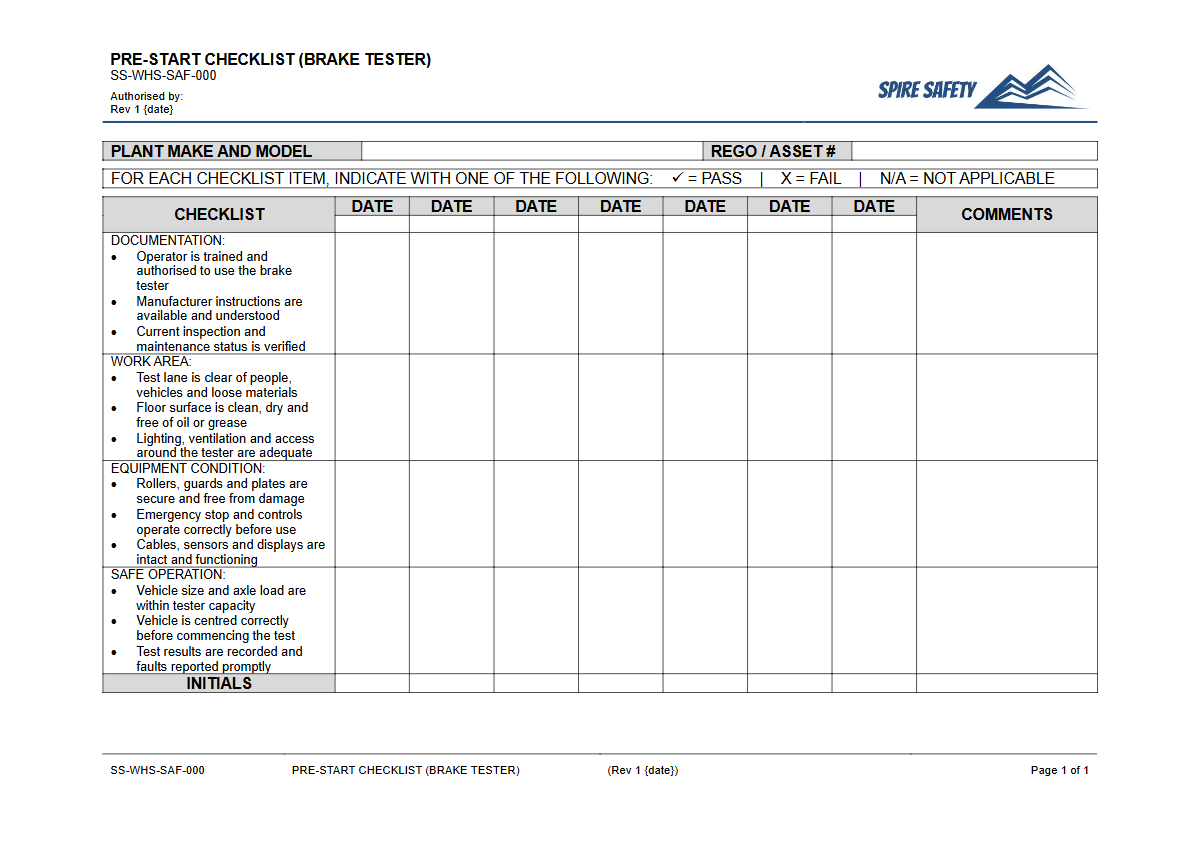
Regularly inspecting workshop equipment is fundamental to maintaining a safe work environment. This Free Pre-Start Checklist (Brake Tester) Template provides a structured format for operators to verify that a brake tester is safe and ready for use before commencing work.
Using this checklist helps identify potential faults, defects, or damage that could compromise the accuracy of test results or pose a risk to the operator. It serves as a practical tool to meet your duty of care under Australian WHS legislation by ensuring plant is inspected and maintained in a safe working condition.
A consistent pre-start inspection process helps minimise the risk of equipment failure, prevents incidents, and creates a formal record of safety diligence.
Incorporating this check into daily routines is a critical component of a robust safety framework. A regular toolbox talk on plant maintenance can help reinforce these positive safety behaviours and ensure all team members understand their responsibilities.
Video walkthrough
How to Use the Free Pre-Start Checklist (Brake Tester) Template
This template is designed for immediate use. After downloading the DOCX or PDF file, you can integrate it into your operational safety procedures. The process is straightforward:
- Download: Choose the format that best suits your needs. The DOCX version is fully editable.
- Customise: It's crucial to remember that this is a template. We recommend you customise it to reflect the specific make and model of your brake tester, your unique operational procedures, and any site-specific hazards.
- Train: Ensure all operators are trained not only on how to use the brake tester but also on how to properly complete the pre-start checklist, including what to look for during each check.
- Implement: Make the checklist readily available at the location of the equipment. Establish a clear procedure for what to do if a fault is identified, including tagging the equipment out of service and reporting the issue to a supervisor.
Properly customising and implementing safety documents like this one is a key part of building effective WHS management systems. This ensures your safety processes are practical and relevant to your actual workplace activities.
When to Use a Brake Tester Pre-Start Checklist
The pre-start checklist should be completed before the first use of the brake tester each day or at the beginning of each shift. It is a pre-operational check designed to catch issues that may have developed overnight or during a previous shift.
It should also be used after any maintenance or repair work has been performed to verify the equipment is safe to return to service. Pre-start inspections are a fundamental safety requirement for many types of workplace plant, from fixed workshop equipment to mobile machinery like those covered in our Articulated Loader Pre-Start Checklist.
Who Should Use This Checklist
This checklist should be used by any person who operates the brake tester. The user must be a competent person, meaning they have received the necessary training and instruction to operate the equipment safely and understand the items on the checklist.
In many organisations, this process is formalised to ensure only authorised personnel conduct these checks. For other complex machinery, operational steps are often detailed in a Safe Operating Procedure, as seen in our free Brake Press SOP template.
Maintaining a file of completed checklists provides critical evidence of your safety procedures and due diligence. These records can be invaluable during any incident investigation or a formal WHS compliance audit, demonstrating a systematic approach to managing plant safety.
For organisations needing more hands-on guidance in developing comprehensive plant safety protocols or other WHS documentation, seeking external expertise can be highly beneficial. Professional WHS consulting can provide tailored advice to ensure your systems are effective and aligned with industry best practice.
Common mistakes
Common mistakes to avoid
- "Pencil-whipping" the checklist without physically performing the checks.
- Failing to customise the generic template for the specific brake tester model.
- Not removing faulty equipment from service immediately after a defect is found.
- Operators completing the checklist without adequate training on what to look for.
Legal references
Legal considerations
The following legal requirements may be relevant to this type of work.
- Work Health and Safety Act (Harmonised) — Provides the primary duties for protecting workers and other people from work health and safety risks.
- Work Health and Safety Regulations (Harmonised) — Sets out requirements supporting the management of workplace hazards and risks.
The following codes may be relevant to this type of work.
- Managing WHS Risks Code of Practice — Provides practical guidance on identifying hazards, assessing risks and applying effective controls.
- Work Health and Safety Consultation, Cooperation and Coordination Code of Practice — Provides practical guidance on consulting workers and coordinating with other duty holders.
- Managing the Work Environment and Facilities Code of Practice — Provides practical guidance on safe work environments, workplace facilities and related controls.
Did you know
Calibration is Key
Brake testers require regular calibration by a qualified technician to ensure their readings are accurate and legally defensible. Pre-start checks help identify issues that may arise between these major service intervals.
Beyond the Workshop
Mobile brake testers are increasingly used by regulatory bodies and fleet operators for on-site compliance checks, making in-house pre-checks even more critical to avoid fines and downtime.
FAQ
Frequently asked questions
01Is a brake tester pre-start checklist a legal requirement in Australia?
02How often should a brake tester be inspected?
03What happens if a fault is found during the check?
04Can I use this template for any type of brake tester?
Share this resource
Free Pre-Start Checklist (Brake Tester) Template
Browse Categories
How To Use It
- 1Download and open in Word or PDF.
- 2Replace the placeholders with your business details.
- 3Get it reviewed by a WHS specialist before rollout.
Need it customised?
Our WHS consultants can adapt this template to your site, run a gap analysis, or audit what you already have in place.
Book a Free Consultation WHS consulting servicesor call 1300 156 382