
Free Pre-Start Checklist (Bottle Washer) Template
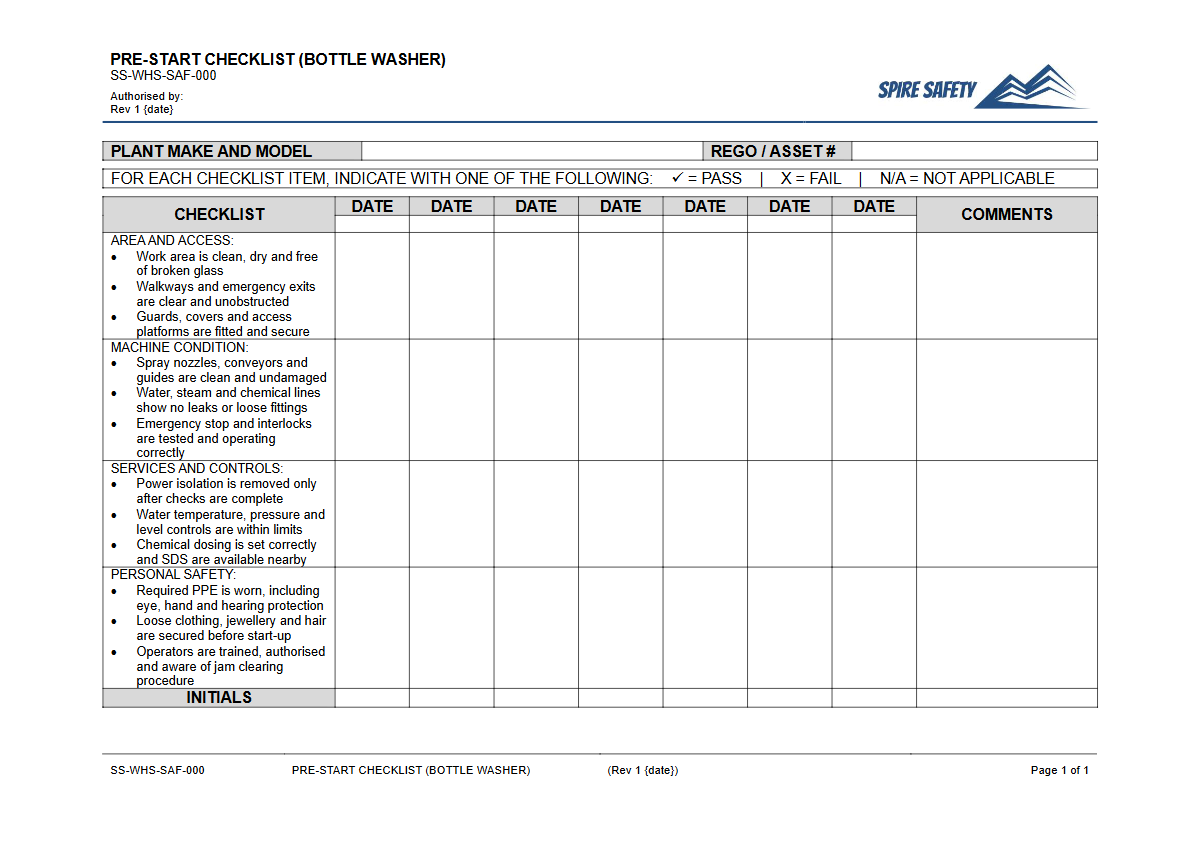
Download our Free Pre-Start Checklist (Bottle Washer) Template. This structured document for Australian businesses helps formalise safety inspections.
Free Pre-Start Checklist (Bottle Washer) Template
DOCX • 125 KB + PDF
Updated Oct 2026
No signup required
Purpose of the Free Pre-Start Checklist (Bottle Washer) Template
Operating industrial bottle washers involves significant risks, including exposure to high-pressure water, chemicals, moving parts, and electrical systems. Implementing a routine inspection process is a critical control measure to manage these hazards.
This Free Pre-Start Checklist (Bottle Washer) Template provides a structured starting point for your organisation to formalise these essential safety checks. Using a checklist ensures that operators conduct a consistent and thorough inspection before each use, helping to identify potential faults or unsafe conditions before they lead to an incident, injury, or costly equipment failure.
Documenting these checks also creates a valuable record, demonstrating due diligence and a proactive approach to workplace health and safety.
Regular equipment inspections are a cornerstone of any effective plant safety program. To help embed this behaviour with your teams, you can use our Pre-Start Checks and Plant Maintenance Toolbox Talk Template to facilitate direct and practical safety discussions on the topic.
Video walkthrough
How to use the Free Pre-Start Checklist (Bottle Washer) Template
This template is designed to be a foundation, not a final document. Its effective use depends on proper customisation and implementation within your specific operational context.
- Download and Customise: Download the template in your preferred format (DOCX for easy editing or PDF). Crucially, you must adapt the checklist to the specific make, model, and configuration of the bottle washer(s) used in your workplace. We cannot know the unique hazards of your equipment, so you must add, remove, or modify checklist items to ensure they are relevant and comprehensive.
- Consult and Train: Involve the equipment operators and maintenance personnel in the customisation process. Their hands-on knowledge is invaluable. Once the checklist is finalised, provide training to all relevant workers on how to correctly perform each check and what to do if a fault is found.
- Integrate into Workflow: Make the pre-start check a non-negotiable step before any operator begins their shift or starts up the machine. Completed checklists should be reviewed by a supervisor and filed according to your organisation's record-keeping procedures.
While this checklist focuses on pre-operational safety, it should be used alongside a comprehensive safe work procedure. For related equipment, our FREE Pressure Washer SOP (Safe Operating Procedure) Template provides a good example of how to document a step-by-step process for safe operation.
Common Hazards with Bottle Washers
When customising your checklist, ensure it addresses common hazards associated with this type of machinery. These often include:
- Mechanical Hazards: Guarding for conveyors, drive chains, gears, and other moving parts must be secure and functional.
- Electrical Hazards: Check for damaged cords, plugs, and control panels. Ensure emergency stops and interlocks are working correctly.
- Pressure Hazards: Inspect hoses, fittings, and nozzles for wear, cracks, or leaks that could result in high-pressure water injection injuries.
- Chemical Hazards: If using detergents or sanitisers, ensure supply lines are secure and that appropriate personal protective equipment (PPE) is available and used.
- Thermal Hazards: Check for exposed hot surfaces, particularly if the washer uses hot water or steam for sterilisation.
When to use it
The pre-start checklist should be completed by the operator before the bottle washer is used for the first time each day or at the beginning of every shift. It is a proactive safety measure intended to catch issues early.
It does not replace the need for regular, scheduled preventative maintenance or more detailed inspections performed by qualified maintenance personnel. Integrating these daily checks is a key component of robust WHS management systems, reinforcing a safety-first culture.
Who should use it
This checklist is designed for use by trained and competent operators who are authorised to use the bottle washing equipment. Supervisors or managers also have a role in ensuring the checks are being completed correctly and in taking action on any reported faults or deficiencies.
Verifying that a worker has the necessary skills to operate machinery safely is a key responsibility for any business. As an example of how this can be formalised, you can review our Verification of Competency (Pipe Threader) Template to see how an assessment can be structured.
Regularly reviewing your safety documents and processes against WHS regulations and Australian Standards is essential. A comprehensive site review can help identify gaps not only in equipment checks but across all your safety procedures. For professional support, consider engaging a specialist for a WHS compliance audit.
This document is one of many templates available to support Australian businesses. You can explore our complete free WHS resources library for more checklists, procedures, and toolbox talks to enhance your safety management system.
Common mistakes
Common mistakes to avoid
- Using a generic, non-customised checklist that doesn't cover the specific model's hazards.
- 'Pencil-whipping' the form by ticking all boxes without physically performing the checks.
- Ignoring seemingly 'minor' faults like a slow leak or a rattling guard, which can be early indicators of major failure.
- Failing to formally report identified defects, meaning maintenance is never scheduled and the hazard remains.
Legal references
Legal considerations
The following legal requirements may be relevant to this type of work.
- Work Health and Safety Act (Harmonised) — Provides the primary duties for protecting workers and other people from work health and safety risks.
- Work Health and Safety Regulations (Harmonised) — Sets out requirements supporting the management of workplace hazards and risks.
The following codes may be relevant to this type of work.
- Managing WHS Risks Code of Practice — Provides practical guidance on identifying hazards, assessing risks and applying effective controls.
- Work Health and Safety Consultation, Cooperation and Coordination Code of Practice — Provides practical guidance on consulting workers and coordinating with other duty holders.
- Managing the Work Environment and Facilities Code of Practice — Provides practical guidance on safe work environments, workplace facilities and related controls.
Did you know
Injection Injury Risk
A fluid injection injury from a high-pressure water system can occur at pressures as low as 700 kPa (100 psi). These injuries often appear minor initially but can lead to severe tissue damage, bacterial infection, and even amputation if not treated immediately as a surgical emergency.
The 'Normalisation of Deviance'
Sociologist Diane Vaughan coined this term to describe how people can become so accustomed to a deviation from a safety rule that they no longer see it as risky. Skipping pre-start checks is a classic example of this dangerous workplace behaviour.
FAQ
Frequently asked questions
01What is the primary purpose of a pre-start checklist?
02Why are pre-start checks for bottle washers so important?
03How often should a bottle washer be inspected?
04Who is responsible for ensuring equipment pre-start checks are done?
Share this resource
Free Pre-Start Checklist (Bottle Washer) Template
Browse Categories
How To Use It
- 1Download and open in Word or PDF.
- 2Replace the placeholders with your business details.
- 3Get it reviewed by a WHS specialist before rollout.
Need it customised?
Our WHS consultants can adapt this template to your site, run a gap analysis, or audit what you already have in place.
Book a Free Consultation WHS consulting servicesor call 1300 156 382