
Free Pre-Start Checklist (Boom Pump) Template
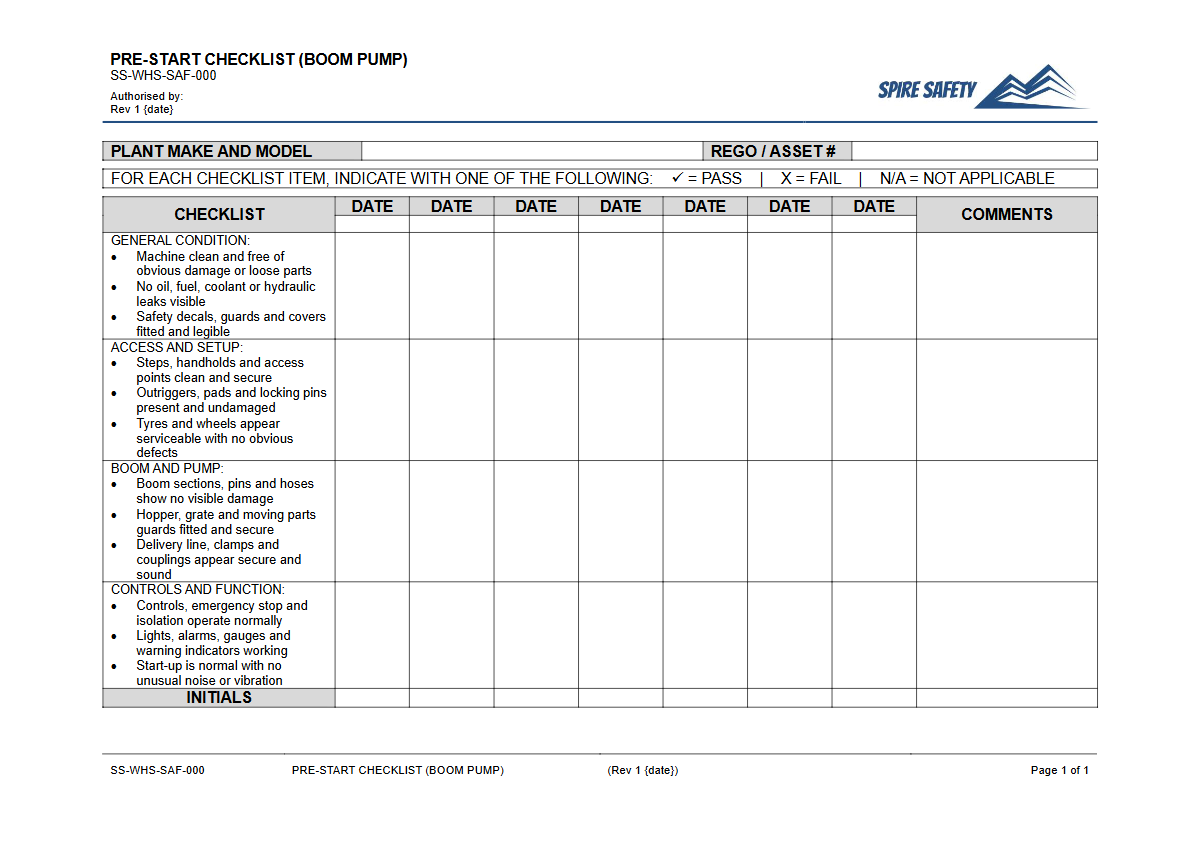
Download our free Pre-Start Checklist (Boom Pump) Template to formalise daily equipment checks. This structured DOCX & PDF helps manage WHS risks.
Free Pre-Start Checklist (Boom Pump) Template
DOCX • 125 KB + PDF
Updated Oct 2026
No signup required
Purpose of the Free Pre-Start Checklist (Boom Pump) Template
Operating a concrete boom pump is a high-risk activity that demands rigorous safety protocols. This free Pre-Start Checklist (Boom Pump) Template provides a structured framework for operators to conduct thorough, consistent inspections before each use.
The primary purpose of this checklist is to systematically identify any mechanical faults, hydraulic leaks, structural damage, or control system malfunctions before the equipment is put into service. By formalising this process, you create a documented record of due diligence, which is a key component of any effective WHS management system. Regular checks help prevent catastrophic failures, protect workers and the public from harm, minimise costly downtime, and demonstrate a proactive approach to safety management.
Video walkthrough
How to use the Free Pre-Start Checklist (Boom Pump) Template
Using this template effectively involves more than just downloading it. First, download the document in your preferred format (DOCX or PDF).
Next, and most importantly, you must adapt the checklist to your specific equipment and workplace. The document is a general guide and requires customisation to be effective.
IMPORTANT: This is a template, not a finished document. We cannot guarantee it covers every specific hazard for your make, model, and operational context.
You MUST customise it to align with the manufacturer's instructions, your site-specific risk assessments, and any relevant state or territory regulations. A periodic review by a competent person, potentially as part of a formal WHS compliance auditing process, can ensure your checklists remain current and effective.
Once customised, provide training to all operators on how to properly complete the checks and what each item entails. Finally, implement the checklist as a mandatory step before every shift, ensuring completed forms are reviewed by a supervisor and stored for record-keeping purposes.
When to use a Boom Pump Pre-Start Checklist
The Pre-Start Checklist must be completed before the start of every shift or before the boom pump is used for the first time on any given day. It is not a weekly or monthly task.
The consistency of daily checks is what makes this tool effective at catching developing faults before they lead to an incident. If a fault or defect is identified during the check, the equipment must not be used.
It should be immediately isolated, tagged out of service, and the issue reported to a supervisor or maintenance manager for rectification. Never operate machinery that has failed a pre-start inspection.
You can explore our free WHS resources library for other tools that support safe plant operation.
Who should use this Pre-Start Checklist
The checklist is designed to be completed by a person who is trained, licensed, and deemed competent to operate the specific concrete boom pump. This individual has the direct responsibility to ensure the machine is safe before they begin work.
Supervisors and managers also have a role; they are responsible for ensuring the checks are being completed correctly and for reviewing the submitted checklists to identify recurring issues or patterns of wear that may require more significant maintenance interventions. While this checklist is for a boom pump, similar rigour is needed for other high-risk plant, like what's covered in our free checklist for floor saws.
Key Inspection Areas
A thorough boom pump inspection covers several critical areas. Your customised checklist should include specific items under headings such as:
- Structural & Mechanical: Check for cracks in welds, boom section damage, security of pins and fasteners, turntable condition, and signs of metal fatigue.
- Outriggers & Stabilisers: Inspect pads, legs, and controls for proper function and signs of damage. Ensure they are on firm, level ground.
- Hydraulic Systems: Look for leaks in hoses, fittings, and cylinders. Check hydraulic oil levels and ensure pressure gauges are functioning correctly.
- Operational Controls: Test all functions from the control panel and remote control, including the emergency stop button and warning alarms. General WHS consulting can help you refine risk assessments for these operational hazards.
- Pipeline & Hopper: Inspect the concrete pipeline for wear or damage, ensure all clamps are secure, and check the hopper grate is in place and not damaged.
- General Safety: Confirm the presence and condition of the fire extinguisher, first aid kit, operator's manual, and any required safety decals or signage.
By integrating these checks into your daily routine, you embed a critical safety habit within your organisation's culture. This systematic approach is fundamental to managing the significant risks associated with concrete pumping operations.
Embedding these procedures within a certified framework can further strengthen your safety posture, and our ISO 45001 consulting services can assist with this integration.
Common mistakes
Common mistakes to avoid
- "Pencil-whipping" the checklist without physically inspecting the items.
- Failing to customise the generic template for the specific make and model of the pump.
- Continuing to operate the machine after a minor fault has been identified.
- Poor record-keeping of completed checklists, which hinders safety analysis and incident investigations.
Legal references
Legal considerations
The following legal requirements may be relevant to this type of work.
- Work Health and Safety Act (Harmonised) — Provides the primary duties for protecting workers and other people from work health and safety risks.
- Work Health and Safety Regulations (Harmonised) — Sets out requirements supporting the management of workplace hazards and risks.
The following codes may be relevant to this type of work.
- Managing WHS Risks Code of Practice — Provides practical guidance on identifying hazards, assessing risks and applying effective controls.
- Work Health and Safety Consultation, Cooperation and Coordination Code of Practice — Provides practical guidance on consulting workers and coordinating with other duty holders.
- Managing the Work Environment and Facilities Code of Practice — Provides practical guidance on safe work environments, workplace facilities and related controls.
Did you know
High-Risk Work Licence
In Australia, operating a concrete placing boom with a boom length of 11 metres or more requires a specific High-Risk Work Licence (class PB).
Leading Causes of Incidents
Major incidents involving concrete boom pumps frequently involve contact with overhead power lines, boom collapse from mechanical failure, or vehicle overturns due to improper stabilisation.
FAQ
Frequently asked questions
01What happens if a fault is found during the boom pump pre-start check?
02Is this Pre-Start Checklist compliant with Australian WHS laws?
03Who is responsible for completing the boom pump pre-start checklist?
04How often should a boom pump pre-start check be performed?
Share this resource
Free Pre-Start Checklist (Boom Pump) Template
Browse Categories
How To Use It
- 1Download and open in Word or PDF.
- 2Replace the placeholders with your business details.
- 3Get it reviewed by a WHS specialist before rollout.
Need it customised?
Our WHS consultants can adapt this template to your site, run a gap analysis, or audit what you already have in place.
Book a Free Consultation WHS consulting servicesor call 1300 156 382