
Free Pre-Start Checklist (Chlorinator) Template
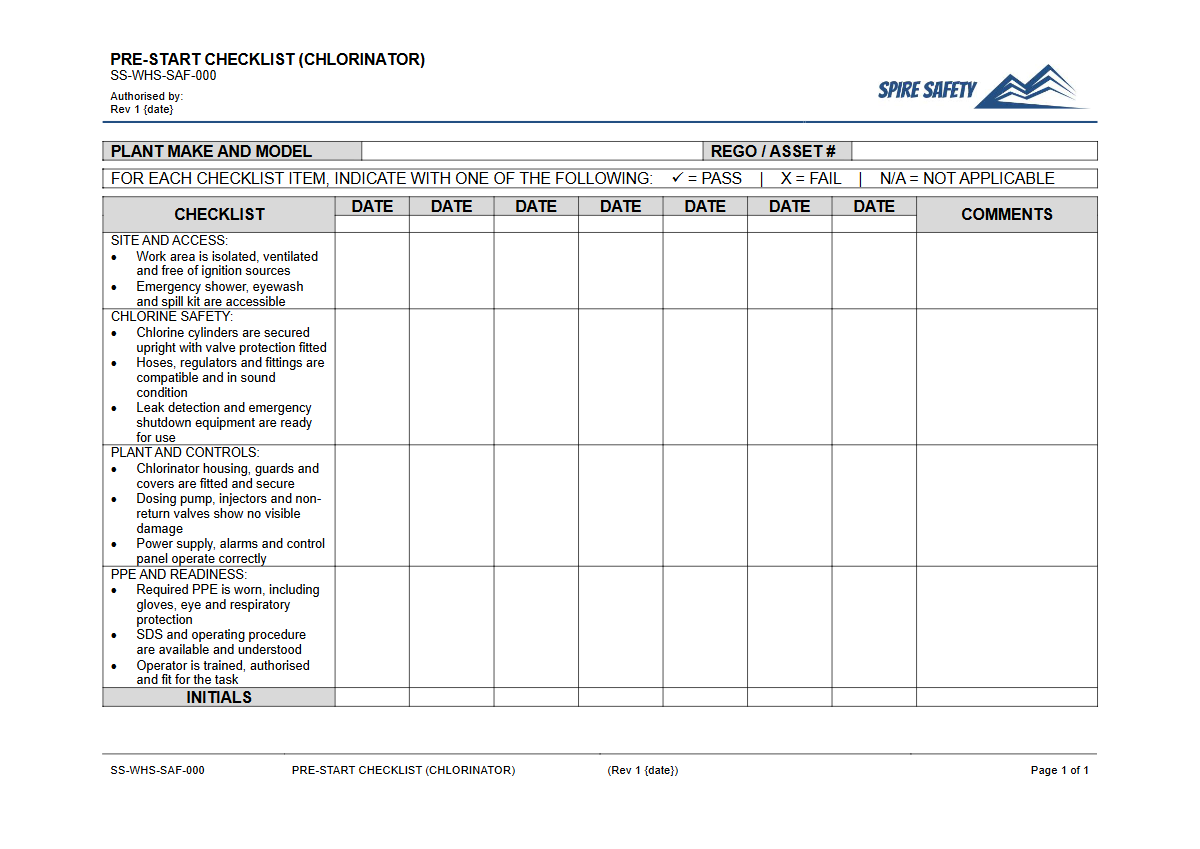
Formalise safety checks on chlorination equipment with our free Pre-Start Checklist (Chlorinator) Template.
Free Pre-Start Checklist (Chlorinator) Template
DOCX • 125 KB + PDF
Updated Oct 2026
No signup required
Purpose of the Free Pre-Start Checklist (Chlorinator) Template
This Free Pre-Start Checklist (Chlorinator) Template provides a structured starting point for organisations to formalise daily safety inspections of chlorination equipment. Using a checklist before operation is a critical proactive measure to identify and control hazards before they cause harm.
Chlorinators, which handle hazardous chemicals under pressure, present significant risks, including chemical leaks, exposure to toxic gas, electrical faults, and equipment failure.
Implementing a consistent pre-start process helps to systematically verify that the equipment is in safe working order, all safety controls are functioning, and the immediate work area is free from hazards. It forms a key part of your daily safety routine, demonstrating due diligence and a commitment to worker safety.
Documenting these checks creates a valuable record for maintenance planning, incident investigation, and safety audits. It is an essential element within broader WHS management systems that aim to manage risks proactively.
Video walkthrough
How to use the Free Pre-Start Checklist (Chlorinator) Template
This template is provided in both DOCX and PDF formats for your convenience. The DOCX file is fully editable, allowing you to tailor the checklist to your specific operational needs. To use the template effectively, follow these steps:
- Download: Select your preferred format (DOCX or PDF) and download the file.
- Customise: Open the DOCX file and modify the checklist items. Add, remove, or edit checks to align with the specific make and model of your chlorinator, the type of chlorine used (gas, liquid, or solid), and any site-specific hazards or procedures. Include fields for operator details, date, time, and corrective action notes.
- Train: Ensure all operators are trained on how to use the checklist correctly. They must understand what each item means and how to identify a non-conformance.
- Implement: Integrate the checklist into your standard operating procedures, mandating its completion before every use or at the start of each shift.
Please note: this document is a template that you must customise to suit your specific workplace, equipment, and operational context. We cannot guarantee it will meet your needs 'out of the box'.
Effective pre-start inspections are vital across all types of plant and equipment. For broader discussions on this topic with your team, our Pre-Start Checks and Plant Maintenance Toolbox Talk Template provides a useful framework.
When to use a Pre-Start Checklist
A Pre-Start Checklist for a chlorinator should be completed before the equipment is used for the first time on any given day or shift. This frequency ensures that any faults or changes that may have occurred overnight or between shifts—such as damage, leaks, or tampering—are identified before the system is energised and put into service.
The checklist should also be used after any significant maintenance, repair, or modification to verify that the equipment has been returned to a safe operational state. The completed records from these checks provide a continuous and auditable history of the equipment's condition, which can be invaluable during a formal WHS compliance auditing process to verify that safety procedures are being followed consistently.
Who should use it
This Pre-Start Checklist should be used by trained and competent personnel who are authorised to operate the chlorination system. This typically includes:
- Plant Operators: The primary users responsible for the day-to-day operation of the equipment. They are on the front line and are best placed to notice subtle changes or developing issues.
- Maintenance Staff: When conducting post-maintenance checks to ensure the system is safe to hand back to operations.
- Supervisors and Managers: They are responsible for ensuring the pre-start process is implemented correctly, that operators are completing the checks diligently, and that a system is in place to address and close out any identified defects in a timely manner.
Establishing robust safety procedures around high-risk equipment is a fundamental WHS duty. For organisations needing assistance in developing or refining their safety systems, engaging professional WHS consulting services can provide expert guidance and support.
Similar diligence is required for other water treatment equipment; you can adapt this process using our Free Pre-Start Checklist (Aerator) Template for other plant items.
Common mistakes
Common mistakes to avoid
- Using the generic template without customising it for the specific chlorinator model and workplace risks.
- Treating the checklist as a 'tick and flick' exercise without physically verifying each item.
- Failing to establish a clear procedure for reporting and rectifying defects found during the check.
- Neglecting to provide adequate training to operators on how to properly conduct the inspection and identify potential faults.
Legal references
Legal considerations
The following legal requirements may be relevant to this type of work.
- Work Health and Safety Act (Harmonised) — Provides the primary duties for protecting workers and other people from work health and safety risks.
- Work Health and Safety Regulations (Harmonised) — Sets out requirements supporting the management of workplace hazards and risks.
The following codes may be relevant to this type of work.
- Managing WHS Risks Code of Practice — Provides practical guidance on identifying hazards, assessing risks and applying effective controls.
- Work Health and Safety Consultation, Cooperation and Coordination Code of Practice — Provides practical guidance on consulting workers and coordinating with other duty holders.
- Managing the Work Environment and Facilities Code of Practice — Provides practical guidance on safe work environments, workplace facilities and related controls.
Did you know
Chlorine's Dual Nature
Chlorine is one of the most commonly manufactured chemicals in the world, essential for public health, but even low levels of chlorine gas (1-3 ppm) can cause mild mucous membrane irritation.
FAQ
Frequently asked questions
01What are the primary hazards to look for during a chlorinator pre-start check?
02How often does a chlorinator pre-start checklist need to be completed?
03Can this checklist be adapted for both gas and liquid chlorination systems?
04Who is responsible for ensuring pre-start checks are completed correctly?
Share this resource
Free Pre-Start Checklist (Chlorinator) Template
Browse Categories
How To Use It
- 1Download and open in Word or PDF.
- 2Replace the placeholders with your business details.
- 3Get it reviewed by a WHS specialist before rollout.
Need it customised?
Our WHS consultants can adapt this template to your site, run a gap analysis, or audit what you already have in place.
Book a Free Consultation WHS consulting servicesor call 1300 156 382