
Free Pre-Start Checklist (Clothes Dryer) Template
Download our free Pre-Start Checklist (Clothes Dryer) Template. A structured Word & PDF resource to formalise daily equipment safety checks in Australia.
Free Pre-Start Checklist (Clothes Dryer) Template
DOCX • 125 KB + PDF
Updated Oct 2026
No signup required
Purpose of the Free Pre-Start Checklist (Clothes Dryer) Template
Commercial clothes dryers, common in industries like hospitality, healthcare, and laundromats, pose significant fire and electrical risks if not properly maintained. The primary cause of dryer fires is the ignition of lint build-up in the exhaust duct and surrounding areas.
This Free Pre-Start Checklist (Clothes Dryer) Template provides a structured framework for operators to conduct consistent, documented safety inspections before using the equipment. Formalising these checks helps identify potential hazards such as blocked vents, frayed electrical cords, or malfunctioning components before they lead to an incident, equipment damage, or costly downtime.
Using a standardised checklist transforms routine inspections from a matter of memory into a formal process. It forms a critical part of your preventative maintenance schedule and demonstrates a proactive approach to risk management.
Consistent use helps embed a culture of safety and can be discussed regularly using resources like a Pre-Start Checks and Plant Maintenance Toolbox Talk to reinforce its importance.
Video walkthrough
How to use the Free Pre-Start Checklist (Clothes Dryer) Template
This resource is provided as both a DOCX file for easy customisation and a PDF for immediate printing and use. The key to effective implementation is tailoring the document to your specific operational needs.
It is crucial to customise this template. We have provided a solid foundation based on common safety principles, but you must adapt it to reflect the specific make and model of your dryers, your work environment, and any unique hazards identified through your risk assessment process.
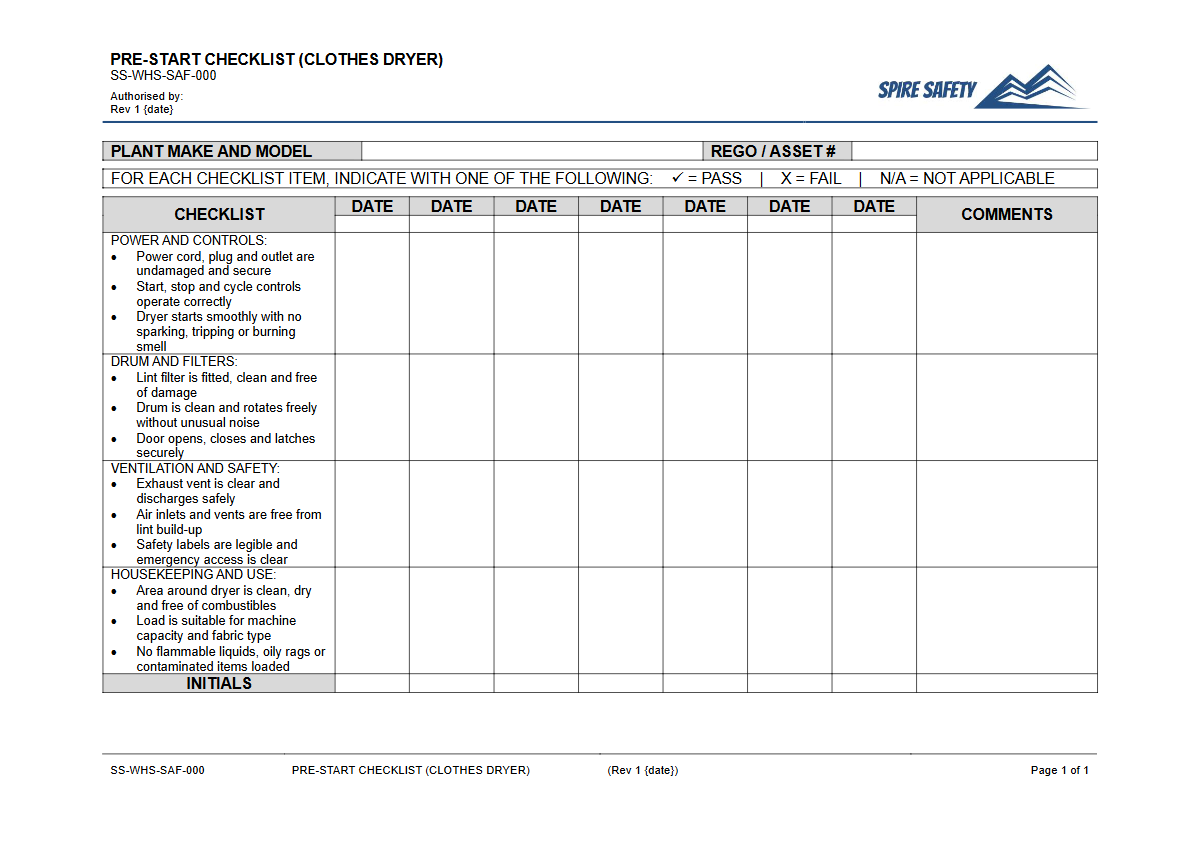
Key Inspection Points to Include:
- Lint Filter: Check that it is clean before every cycle. A clogged filter restricts airflow, causing heat build-up and creating a serious fire hazard.
- Exhaust Vent & Ducting: Ensure the exterior vent is clear of obstructions like leaves, nests, or snow. Check for visible lint accumulation around the connection point.
- Power Supply: Inspect the power cord and plug for any signs of wear, fraying, or damage. Ensure the connection to the outlet is secure.
- Door & Seal: Check that the door latches securely and the seal is intact to ensure proper operation and heat containment.
- Controls & Settings: Verify that all dials, buttons, and digital displays are functioning correctly.
- General Area: Keep the area around the dryer clear of flammable materials, clutter, and combustibles.
Once customised, this checklist should be integrated into your daily operating procedures. This ensures it becomes a routine part of your organisation's comprehensive WHS management system rather than an isolated document.
When to use it
A pre-start check should be completed before the first use of the clothes dryer each day or at the beginning of every shift in facilities with 24-hour operations. The goal is to catch developing issues early.
Creating a habit of performing the check at a consistent time reinforces its importance and ensures it doesn't get overlooked during busy periods. In high-dependency settings like aged care, where laundry services are essential for resident wellbeing, these routine checks are non-negotiable. Embedding this process supports the broader safety culture necessary in such environments, complementing other procedures detailed in resources like the Aged Care Manual Handling Toolbox Talk.
Who should use it
The checklist is designed for the primary operators of the equipment. This includes laundry staff, hotel housekeepers, aged care facility workers, or anyone tasked with operating a commercial dryer.
They are the first line of defence in identifying faults or unsafe conditions. Supervisors and managers also have a crucial role.
They are responsible for training staff on how to use the checklist correctly, ensuring checks are being completed, and reviewing the completed forms. Any identified faults or required maintenance must be actioned promptly, and the equipment should be tagged out of service until it is repaired and deemed safe to use.
Regular reviews of completed checklists can reveal recurring issues, indicating a need for more comprehensive maintenance or even equipment replacement. These records are valuable inputs for periodic WHS compliance audits. The process of customising and implementing this checklist can be applied to other machinery in your workplace.
For example, a facility with industrial mixing equipment might need a specific Pre-Start Checklist (Agitator) Template to manage different risks. You can explore our free WHS resources library for more templates to support your safety management system.
Common mistakes
Common mistakes to avoid
- Using the checklist as a 'tick and flick' exercise without physically inspecting each item.
- Forgetting to clean the lint filter before every load, not just once a day.
- Ignoring unusual noises, vibrations, or burning smells during operation.
- Overloading the machine, which strains the motor and blocks airflow, increasing fire risk.
Legal references
Legal considerations
The following legal requirements may be relevant to this type of work.
- Work Health and Safety Act (Harmonised) — Provides the primary duties for protecting workers and other people from work health and safety risks.
- Work Health and Safety Regulations (Harmonised) — Sets out requirements supporting the management of workplace hazards and risks.
The following codes may be relevant to this type of work.
- Managing WHS Risks Code of Practice — Provides practical guidance on identifying hazards, assessing risks and applying effective controls.
- Work Health and Safety Consultation, Cooperation and Coordination Code of Practice — Provides practical guidance on consulting workers and coordinating with other duty holders.
- Managing the Work Environment and Facilities Code of Practice — Provides practical guidance on safe work environments, workplace facilities and related controls.
Did you know
Fire Risk
According to the ACCC, clothes dryers are responsible for over 200 house fires across Australia each year, with the primary cause being a failure to clean the lint filter.
Efficiency Impact
A clogged lint filter and exhaust vent not only create a fire hazard but also reduce the dryer's efficiency. A clean vent system allows air to circulate properly, drying clothes faster and using less energy.
FAQ
Frequently asked questions
01Is a pre-start check legally required for a commercial clothes dryer in Australia?
02How often should the dryer's lint filter be cleaned?
03What are the main fire hazards associated with clothes dryers?
04Can I use this template for a domestic clothes dryer at home?
Share this resource
Free Pre-Start Checklist (Clothes Dryer) Template
Browse Categories
How To Use It
- 1Download and open in Word or PDF.
- 2Replace the placeholders with your business details.
- 3Get it reviewed by a WHS specialist before rollout.
Need it customised?
Our WHS consultants can adapt this template to your site, run a gap analysis, or audit what you already have in place.
Book a Free Consultation WHS consulting servicesor call 1300 156 382