
Free Pre-Start Checklist (Coffee Grinder) Template
Download our free Pre-Start Checklist (Coffee Grinder) Template.
Free Pre-Start Checklist (Coffee Grinder) Template
DOCX • 125 KB + PDF
Updated Oct 2026
No signup required
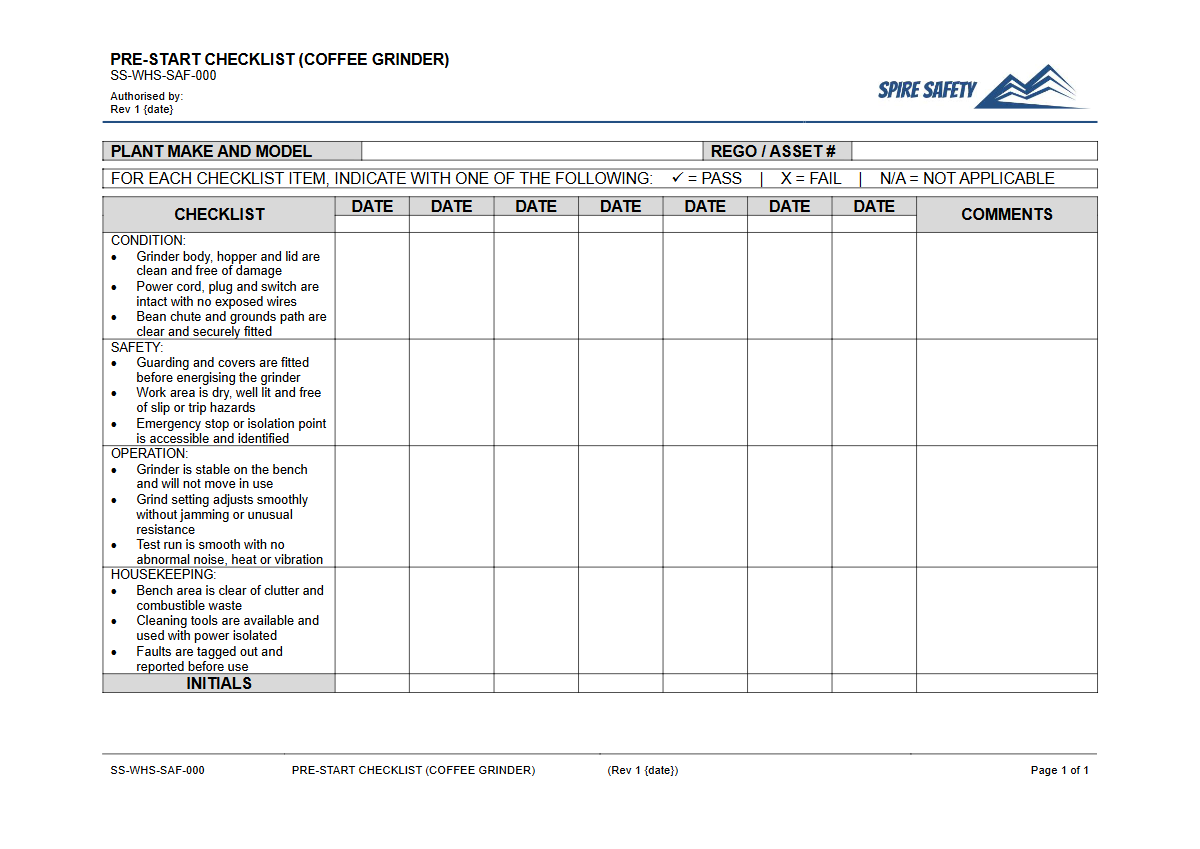
Purpose of the Free Pre-Start Checklist (Coffee Grinder) Template
Using a commercial coffee grinder is a daily task in countless cafes, restaurants, and offices across Australia. To ensure the safety of operators and the longevity of the equipment, a consistent inspection routine is crucial.
This is where our Free Pre-Start Checklist (Coffee Grinder) Template comes in. It provides a structured format to formalise these daily checks, helping you identify potential hazards before they cause harm.
A documented pre-start check demonstrates a proactive approach to workplace health and safety. It helps in systematically checking for common issues such as damaged electrical cords, loose components, improper guarding, or cleanliness issues that could affect performance and safety.
Regularly completing this checklist helps integrate equipment safety into your broader WHS management systems, creating a documented record of due diligence and helping to prevent incidents before they occur.
Video walkthrough
How to use the Free Pre-Start Checklist (Coffee Grinder) Template
This template is designed for practical, on-the-floor use. The process is straightforward:
- Download: Get the template in your preferred format, DOCX for easy editing or PDF for straightforward printing.
- Customise: This template is a starting point. It is essential that you customise this document to suit the specific make and model of your coffee grinder, your workplace environment, and your operational procedures. We are not liable for any incidents that may arise from the use of this template. Add your company branding and specific check items relevant to your equipment.
- Train: Ensure all operators are trained on how to properly conduct the inspection and what to do if they identify a fault. They must understand that the grinder should not be used if it fails a critical safety check.
- Implement: Integrate the checklist into your daily opening procedures. Store completed records in a designated location for review and auditing purposes.
Discussing the findings from these checks can be an effective topic for regular safety meetings, reinforcing their importance. Our Pre-Start Checks and Plant Maintenance Toolbox Talk Template can help structure these discussions and foster a stronger safety culture.
Key Inspection Points for a Coffee Grinder
A thorough coffee grinder pre-start check should cover several key areas to manage risks effectively. Your customised checklist should include points such as:
Electrical Safety
- Inspect the power cord for any cuts, abrasions, or exposed wiring.
- Check the plug for damage, including bent or loose pins.
- Ensure the power switch is functional and not damaged.
- Verify that the grinder is plugged into a suitable, non-overloaded power outlet.
Mechanical and Operational Safety
- Confirm the bean hopper is securely seated and free from cracks.
- Check that any guards or covers over the grinding burrs are in place and secure.
- Ensure the grind adjustment collar or lever moves freely and is not jammed.
- Test the dosing mechanism (if applicable) to ensure it operates smoothly.
While a coffee grinder presents different hazards to industrial equipment, the principles of inspection remain the same. The focus is on electrical safety and cleanliness, unlike the more complex guarding and structural checks detailed in a Free Bench Grinder SOP.
When to use the Pre-Start Checklist
The coffee grinder pre-start check should be completed before the first use of the equipment each day or at the beginning of each shift in a multi-shift operation. It should also be performed after any cleaning, maintenance, or relocation of the machine to ensure it has been reassembled correctly and is safe to operate.
Who should use the Pre-Start Checklist
Any worker tasked with operating the coffee grinder should be responsible for completing the checklist. This typically includes baristas, kitchen staff, or designated office personnel.
It's vital that these individuals are not only shown how to fill out the form but also understand the 'why' behind each check. Ensuring staff are not only trained but also competent is a key part of WHS management. While this checklist helps with daily inspections, formally verifying a worker's ability to operate equipment safely is also vital, a process that is critical for higher-risk plant like that covered in our Verification of Competency (Die Grinder) Template.
A pre-start check is one component of a safe system of work. It should be supported by clear operational guidelines, such as a Safe Operating Procedure.
For other types of equipment, you might require a Free Angle Grinder SOP to detail the step-by-step process for safe use. To ensure all your safety documents remain effective, a periodic review is recommended.
A formal WHS compliance auditing process can identify gaps and opportunities for improvement across your entire safety system. Explore our complete free WHS resources library for more templates to support your safety management system.
Common mistakes
Common mistakes to avoid
- Treating the checklist as a tick-and-flick exercise without proper inspection.
- Using a generic checklist without customising it for the specific grinder model used.
- Failing to record the results of the check or not having a clear process for reporting and rectifying faults.
- Neglecting to train new staff members on how to perform the checks correctly.
Legal references
Legal considerations
The following legal requirements may be relevant to this type of work.
- Work Health and Safety Act (Harmonised) — Provides the primary duties for protecting workers and other people from work health and safety risks.
- Work Health and Safety Regulations (Harmonised) — Sets out requirements supporting the management of workplace hazards and risks.
The following codes may be relevant to this type of work.
- Managing WHS Risks Code of Practice — Provides practical guidance on identifying hazards, assessing risks and applying effective controls.
- Work Health and Safety Consultation, Cooperation and Coordination Code of Practice — Provides practical guidance on consulting workers and coordinating with other duty holders.
- Managing the Work Environment and Facilities Code of Practice — Provides practical guidance on safe work environments, workplace facilities and related controls.
Did you know
Blade vs. Burr
Most commercial grinders are 'burr' grinders, which crush beans between two revolving abrasive surfaces. This differs from domestic 'blade' grinders that chop beans, and this design difference affects maintenance needs and cleaning procedures.
Static Buildup
Grinding coffee can create static electricity, causing fine coffee grounds (chaff) to cling to surfaces. This is a common operational issue, not a fault, but highlights the importance of regular cleaning for both function and hygiene.
FAQ
Frequently asked questions
01What is the primary purpose of a coffee grinder pre-start checklist?
02How often should a coffee grinder pre-start check be performed?
03Is this checklist template suitable for commercial espresso grinders?
04Do I need a Safe Work Method Statement (SWMS) for a coffee grinder?
Share this resource
Free Pre-Start Checklist (Coffee Grinder) Template
Browse Categories
How To Use It
- 1Download and open in Word or PDF.
- 2Replace the placeholders with your business details.
- 3Get it reviewed by a WHS specialist before rollout.
Need it customised?
Our WHS consultants can adapt this template to your site, run a gap analysis, or audit what you already have in place.
Book a Free Consultation WHS consulting servicesor call 1300 156 382