
Free Pre-Start Checklist (Combi Oven) Template
Download our free Pre-Start Checklist (Combi Oven) Template.
Free Pre-Start Checklist (Combi Oven) Template
DOCX • 125 KB + PDF
Updated Oct 2026
No signup required
Purpose of the Free Pre-Start Checklist (Combi Oven) Template
Operating a commercial combi oven involves significant risks, including intense heat, high-pressure steam, and electrical hazards. A systematic pre-start inspection is a critical control measure to ensure the equipment is safe to use before every shift.
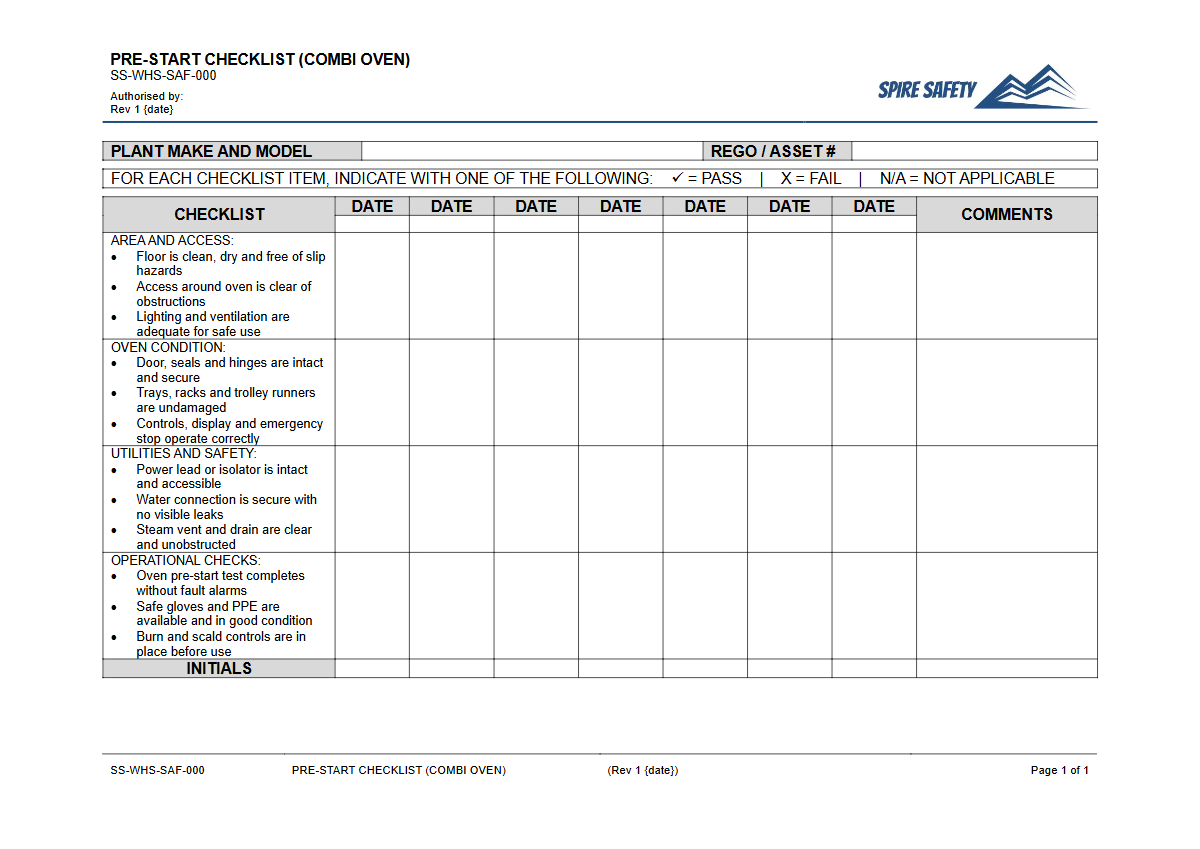
Our Free Pre-Start Checklist (Combi Oven) Template provides a structured framework for these daily checks, helping to identify potential faults before they can lead to worker injury, costly breakdowns, or food safety compromises.
Using a standardised checklist helps formalise safety procedures, ensuring that no step is missed during busy service periods. It creates a documented record of inspections, which is essential for demonstrating due diligence and forms a key component of any effective safety management system.
By proactively identifying issues like worn door seals, blocked drainage, or malfunctioning controls, you can manage risks and maintain a safer work environment for your kitchen staff. Integrating such procedures is fundamental to building robust WHS management systems in any hospitality setting.
Video walkthrough
How to use the Free Pre-Start Checklist (Combi Oven) Template
This resource is designed to be a practical starting point for your organisation. After downloading the DOCX or PDF file, the next step is customisation.
It is crucial to adapt the checklist to the specific make and model of the combi oven used in your workplace, as features and safety components can vary significantly between manufacturers.
Walk through the operation of your specific unit and add or remove checklist items to reflect its unique functions. This may include checks for specific digital error codes, the condition of internal cleaning systems, the integrity of water filtration connections, and the security of rolling racks.
Train your staff not only on how to use the oven but also on how to complete the checklist accurately.
Important Note on Customisation
This document is a template only. To make it effective and relevant to your operations, you must customise it.
We are not responsible for the outcomes if you use this template without tailoring it to your specific equipment, workplace, and the risks present in your environment.
To support staff training on the importance of these inspections, consider running a session based on our pre-start checks and plant maintenance toolbox talk. This helps reinforce the 'why' behind the daily check, encouraging a more diligent approach beyond a simple tick-box exercise.
When to use a Combi Oven Pre-Start Checklist
The Combi Oven Pre-Start Checklist should be completed at the beginning of each day or shift before the oven is used for the first time. This ensures that any issues that may have developed overnight or gone unnoticed from the previous shift are caught before the appliance is put into full operation.
In high-volume kitchens, a brief visual inspection may also be prudent before each individual use throughout the day, focusing on obvious hazards like obstructions or damage. The completed daily checklists should be filed and retained as part of your safety records. These documents provide valuable data for maintenance scheduling and can be reviewed during internal safety reviews or WHS compliance audits.
Who should use this Pre-Start Checklist
This checklist should be used by personnel who have been properly trained and deemed competent to operate the combi oven. This typically includes chefs, cooks, and kitchen hands who are directly responsible for using the equipment.
The responsibility for overseeing the process and reviewing completed checklists should fall to a supervisor, head chef, or manager.
It is vital that workers are not only trained on how to use the oven but also understand the risks associated with it and the importance of each item on the checklist. Competency also includes knowing what to do when a fault is identified—namely, to stop, tag the equipment as out-of-service, and report the issue to a supervisor immediately. The same principles of operator-led checks apply to other kitchen equipment, such as when using a pre-start checklist for a coffee grinder.
By integrating this template into your daily routine, you empower your team to take an active role in workplace safety. For organisations needing further guidance on implementing practical risk controls and safety documentation, engaging with specialist WHS consulting services can provide tailored support and expertise.
Common mistakes
Common mistakes to avoid
- Using a generic checklist without customising it for the specific make and model of the combi oven.
- Skipping checks during busy periods or treating it as a 'tick-and-flick' exercise without genuine inspection.
- Failing to action identified issues, such as worn door seals or error codes, and continuing to use the faulty equipment.
- Not providing adequate training to staff on how to perform the checks correctly and what to do if a fault is found.
Legal references
Legal considerations
The following legal requirements may be relevant to this type of work.
- Work Health and Safety Act (Harmonised) — Provides the primary duties for protecting workers and other people from work health and safety risks.
- Work Health and Safety Regulations (Harmonised) — Sets out requirements supporting the management of workplace hazards and risks.
The following codes may be relevant to this type of work.
- Managing WHS Risks Code of Practice — Provides practical guidance on identifying hazards, assessing risks and applying effective controls.
- Work Health and Safety Consultation, Cooperation and Coordination Code of Practice — Provides practical guidance on consulting workers and coordinating with other duty holders.
- Managing the Work Environment and Facilities Code of Practice — Provides practical guidance on safe work environments, workplace facilities and related controls.
Did you know
Steam Hazards
The steam generated by a combi oven can cause severe scalds instantly. A faulty door seal not only reduces cooking efficiency but also creates a significant burn risk for anyone nearby.
Water Quality Matters
The quality of water used in a combi oven directly affects its performance and longevity. Hard water causes lime scale build-up, leading to component failure and costly repairs if not managed with filtration and regular descaling.
FAQ
Frequently asked questions
01What should a combi oven pre-start check include?
02Why are pre-start checks for kitchen equipment important?
03How often should a combi oven be inspected?
04Is this template compliant with Australian WHS laws?
Share this resource
Free Pre-Start Checklist (Combi Oven) Template
Browse Categories
How To Use It
- 1Download and open in Word or PDF.
- 2Replace the placeholders with your business details.
- 3Get it reviewed by a WHS specialist before rollout.
Need it customised?
Our WHS consultants can adapt this template to your site, run a gap analysis, or audit what you already have in place.
Book a Free Consultation WHS consulting servicesor call 1300 156 382