
Free Pre-Start Checklist (Dialysis Unit) Template
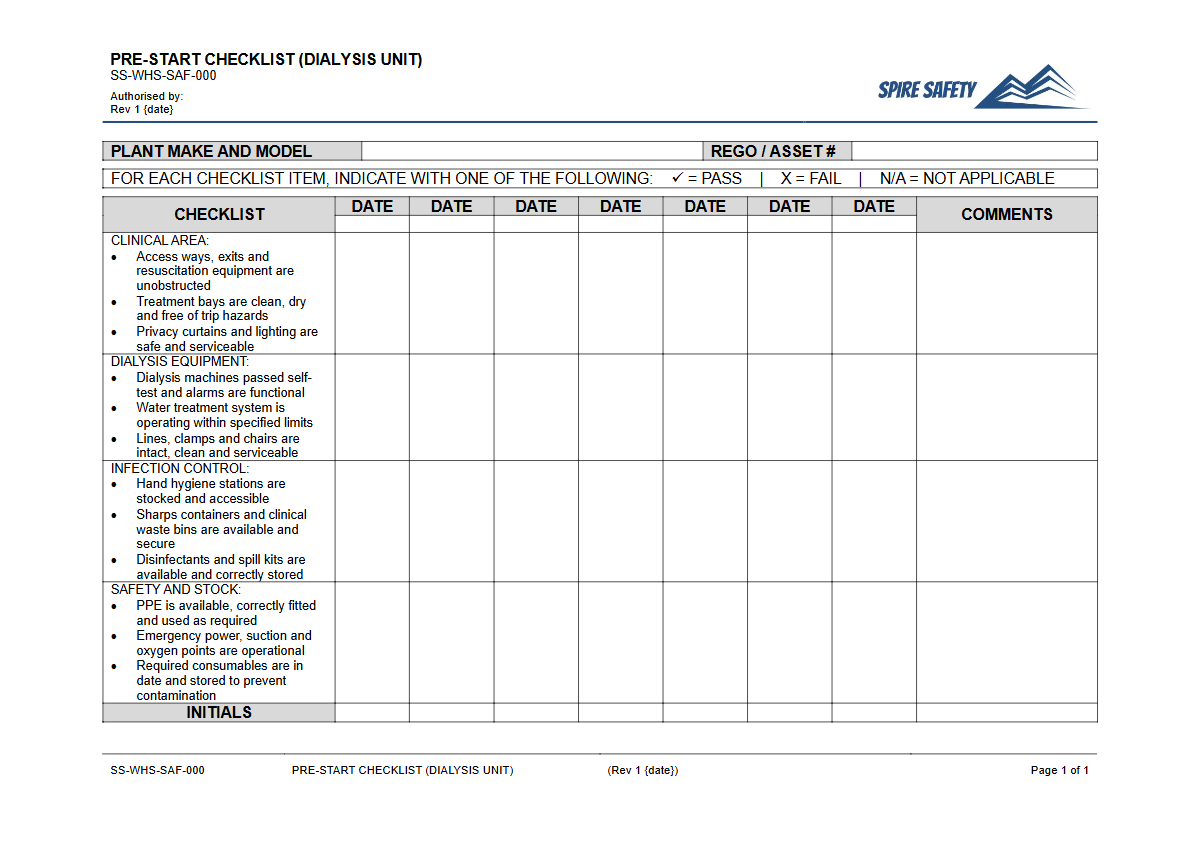
Download our free Pre-Start Checklist (Dialysis Unit) Template. This structured DOCX & PDF resource helps formalise daily equipment safety checks.
Free Pre-Start Checklist (Dialysis Unit) Template
DOCX • 125 KB + PDF
Updated Oct 2026
No signup required
Purpose of the Free Pre-Start Checklist (Dialysis Unit) Template
Dialysis is a life-sustaining treatment, and the reliability of the equipment used is paramount. This Free Pre-Start Checklist (Dialysis Unit) Template provides a structured framework for healthcare professionals to conduct consistent and thorough safety inspections before each use.
Implementing a formal pre-start check helps to identify potential faults, ensure the machine is clean and correctly set up, and verify that all safety features are functional. Regular checks are a fundamental component of proactive risk management in a clinical setting, safeguarding both patients and operators.
Using this checklist helps an organisation demonstrate its commitment to safety and operational excellence. It formalises the process of verifying equipment readiness, reducing the risk of equipment malfunction during treatment. This structured approach is crucial for maintaining high standards of patient care and aligns with the principles of effective risk control seen in other healthcare procedures, such as those governing aged care manual handling procedures.
Video walkthrough
How to use the Free Pre-Start Checklist (Dialysis Unit) Template
This resource is provided as a customisable template in both DOCX and PDF formats. It is designed to be adapted to the specific models of dialysis machines and the established protocols within your healthcare facility.
The checklist prompts operators to inspect critical components such as fluid lines, alarms, monitors, and water treatment connections. It also includes sections for recording actions taken and escalating any identified issues to the appropriate personnel, like biomedical engineering or a unit manager.
To implement it effectively:
- Download: Select the DOCX version for easy editing.
- Customise: Modify the checklist items to match your specific dialysis machine models, consumables, and internal safety protocols. Add your organisation’s logo and details.
- Train: Ensure all relevant staff (e.g., renal nurses, dialysis technicians) are trained on how to use the checklist correctly and understand the importance of each check.
- Implement: Integrate the checklist into your daily startup procedures for the dialysis unit.
Important: This document is a starting-point template only. We have provided a structured guide, but you must customise it to reflect your specific equipment, workplace, and the unique risks present in your facility.
A standalone document is only one part of a safe system of work; it must be incorporated into your facility's broader WHS management systems to be effective.
When to use a Dialysis Unit Pre-Start Checklist
The pre-start checklist should be completed before the first use of the dialysis machine each day or at the beginning of each operational shift. It serves as the final verification that the machine is safe and ready for patient connection after cleaning, disinfection, and any routine maintenance.
Consistent use establishes a baseline for equipment condition, making it easier to spot deviations and developing issues. Integrating this check into daily routines is a key theme of our Pre-Start Checks and Plant Maintenance Toolbox Talk Template, which reinforces the importance of this habit.
Who should use this checklist
This checklist should be completed by a trained and competent person authorised to operate the dialysis equipment. This typically includes registered nurses specialising in nephrology, clinical technologists, or dialysis technicians.
The user must have a thorough understanding of the machine's operation, its safety features, and the potential hazards associated with its use. Ensuring that operators have the requisite skills and knowledge is a core responsibility for any person conducting a business or undertaking (PCBU), and seeking WHS consulting can help your organisation develop robust competency and training frameworks.
Beyond the Pre-Start: A Holistic Approach
While a pre-start checklist is a critical tool for day-to-day safety, it forms just one part of a comprehensive safety and quality assurance program. This program should also include scheduled preventative maintenance by qualified biomedical technicians, regular performance verification, and adherence to the manufacturer's servicing requirements.
Periodically reviewing your overall processes, including the effectiveness of your pre-start checks, ensures continuous improvement. A formal WHS compliance audit can provide valuable third-party insight into the health of your safety systems and identify opportunities for enhancement.
By integrating daily checks, professional maintenance, and periodic reviews, healthcare facilities can create a robust system that ensures the ongoing safety and reliability of their dialysis services. For more tools to support your safety programs, you can browse our complete free WHS resources library.
Common mistakes
Common mistakes to avoid
- Failing to customise the generic template for the specific machine model and clinic protocols.
- 'Pencil-whipping' the form without performing the physical checks, defeating its purpose.
- Not immediately reporting and escalating identified faults to maintenance or management.
- Insufficient training for staff on why each check is important and how to perform it correctly.
Legal references
Legal considerations
The following legal requirements may be relevant to this type of work.
- Work Health and Safety Act (Harmonised) — Provides the primary duties for protecting workers and other people from work health and safety risks.
- Work Health and Safety Regulations (Harmonised) — Sets out requirements supporting the management of workplace hazards and risks.
The following codes may be relevant to this type of work.
- Managing WHS Risks Code of Practice — Provides practical guidance on identifying hazards, assessing risks and applying effective controls.
- Work Health and Safety Consultation, Cooperation and Coordination Code of Practice — Provides practical guidance on consulting workers and coordinating with other duty holders.
- Managing the Work Environment and Facilities Code of Practice — Provides practical guidance on safe work environments, workplace facilities and related controls.
Did you know
Australian Regulation
In Australia, dialysis machines are regulated as medical devices by the Therapeutic Goods Administration (TGA), which sets requirements for their safety, quality, and performance.
Treatment Volume
Over 13 million dialysis treatments are performed in Australia each year, highlighting the critical importance of equipment reliability and safety in this sector.
FAQ
Frequently asked questions
01Why are pre-start checks for dialysis units so important?
02What should be included in a dialysis unit pre-start checklist?
03How often should this checklist be reviewed and updated?
04Can this template be used for different brands of dialysis machines?
Share this resource
Free Pre-Start Checklist (Dialysis Unit) Template
Browse Categories
How To Use It
- 1Download and open in Word or PDF.
- 2Replace the placeholders with your business details.
- 3Get it reviewed by a WHS specialist before rollout.
Need it customised?
Our WHS consultants can adapt this template to your site, run a gap analysis, or audit what you already have in place.
Book a Free Consultation WHS consulting servicesor call 1300 156 382