
Free Pre-Start Checklist (Die Grinder) Template
Download our free Pre-Start Checklist (Die Grinder) Template. This structured DOCX & PDF resource helps formalise daily equipment checks. Get your template.
Free Pre-Start Checklist (Die Grinder) Template
DOCX • 125 KB + PDF
Updated Oct 2026
No signup required
Purpose of the Free Pre-Start Checklist (Die Grinder) Template
A die grinder is a high-speed rotary tool used for grinding, sanding, honing, or polishing materials. Its power and versatility also introduce significant workplace hazards, including high-speed projectiles from disc failure, cuts and abrasions, electric shock, noise, and hand-arm vibration.
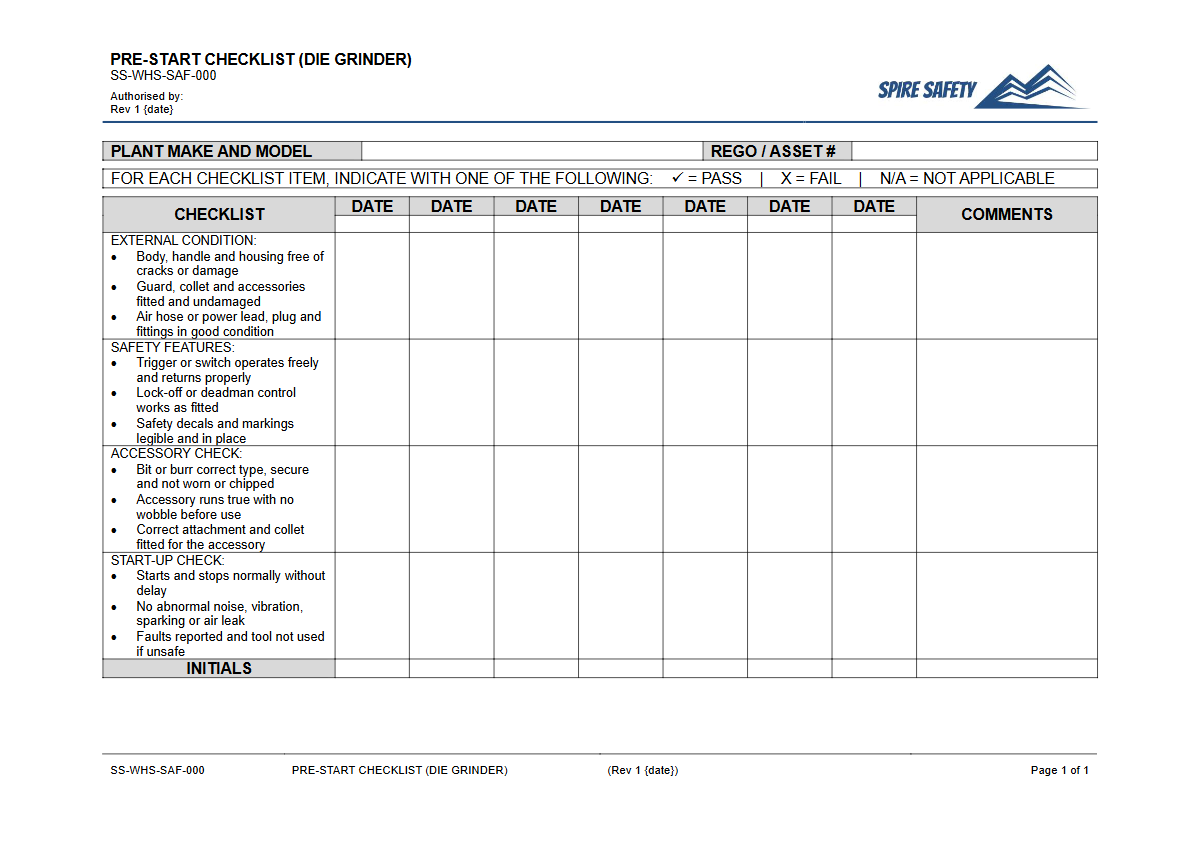
This Free Pre-Start Checklist (Die Grinder) Template provides a structured framework for operators to conduct a thorough and consistent safety inspection before each use. Formalising this process helps identify and control potential faults before they lead to an incident, injury, or equipment failure.
Using a checklist demonstrates a commitment to proactive safety management and creates a verifiable record of due diligence.
Video walkthrough
How to use the Free Pre-Start Checklist (Die Grinder) Template
This resource is available as a fully editable DOCX file and a print-ready PDF. After downloading, you can implement it into your daily safety procedures immediately.
However, it is crucial to adapt the document to your specific operational context.
Note: While this template is a comprehensive starting point aligned with Australian WHS practices, we have designed it to be customised. You should review the checklist and add, remove, or modify items to reflect the specific make and model of your die grinders, the types of attachments used, and the unique risks present in your work environment. Integrating such procedures is a key component of effective WHS management systems.
Key Inspection Points on the Checklist
A thorough pre-start inspection for a die grinder should cover several critical areas to ensure operator safety and equipment integrity. Key checks typically include:
- Guards and Housings: Confirm that all safety guards are correctly fitted, secure, and free from damage or modifications that could compromise their function.
- Abrasive Discs/Bits: Check that the correct attachment is selected for the job. Inspect the disc or bit for cracks, chips, or other damage. Ensure its speed rating is equal to or greater than the maximum speed of the grinder.
- Power Supply: For corded models, inspect the entire length of the power cord for cuts, abrasions, or exposed wires. Check the plug for damage. Ensure the tool is connected via a tested and functioning residual current device (RCD). For pneumatic models, check hoses and couplings for leaks or damage.
- Controls and Switches: Test the trigger/switch to ensure it activates and deactivates correctly and does not stick. If a lock-on button is present, verify its function.
- General Condition: Check the tool body for cracks or damage. Ensure air vents are clear of debris to prevent overheating.
When to use a Die Grinder Pre-Start Checklist
The checklist should be completed by the operator before the first use of the die grinder on every shift. If the tool is used intermittently throughout the day by different people, a new check should be performed by each new operator.
This routine reinforces safe work habits and ensures any damage or faults that may have occurred are identified promptly. This process is similar for other fixed and portable grinding equipment, as outlined in our Free Pre-Start Checklist (Bench Grinder) Template.
Who should use this checklist
This pre-start checklist is designed to be used by any person who is authorised and trained to operate a die grinder. The operator holds the primary responsibility for conducting the inspection and ensuring the tool is safe to use.
Supervisors and managers also have a role in ensuring that operators are completing the checks correctly and that any reported faults are actioned immediately. Completed checklists form an important part of your safety records, providing valuable data for maintenance scheduling and evidence of safety procedures during a WHS compliance auditing process.
For organisations looking to implement broader safety frameworks or refine existing documentation, direct support may be beneficial. Engaging with WHS consulting professionals can help ensure your safety management system is robust, practical, and tailored to your specific risks and legal obligations. For more templates and guides, you can browse our complete free WHS resources library.
Common mistakes
Common mistakes to avoid
- Using an abrasive disc or bit that has a lower RPM rating than the grinder's maximum speed.
- Failing to inspect the power cord and plug for damage, increasing the risk of electric shock.
- Operating the grinder with the safety guard removed or improperly adjusted.
- Treating the checklist as a paperwork exercise without physically inspecting each item.
Legal references
Legal considerations
The following legal requirements may be relevant to this type of work.
- Work Health and Safety Act (Harmonised) — Provides the primary duties for protecting workers and other people from work health and safety risks.
- Work Health and Safety Regulations (Harmonised) — Sets out requirements supporting the management of workplace hazards and risks.
The following codes may be relevant to this type of work.
- Managing WHS Risks Code of Practice — Provides practical guidance on identifying hazards, assessing risks and applying effective controls.
- Work Health and Safety Consultation, Cooperation and Coordination Code of Practice — Provides practical guidance on consulting workers and coordinating with other duty holders.
- Managing the Work Environment and Facilities Code of Practice — Provides practical guidance on safe work environments, workplace facilities and related controls.
Did you know
Vibration Risk
Die grinders can generate high levels of hand-arm vibration (HAV), a known cause of permanent nerve, muscle, and joint damage. Regular maintenance and using the right bit for the job, as documented in pre-start checks, can help manage this risk.
FAQ
Frequently asked questions
01What is a die grinder pre-start checklist?
02Why is a pre-start check so important for a die grinder?
03Who is responsible for completing the die grinder pre-start inspection?
04How often should a die grinder pre-start check be performed?
Share this resource
Free Pre-Start Checklist (Die Grinder) Template
Browse Categories
How To Use It
- 1Download and open in Word or PDF.
- 2Replace the placeholders with your business details.
- 3Get it reviewed by a WHS specialist before rollout.
Need it customised?
Our WHS consultants can adapt this template to your site, run a gap analysis, or audit what you already have in place.
Book a Free Consultation WHS consulting servicesor call 1300 156 382