
Free Pre-Start Checklist (Grain Cleaner) Template
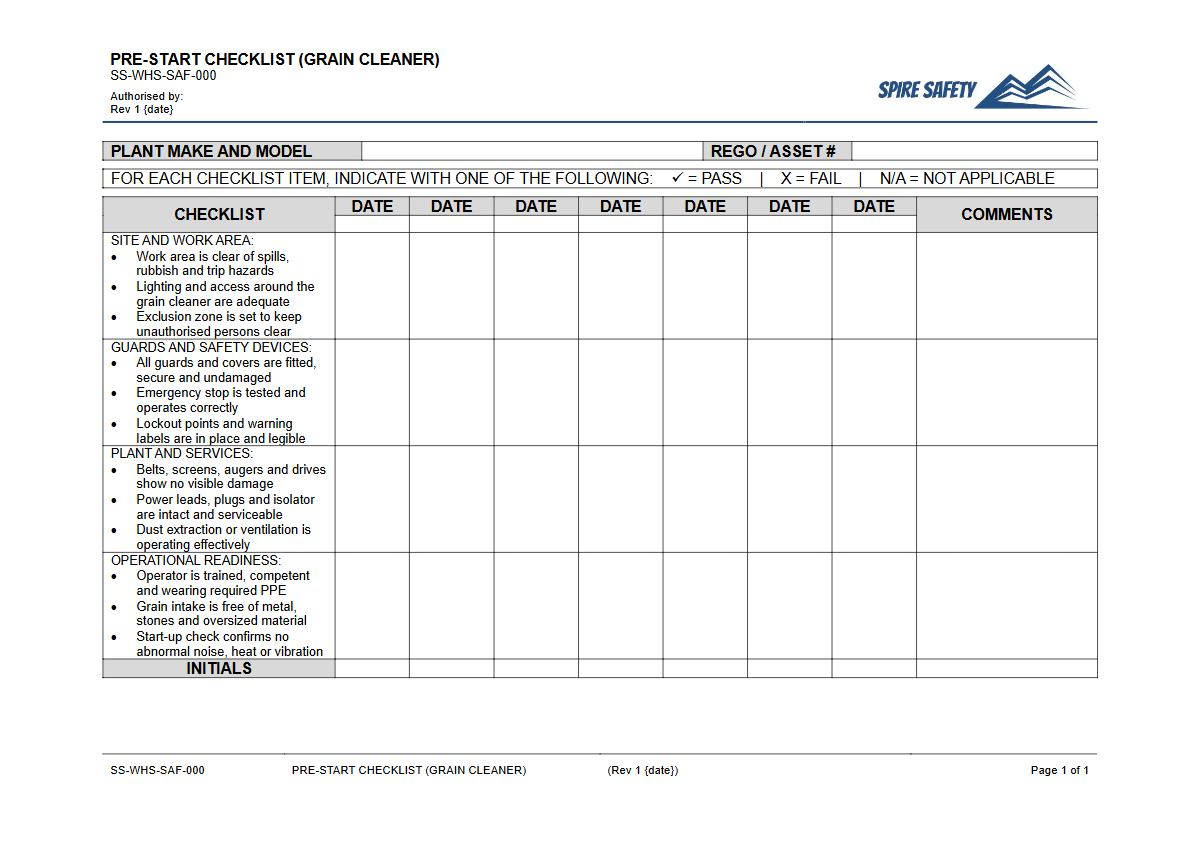
Download our free Pre-Start Checklist (Grain Cleaner) Template. This DOCX & PDF resource helps formalise daily equipment checks.
Free Pre-Start Checklist (Grain Cleaner) Template
DOCX • 125 KB + PDF
Updated Oct 2026
No signup required
Purpose of the Free Pre-Start Checklist (Grain Cleaner) Template
Implementing a consistent inspection routine is crucial for operating agricultural machinery safely. Our free Pre-Start Checklist (Grain Cleaner) Template provides a structured starting point for your business to formalise daily equipment safety checks, helping to identify and control hazards before they cause an incident.
Using a checklist ensures that key safety components, such as guards, emergency stops, and drive mechanisms, are inspected systematically every time.
A documented pre-start check is a fundamental component of effective WHS management systems. It creates a record that demonstrates due diligence and helps identify mechanical issues like worn belts, damaged guards, or blocked screens before they lead to costly breakdowns or serious injuries. This proactive approach to safety and maintenance supports a positive safety culture and helps meet your obligations under Australian WHS laws.
The checklist encourages operators to take ownership of their equipment's condition and fosters a preventative mindset. While this document is specific to grain cleaners, the principles of safe operation apply to all farm equipment.
You can complement your procedures with other resources, such as a free Grain Drill SOP (Safe Operating Procedure) template, to build a comprehensive safety framework.
Video walkthrough
How to Use the Free Pre-Start Checklist (Grain Cleaner) Template
This template is provided in both DOCX and PDF formats for your convenience. The DOCX version is fully editable, allowing you to tailor the checklist to your specific operational needs.
Download the file and add your company branding, site-specific details, and any checks relevant to the particular make and model of your grain cleaner. Items to consider adding include checks for specific augers, screens, fans, or dust extraction systems unique to your machine.
Important: This document is a template, not a finished product. It is essential that you customise it to reflect the specific machinery, tasks, and hazards present at your workplace.
We have created this template as a guide based on common WHS principles, but it is your responsibility to ensure it is adapted to suit your specific legal and operational requirements. If you require assistance with this process, our WHS consulting services can provide expert guidance.
Once customised, the checklist should be printed and kept with the machine or in a designated logbook. Operators should be trained on how to complete it correctly, including the process for reporting and tagging out faulty equipment. Regular inspections are a core part of proactive maintenance; you can reinforce this message with our Pre-Start Checks and Plant Maintenance Toolbox Talk.
When to Use It
This check should be completed by the operator at the start of each day or shift, before the grain cleaner is first energised or used. It is designed to be a quick but thorough inspection that takes only a few minutes to complete.
A check should also be performed if the machine has been idle for an extended period or after it has undergone maintenance or repairs to ensure it is safe to return to service.
Many agricultural sites use a range of specialised plant for grain handling. If your operations also involve grain storage and aeration, you may find our Free Pre-Start Checklist (Aerator) Template useful for standardising your inspection processes across different equipment types.
Who Should Use It
The pre-start checklist should be completed by a competent operator who has been trained in the safe use of the specific grain cleaner. The person performing the check must understand the function of each component they are inspecting and be able to recognise signs of wear, damage, or malfunction.
They must also be authorised to stop work and report any identified faults according to your organisation's procedures.
Supervisors and managers should also be familiar with the checklist. They are responsible for ensuring the checks are being completed correctly, reviewing the completed records, and actioning any reported faults in a timely manner. Periodically reviewing completed checklists is a key part of ensuring procedures are being followed, which can be verified through a formal WHS compliance audit. To find more safety templates and documents to support your procedures, you can browse our complete free WHS resources library.
Common mistakes
Common mistakes to avoid
- Skipping checks during busy periods, assuming the machine is fine.
- Failing to isolate the machine from energy sources before inspecting moving parts.
- Ignoring minor issues like loose guards or worn belts, which can lead to major failures.
- Using a generic, non-customised checklist that doesn't cover the specific features of the machine.
Legal references
Legal considerations
The following legal requirements may be relevant to this type of work.
- Work Health and Safety Act (Harmonised) — Provides the primary duties for protecting workers and other people from work health and safety risks.
- Work Health and Safety Regulations (Harmonised) — Sets out requirements supporting the management of workplace hazards and risks.
The following codes may be relevant to this type of work.
- Managing WHS Risks Code of Practice — Provides practical guidance on identifying hazards, assessing risks and applying effective controls.
- Work Health and Safety Consultation, Cooperation and Coordination Code of Practice — Provides practical guidance on consulting workers and coordinating with other duty holders.
- Managing the Work Environment and Facilities Code of Practice — Provides practical guidance on safe work environments, workplace facilities and related controls.
Did you know
Dust Dangers
Fine dust from grains like wheat, oats, and barley is highly combustible. When suspended in the air in a confined space, it can be ignited by a spark or hot surface, causing a violent dust explosion.
Entanglement Risks
Unguarded Power Take-Off (PTO) shafts are a major cause of fatalities on Australian farms. A PTO shaft rotating at 540 rpm can wrap a person's limb or clothing around it multiple times in less than a second.
FAQ
Frequently asked questions
01Why are pre-start checks for grain cleaners important?
02What are the main hazards associated with grain cleaners?
03How often should a grain cleaner pre-start check be done?
04Can I use a generic checklist for all my agricultural machinery?
Share this resource
Free Pre-Start Checklist (Grain Cleaner) Template
Browse Categories
How To Use It
- 1Download and open in Word or PDF.
- 2Replace the placeholders with your business details.
- 3Get it reviewed by a WHS specialist before rollout.
Need it customised?
Our WHS consultants can adapt this template to your site, run a gap analysis, or audit what you already have in place.
Book a Free Consultation WHS consulting servicesor call 1300 156 382