
Free Pre-Start Checklist (Grain Dryer) Template
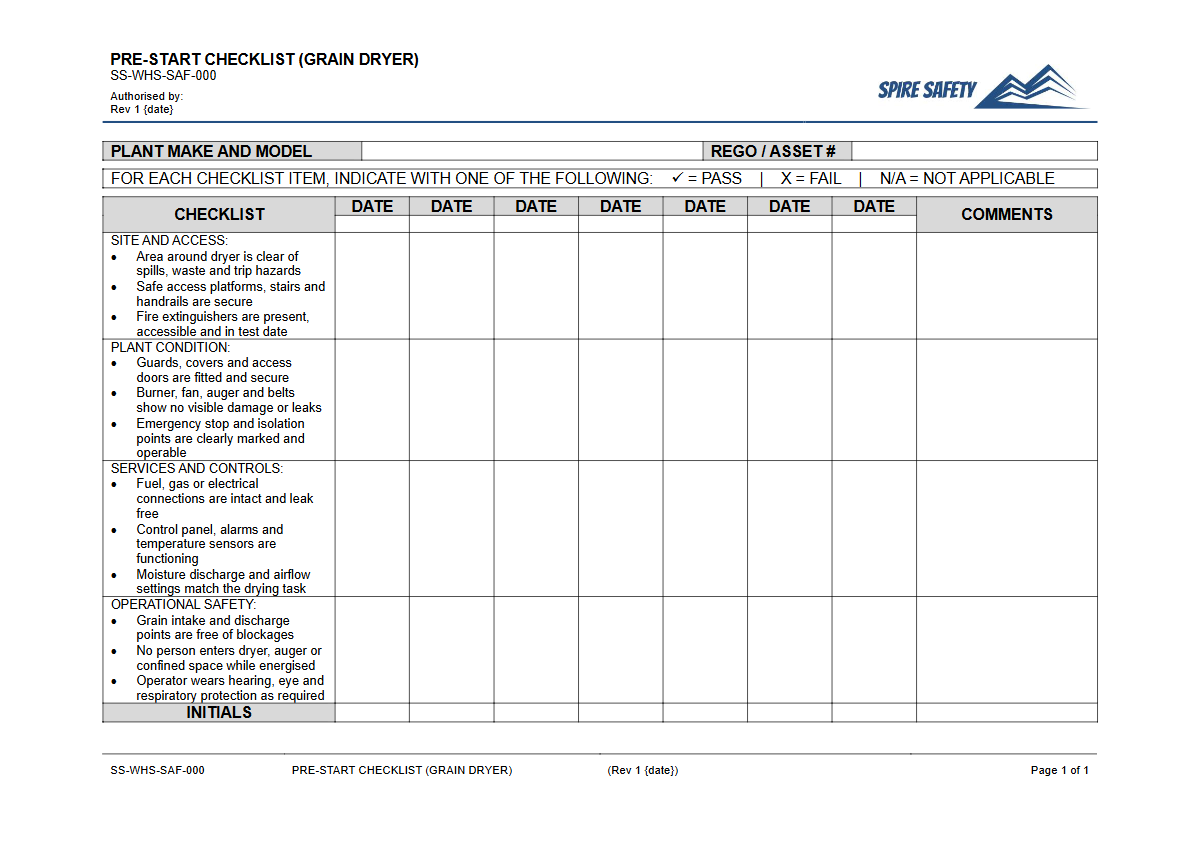
Download our free Pre-Start Checklist (Grain Dryer) Template. This structured document helps formalise daily safety inspections. Available in DOCX & PDF.
Free Pre-Start Checklist (Grain Dryer) Template
DOCX • 125 KB + PDF
Updated Oct 2026
No signup required
Purpose of the Free Pre-Start Checklist (Grain Dryer) Template
Operating agricultural machinery like grain dryers involves significant risks, including fire, explosions from combustible dust, and entanglement in moving parts. A systematic pre-start inspection is a critical safety measure to identify and control these hazards before they cause harm.
This Free Pre-Start Checklist (Grain Dryer) Template provides a structured starting point for organisations to formalise their daily equipment inspections. Using this checklist helps ensure each dryer is in safe working order before operation, promoting a proactive safety culture and helping meet WHS obligations.
It creates a documented record of inspection, which is essential for maintenance scheduling and incident investigations. For other agricultural equipment, you may also need a FREE Grain Drill SOP (Safe Operating Procedure) Template to outline safe work practices.
Implementing documented checks is a fundamental part of building robust WHS management systems. This template assists in standardising procedures, ensuring all operators conduct checks to the same standard. Regularly completing these checks helps prevent costly breakdowns, reduces downtime during critical periods like harvest, and, most importantly, protects workers from injury.
Video walkthrough
How to use the Free Pre-Start Checklist (Grain Dryer) Template
To effectively implement this checklist, download the DOCX file and adapt it to your specific workplace. The key is customisation.
Add your company logo and details, and most importantly, modify the checklist items to reflect the specific make, model, and configuration of your grain dryer. Different machinery requires different checks; for example, the inspection points on a grain dryer are very different from those in our Free Pre-Start Checklist (Agitator) Template.
Once customised, provide training to all operators and maintenance personnel on how to properly complete the inspection. A great way to introduce or reinforce this process is by using a Pre-Start Checks and Plant Maintenance Toolbox Talk Template. Ensure workers understand what each checkpoint means and what to do if they find a fault, such as reporting it to a supervisor and applying a 'Do Not Operate' tag.
Store completed checklists securely as a record of compliance and maintenance history.
Important: This document is a template and not a complete solution. We are not liable for any incidents arising from its use.
You must customise it to address the specific hazards and operational context of your workplace, machinery, and relevant state or territory regulations.
When to use it
A grain dryer pre-start checklist should be completed before the first use of the equipment each day or at the beginning of every operator's shift. This frequency ensures that any issues that may have developed overnight or during a previous shift are identified before work commences.
The check should also be performed after any maintenance or repair work to verify that the equipment has been returned to a safe operational state. During peak seasons with continuous operation, conducting checks at each operator changeover is a sensible practice.
Who should use it
This checklist is designed for use by competent personnel who are trained and authorised to operate the grain dryer. This includes farm workers, grain handlers, and seasonal staff who have received adequate instruction.
Supervisors and managers also have a role; they are responsible for ensuring the checks are being completed correctly and for taking action on any reported faults. They should periodically review the completed checklists to identify recurring issues or trends that may indicate a need for more comprehensive maintenance or operator retraining.
This review process is often a key component of regular WHS compliance auditing to verify that safety procedures are effective in practice.
Common mistakes
Common mistakes to avoid
- "Pencil-whipping" the checklist without physically inspecting each item.
- Failing to report, isolate, and tag out faulty equipment identified during the check.
- Using a generic checklist that misses dryer-specific hazards like burner condition or moisture sensor function.
- Not retaining completed checklists as a legal record of inspection and due diligence.
Legal references
Legal considerations
The following legal requirements may be relevant to this type of work.
- Work Health and Safety Act (Harmonised) — Provides the primary duties for protecting workers and other people from work health and safety risks.
- Work Health and Safety Regulations (Harmonised) — Sets out requirements supporting the management of workplace hazards and risks.
The following codes may be relevant to this type of work.
- Managing WHS Risks Code of Practice — Provides practical guidance on identifying hazards, assessing risks and applying effective controls.
- Work Health and Safety Consultation, Cooperation and Coordination Code of Practice — Provides practical guidance on consulting workers and coordinating with other duty holders.
- Managing the Work Environment and Facilities Code of Practice — Provides practical guidance on safe work environments, workplace facilities and related controls.
Did you know
Combustible Dust
Layers of grain dust as thin as two 50-cent coins can be enough to fuel a dangerous dust explosion if ignited, highlighting the critical need for regular cleaning as verified in pre-start checks.
Fire Risk
The most common cause of grain dryer fires is the accumulation of debris, chaff, and fine grains near heat sources or bearings. A thorough pre-start check is the first line of defence against this risk.
FAQ
Frequently asked questions
01What are the main hazards associated with grain dryers?
02How often should a grain dryer pre-start check be performed?
03Who is responsible for ensuring pre-start checks are completed?
04Can I use this template for my grain auger or silo?
Share this resource
Free Pre-Start Checklist (Grain Dryer) Template
Browse Categories
How To Use It
- 1Download and open in Word or PDF.
- 2Replace the placeholders with your business details.
- 3Get it reviewed by a WHS specialist before rollout.
Need it customised?
Our WHS consultants can adapt this template to your site, run a gap analysis, or audit what you already have in place.
Book a Free Consultation WHS consulting servicesor call 1300 156 382