
Free Pre-Start Checklist (Proofing Oven) Template
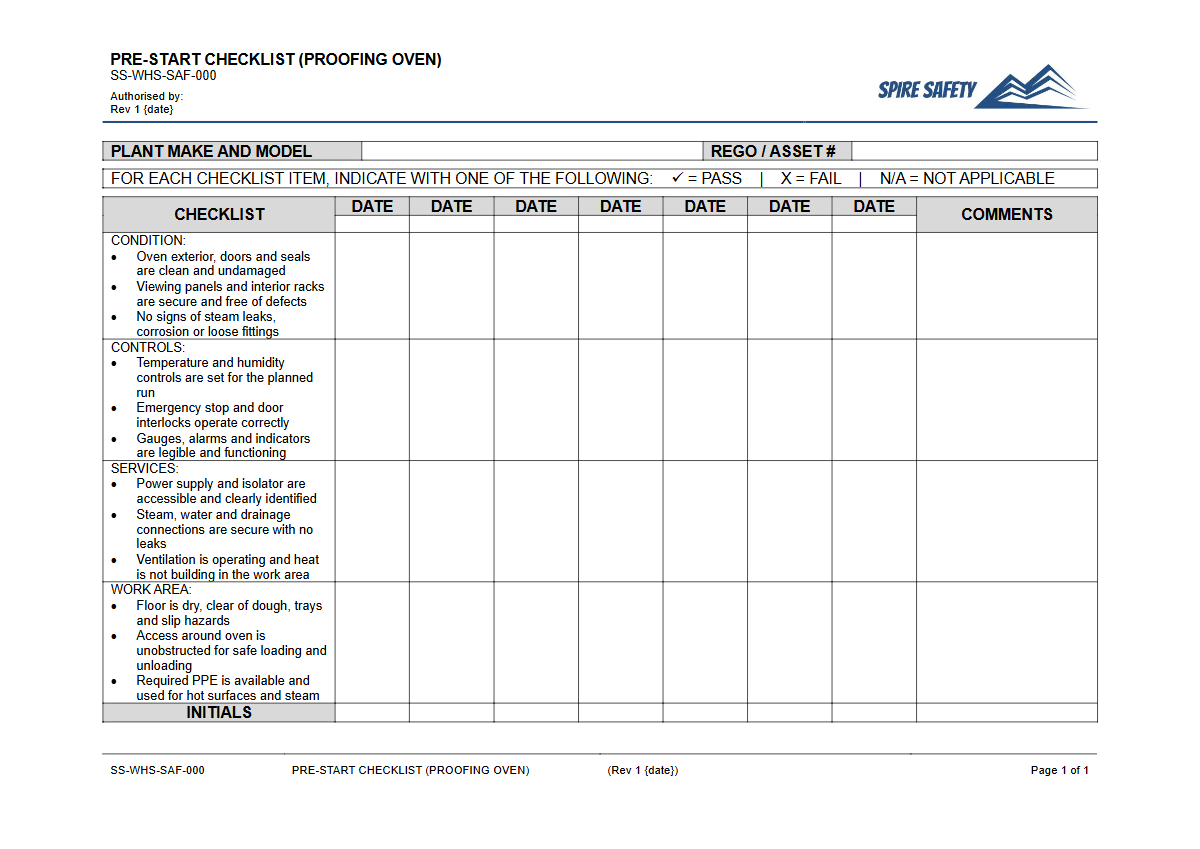
Download our free Pre-Start Checklist (Proofing Oven) Template. This DOCX & PDF resource provides a structured starting point for your equipment safety checks.
Free Pre-Start Checklist (Proofing Oven) Template
DOCX • 125 KB + PDF
Updated Oct 2026
No signup required
Purpose of the Free Pre-Start Checklist (Proofing Oven) Template
A proofing oven, or proofer, is essential in many bakeries and commercial kitchens for controlling dough fermentation. However, like any piece of plant involving heat, steam, and electricity, it presents significant workplace health and safety risks if not properly maintained.
Using our Free Pre-Start Checklist (Proofing Oven) Template helps you formalise the process of inspecting this equipment before it is used.
This checklist guides operators to systematically identify potential hazards such as faulty wiring, malfunctioning temperature controls, damaged door seals, or blocked steam vents. Regularly completing these checks helps prevent incidents like burns, electric shocks, or equipment failures that could lead to fires.
It also provides a documented record of due diligence, demonstrating a commitment to proactive risk management. Integrating such procedures is a key component of effective WHS management systems, creating a safer environment for all workers.
Video walkthrough
How to use the Free Pre-Start Checklist (Proofing Oven) Template
This template is provided as a starting point in both DOCX and PDF formats. The DOCX version is fully editable, allowing for easy customisation to suit your specific workplace needs. To use the checklist effectively, follow these steps:
- Download the template and add your company logo and details.
- Thoroughly review the checklist items and modify them to match the specific make, model, and configuration of your proofing oven.
- Train operators on the importance of the pre-start check and how to complete each item accurately.
- Establish a clear procedure for reporting and rectifying any defects or hazards identified during the inspection.
Customisation Is Essential
To be effective, this checklist must be adapted to your equipment and operational context. Generic checklists can miss critical, model-specific safety features or hazards. When customising, consider including checks for:
- Condition of heating elements and fans.
- Integrity of door gaskets and locking mechanisms.
- Functionality of temperature and humidity gauges and controls.
- Clarity and condition of warning labels and operator instructions.
- Correct operation of emergency stop buttons or power isolation switches.
Note: We have created this template as a guide. You must customise it to address the specific hazards and control measures relevant to your site, equipment, and processes.
Spire Safety accepts no liability for the use of this template.
When to use the Pre-Start Checklist
A pre-start check for a proofing oven should be completed before the first use of each shift or day. This frequency ensures that the equipment's condition is verified before it is energised and production begins.
For equipment that is used less frequently, a check should still be performed before each use. The goal is to catch any potential issues that may have developed since the last operation, preventing them from escalating into more serious incidents. This routine can be reinforced through regular safety discussions, such as with a Pre-Start Checks and Plant Maintenance Toolbox Talk.
Who should use the Pre-Start Checklist
The checklist should be completed by personnel who are trained, competent, and authorised to operate the proofing oven. This typically includes bakers, cooks, or kitchen staff.
It is crucial that these individuals not only know how to operate the oven but also understand the potential hazards and the importance of each check.
Supervisors or managers have a responsibility to ensure these checks are being completed correctly and consistently. They should periodically review the completed forms to identify recurring issues and verify that corrective actions are being taken.
This review process can be a component of internal WHS compliance auditing activities. Discussing the findings from these checklists can also be a valuable agenda item in daily team briefings, which can be documented using a Free Pre-Start Meeting Template.
By implementing this structured approach, you ensure that safety becomes a shared responsibility. For more tools to help formalise your safety processes, explore our complete free WHS resources library.
Common mistakes
Common mistakes to avoid
- Using a generic checklist that doesn't match the specific oven model.
- Operators 'pencil-whipping' the form without performing a physical inspection.
- Failing to establish a clear process for reporting and rectifying identified defects.
- Insufficient training on how to properly inspect each component and recognise potential hazards.
Legal references
Legal considerations
The following legal requirements may be relevant to this type of work.
- Work Health and Safety Act (Harmonised) — Provides the primary duties for protecting workers and other people from work health and safety risks.
- Work Health and Safety Regulations (Harmonised) — Sets out requirements supporting the management of workplace hazards and risks.
The following codes may be relevant to this type of work.
- Managing WHS Risks Code of Practice — Provides practical guidance on identifying hazards, assessing risks and applying effective controls.
- Work Health and Safety Consultation, Cooperation and Coordination Code of Practice — Provides practical guidance on consulting workers and coordinating with other duty holders.
- Managing the Work Environment and Facilities Code of Practice — Provides practical guidance on safe work environments, workplace facilities and related controls.
Did you know
A Precise Environment
Proofing ovens create a precise environment, typically between 24°C to 46°C with 80-85% humidity. Any deviation can significantly impact the yeast's fermentation process, affecting the final product's texture and flavour.
FAQ
Frequently asked questions
01What should a proofing oven pre-start checklist include?
02Why is a pre-start check necessary for a proofing oven?
03How often should proofing oven pre-start checks be done?
04Can this template be used for other bakery equipment like deck ovens or mixers?
Share this resource
Free Pre-Start Checklist (Proofing Oven) Template
Browse Categories
How To Use It
- 1Download and open in Word or PDF.
- 2Replace the placeholders with your business details.
- 3Get it reviewed by a WHS specialist before rollout.
Need it customised?
Our WHS consultants can adapt this template to your site, run a gap analysis, or audit what you already have in place.
Book a Free Consultation WHS consulting servicesor call 1300 156 382