
Free Pre-Start Checklist (Spa Pump) Template
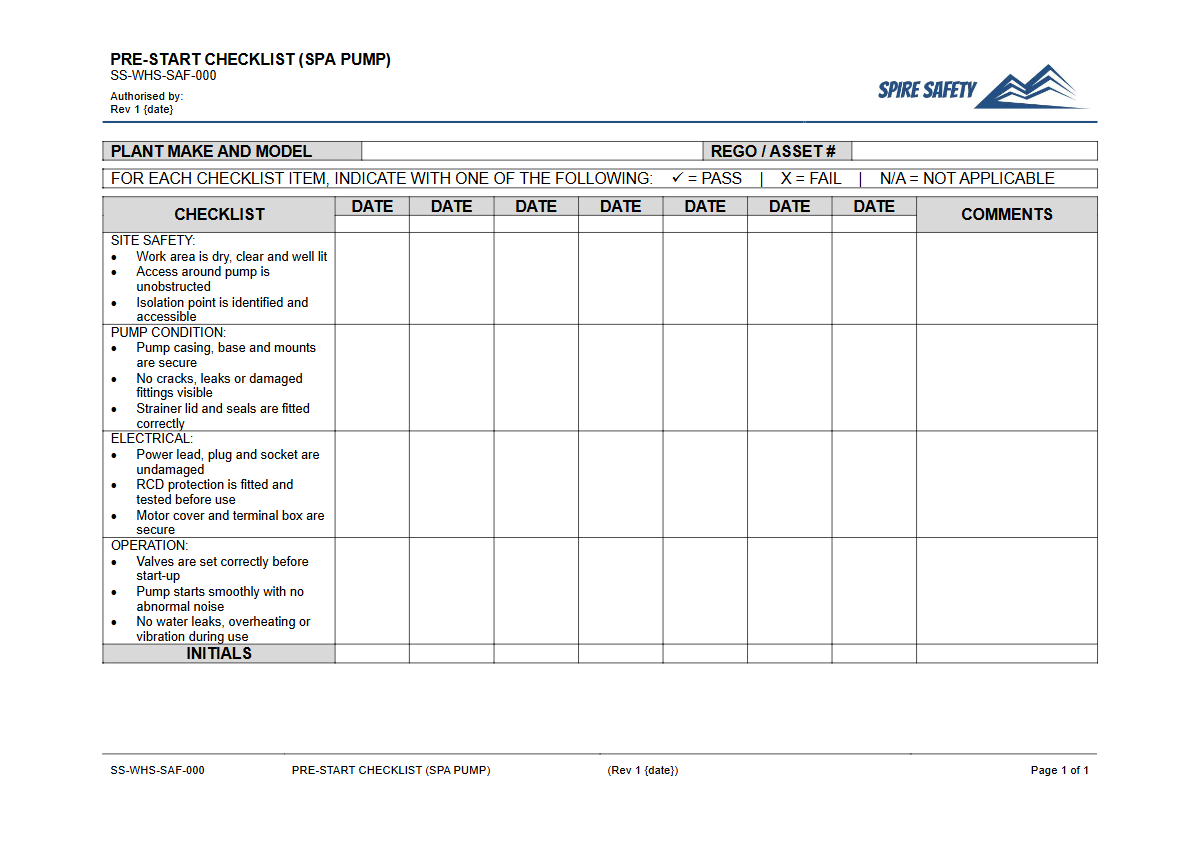
Download our free Pre-Start Checklist (Spa Pump) Template to formalise equipment inspections.
Free Pre-Start Checklist (Spa Pump) Template
DOCX • 125 KB + PDF
Updated Oct 2026
No signup required
Purpose of the Free Pre-start Checklist (Spa Pump) Template
Regularly inspecting spa pumps is a critical safety measure for preventing incidents related to electricity, water, moving parts, and chemical handling. Our Free Pre-Start Checklist (Spa Pump) Template provides a structured starting point for formalising these essential equipment checks.
Using this checklist helps workers systematically identify potential hazards like damaged wiring, leaks, or malfunctioning components before the pump is energised. Identifying risks before operation is a key part of managing plant safety, a process which often begins with a thorough hazard assessment, such as that detailed in our Free Water Pump Risk Assessment Template.
Implementing a documented pre-start process demonstrates a commitment to proactive risk management and helps fulfil a PCBU's primary duty of care under Australian WHS legislation. It creates a formal record that equipment was in a safe condition at the start of work, which is invaluable for maintenance scheduling and incident investigations.
Video walkthrough
How to use the Free Pre-Start Checklist (Spa Pump) Template
This resource is available for download as a DOCX file for easy customisation and a PDF for straightforward printing and use. To effectively integrate this template into your safety procedures, it is essential to adapt it to your specific operational needs.
Please note: This document is a template only. We are not familiar with your specific spa pump model, operational context, or workplace procedures.
You must customise this checklist to align with the manufacturer’s instructions and the specific risks present in your workplace.
Once tailored, the checklist guides the operator through a logical sequence of visual and functional checks. Documenting these checks creates a record of due diligence and helps identify recurring faults. For a comprehensive overview of safe operation, this checklist can be integrated with a FREE Pump SOP (Safe Operating Procedure) Template.
When to use the Pre-Start Checklist
The spa pump pre-start checklist should be completed by a competent person before each use or, at a minimum, at the beginning of each shift where the pump will be operated. The frequency should be determined by your risk assessment, considering factors like the intensity of use, the operating environment, and the age of the equipment.
Conducting the check at the start of every shift establishes a consistent safety baseline and helps embed a proactive safety culture. Reinforcing the importance of these checks can be effectively done through regular team meetings, for which our Pre-Start Checks and Plant Maintenance Toolbox Talk Template is a useful resource.
Who should use the Pre-Start Checklist
This checklist is designed for use by trained and competent workers who are authorised to operate or maintain spa pumps. This includes maintenance personnel, pool technicians, and any other workers tasked with operating the equipment.
It is crucial that these individuals are deemed competent and have received adequate training on the specific spa pump model and the inspection procedure itself. These processes form a crucial component of effective WHS management systems, ensuring that only qualified personnel conduct safety-critical tasks.
Key Inspection Points for Spa Pumps
While your customised checklist will be more detailed based on the manufacturer's guide, key areas for inspection typically include:
- Electrical Components: Check for damaged cords, plugs, and housing. Ensure all electrical connections are secure and protected from water.
- Pump Housing: Inspect for cracks, leaks, or signs of corrosion.
- Piping and Seals: Look for any leaks or drips from pipes, unions, and seals.
- Guarding: Ensure any guards covering moving parts (like the motor fan) are secure and undamaged.
- Pressure Gauges: If fitted, check that gauges are functional and readings are within the normal operating range.
- Surrounding Area: Verify the area is clear of trip hazards, flammable liquids, and water pooling that could create an electrocution risk.
Any defects or faults identified during the pre-start check must be reported immediately according to your organisation's procedures. The equipment should be tagged out of service and not used until it has been repaired by a qualified person.
If you need assistance developing procedures for complex plant, engaging external expertise through WHS consulting can provide valuable guidance.
By formalising your pre-start inspections with this template, your organisation can better manage risks and demonstrate a commitment to plant safety. Explore our full free WHS resources library to find more templates and guides to support your safety objectives.
Common mistakes
Common mistakes to avoid
- Using a generic checklist that hasn't been customised for the specific spa pump model.
- Failing to remove the equipment from service after a fault is identified.
- Pencil-whipping the checklist without actually performing the physical and visual inspections.
- Not providing adequate training to workers on how to properly conduct the checks and what to look for.
Legal references
Legal considerations
The following legal requirements may be relevant to this type of work.
- Work Health and Safety Act (Harmonised) — Provides the primary duties for protecting workers and other people from work health and safety risks.
- Work Health and Safety Regulations (Harmonised) — Sets out requirements supporting the management of workplace hazards and risks.
The following codes may be relevant to this type of work.
- Managing WHS Risks Code of Practice — Provides practical guidance on identifying hazards, assessing risks and applying effective controls.
- Work Health and Safety Consultation, Cooperation and Coordination Code of Practice — Provides practical guidance on consulting workers and coordinating with other duty holders.
- Managing the Work Environment and Facilities Code of Practice — Provides practical guidance on safe work environments, workplace facilities and related controls.
Did you know
Electrocution Risk
The combination of water and electricity makes any fault in a spa pump's electrical system extremely dangerous. A pre-start check is one of the most effective controls for identifying damaged cords or water ingress before the unit is powered on.
Legionella Bacteria
Proper pump operation is vital for water circulation and filtration, which helps prevent the growth of harmful bacteria like Legionella. An operational pre-start check ensures the system that protects user health is functioning correctly.
FAQ
Frequently asked questions
01Is a pre-start checklist legally required for a spa pump in Australia?
02What are the main hazards associated with spa pumps?
03How often should a spa pump pre-start check be performed?
04Can I use this template for both commercial and residential spa pumps?
Share this resource
Free Pre-Start Checklist (Spa Pump) Template
Browse Categories
How To Use It
- 1Download and open in Word or PDF.
- 2Replace the placeholders with your business details.
- 3Get it reviewed by a WHS specialist before rollout.
Need it customised?
Our WHS consultants can adapt this template to your site, run a gap analysis, or audit what you already have in place.
Book a Free Consultation WHS consulting servicesor call 1300 156 382