
Free Pre-Start Checklist (Steam Iron) Template
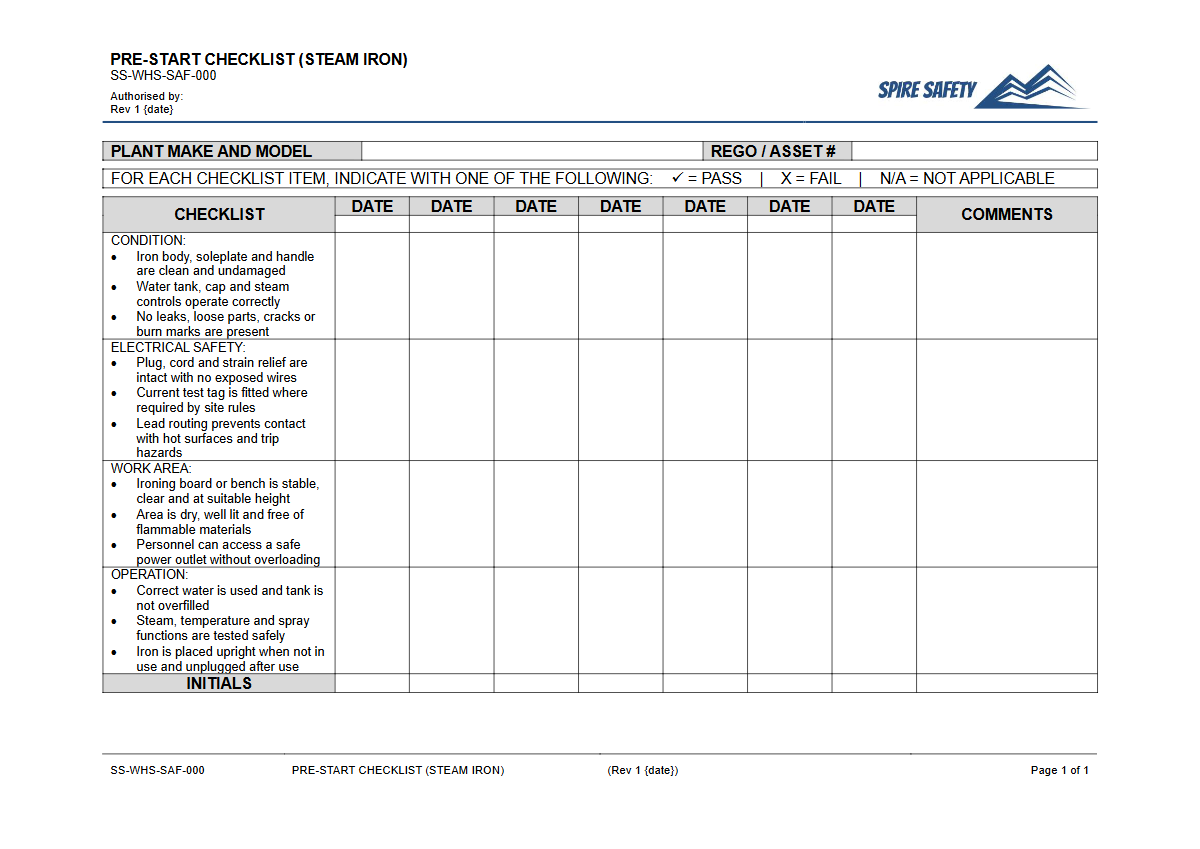
Download our Free Pre-Start Checklist (Steam Iron) Template to formalise daily safety inspections. This DOCX and PDF helps identify hazards before use.
Free Pre-Start Checklist (Steam Iron) Template
DOCX • 125 KB + PDF
Updated Oct 2026
No signup required
Purpose of the Free Pre-Start Checklist (Steam Iron) Template
Regularly inspecting workplace equipment is a fundamental part of maintaining a safe environment. This is especially true for portable electrical appliances like steam irons, which present risks of burns, electrical shock, and slips from water leaks.
Our Free Pre-Start Checklist (Steam Iron) Template provides a structured format to guide operators through these essential daily checks. Formalising this process helps your organisation proactively identify and control hazards before they cause an incident, ensuring equipment is fit for purpose each day.
Implementing pre-start checks is a simple yet effective risk management activity. It transforms safety from an afterthought into a routine behaviour, encouraging operators to take ownership of their equipment.
By documenting these inspections, you create a clear record of due diligence that can be reviewed by supervisors and integrated into your broader WHS management systems. This systematic approach ensures that potential issues like frayed cords, leaking seals, or faulty thermostats are caught early.
A thorough pre-start inspection is the first line of defence in managing specific equipment risks. Documenting the controls for hazards identified is often done using a Safe Work Method Statement, as seen in this Free Soldering Iron SWMS for a similar type of heating tool.
A pre-start checklist acts as a practical daily enforcement of those controls, verifying the equipment's condition before any work commences.
Video walkthrough
How to use the Free Pre-Start Checklist (Steam Iron) Template
This resource is provided in both DOCX and PDF formats for your convenience. The DOCX file is fully editable, allowing you to tailor the checklist to the specific makes and models of steam irons used in your workplace, whether in a commercial laundry, hotel, alteration shop, or manufacturing setting.
To use the template effectively:
- Download the DOCX file.
- Review the checklist items against the manufacturer's operating manual for your specific steam iron.
- Add, remove, or modify checks to address the unique features and risks of your equipment and work environment (e.g., specific water type requirements, auto-shutoff features).
- Incorporate your company branding and specific procedural references.
- Train all operators on how and when to complete the checklist, and what to do if they identify a fault (e.g., remove from service, report to a supervisor).
Important: We've designed this template as a starting point. You must customise it to reflect the specific steam iron models, tasks, and unique environmental risks in your workplace.
A generic checklist cannot account for all variables, and adapting it is crucial for ensuring its effectiveness.
Once customised, this checklist should form part of your daily routine. It can be used alongside other key safety documents, such as a Soldering Iron SOP, which outlines the step-by-step process for using equipment safely.
The pre-start ensures the tool is safe, and the SOP ensures the person uses it safely.
When to use it
The pre-start checklist should be completed by the operator before their first use of the steam iron each day or at the beginning of every shift. It should also be used if the equipment has been returned from maintenance or if there is any reason to suspect it may have developed a fault.
The principle is simple: check it before you use it, every single time.
Who should use it
The primary person responsible for completing the checklist is the operator—the individual who will be using the steam iron. They are best placed to notice subtle changes in the equipment's condition.
Supervisors and managers also have a role; they should periodically review completed checklists to ensure the process is being followed correctly and to identify recurring faults that may indicate a need for different equipment or improved maintenance schedules. These records are valuable inputs for continuous improvement and can be reviewed during routine safety walks or formal WHS compliance auditing.
Ensuring the person using the equipment is competent is also critical. While this checklist confirms the equipment's condition, you must also verify the operator's skill and knowledge.
For related tools, a document like our Free Soldering Iron VOC template can be used to formalise competency assessments. A similar approach can be adapted for users of commercial steam irons to confirm they understand the specific risks and safe operating techniques.
For more tools to strengthen your safety processes, explore our complete free WHS resources library, which contains a wide range of templates aligned with Australian WHS practices.
Common mistakes
Common mistakes to avoid
- Neglecting to check the electrical cord and plug for damage, fraying, or burn marks.
- Failing to inspect the soleplate for residue or damage that could snag fabric and cause ergonomic strain.
- Forgetting to check water levels and for any signs of leaks from the reservoir or seals.
- Leaving a hot iron unattended, even for a short time, creating a significant fire and burn risk.
Legal references
Legal considerations
The following legal requirements may be relevant to this type of work.
- Work Health and Safety Act (Harmonised) — Provides the primary duties for protecting workers and other people from work health and safety risks.
- Work Health and Safety Regulations (Harmonised) — Sets out requirements supporting the management of workplace hazards and risks.
The following codes may be relevant to this type of work.
- Managing WHS Risks Code of Practice — Provides practical guidance on identifying hazards, assessing risks and applying effective controls.
- Work Health and Safety Consultation, Cooperation and Coordination Code of Practice — Provides practical guidance on consulting workers and coordinating with other duty holders.
- Managing the Work Environment and Facilities Code of Practice — Provides practical guidance on safe work environments, workplace facilities and related controls.
Did you know
Water Matters
Using hard tap water in steam irons can lead to mineral buildup (scale), which can clog steam vents, cause spitting of hot water, and potentially damage internal components, creating a safety hazard.
Electrical Cord Danger
The flexible cord is one of the most common points of failure on portable electrical appliances. Fraying, cracking, or exposed wires are major electrical shock and fire hazards that pre-start checks help identify early.
FAQ
Frequently asked questions
01What are the main hazards associated with commercial steam irons?
02How often should a pre-start check be performed on a steam iron?
03Can I use this template for any brand of steam iron?
04Who is responsible for maintaining the steam iron?
Share this resource
Free Pre-Start Checklist (Steam Iron) Template
Browse Categories
How To Use It
- 1Download and open in Word or PDF.
- 2Replace the placeholders with your business details.
- 3Get it reviewed by a WHS specialist before rollout.
Need it customised?
Our WHS consultants can adapt this template to your site, run a gap analysis, or audit what you already have in place.
Book a Free Consultation WHS consulting servicesor call 1300 156 382