
Free Safe Operating Procedure (Concrete Mixer Operation) Template
Download our Free Safe Operating Procedure (Concrete Mixer Operation) Template. This DOCX & PDF resource helps define safe work steps for concrete mixers.
Free Safe Operating Procedure (Concrete Mixer Operation) Template
DOCX • 165 KB + PDF
Updated Oct 2026
No signup required
Purpose of the Free Safe Operating Procedure (Concrete Mixer Operation) Template
Operating a concrete mixer, whether a small portable unit or a larger stationary model, involves significant risks. Hazards include entanglement in rotating parts, noise exposure, manual handling injuries, and exposure to cement dust and chemicals.
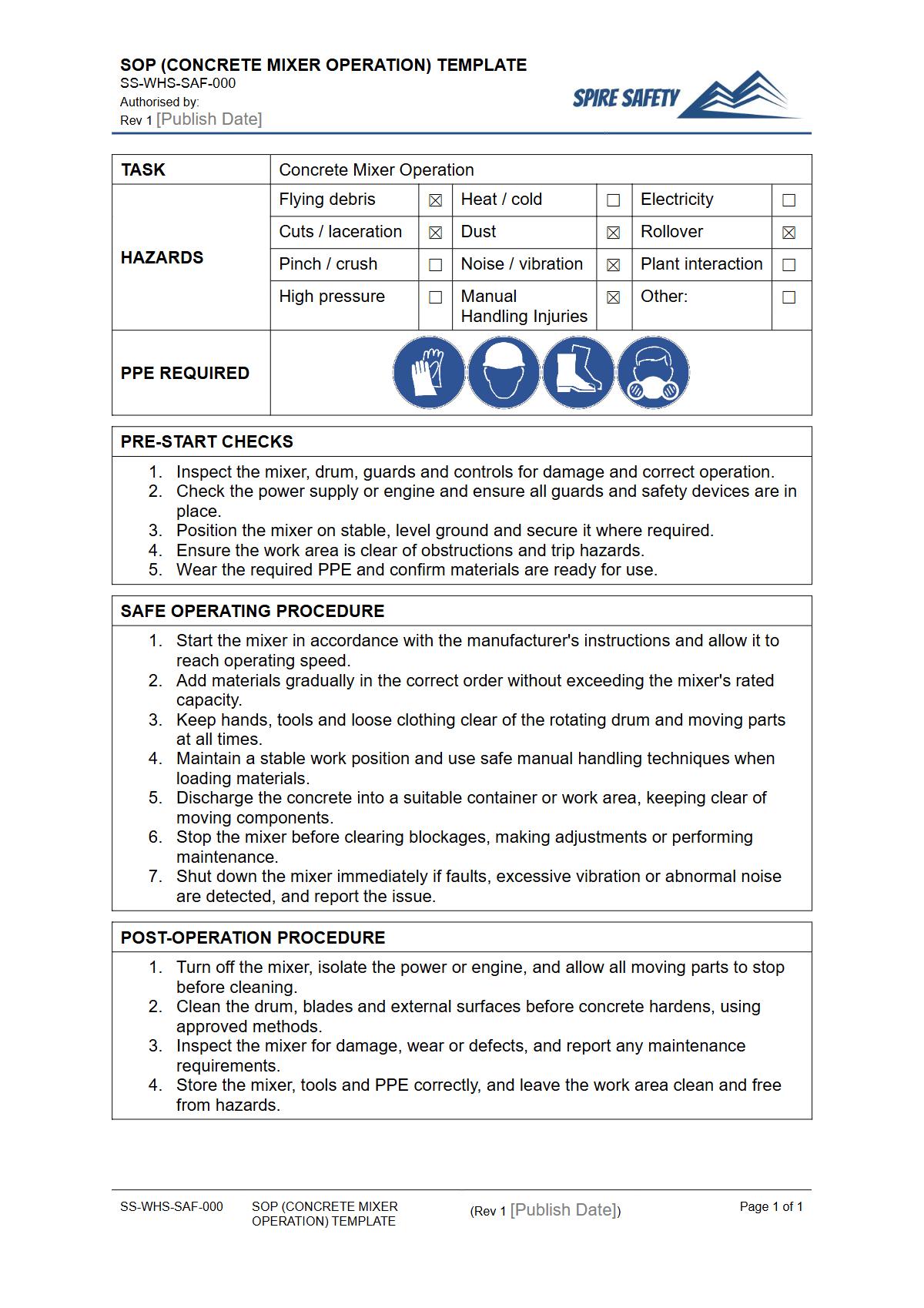
This Free Safe Operating Procedure (Concrete Mixer Operation) Template provides a structured starting point for your business to document a safe system of work. It helps you formalise pre-start checks, step-by-step operating instructions, and shutdown protocols to guide workers and meet your duty of care as a Person Conducting a Business or Undertaking (PCBU).
By implementing a clear SOP, you establish a consistent, safe method for all operators, which is fundamental to minimising workplace incidents. This document is designed to be integrated into your broader WHS management systems, supporting your overall risk management strategy.
Video walkthrough
How to use the Free Safe Operating Procedure (Concrete Mixer Operation) Template
This template is provided in both DOCX and PDF formats for your convenience. The DOCX file is fully editable, allowing you to tailor the content directly to your operational needs.
It is essential that you adapt the document to reflect the specific make and model of the concrete mixer used at your site, the materials being mixed, and the unique environmental conditions of your workplace.
Please note: This is a template document that must be customised to your specific workplace, plant, and equipment. We are not responsible for the implementation or suitability of the final document.
The procedure should be developed in consultation with the workers who will be using it.
When to use it
A Safe Operating Procedure for concrete mixer operation should be used as a primary reference tool in several key situations. It forms the basis of operator training and competency verification for new and existing employees.
It should be readily available near the equipment for quick reference during operation. Furthermore, the SOP is a critical document during safety reviews, incident investigations, and formal WHS compliance auditing to demonstrate that controlled work systems are in place.
Who should use it
This SOP should be used by all personnel involved with concrete mixer operations. This includes:
- Operators: To understand and follow the approved safe steps for using the machine.
- Supervisors and Managers: To train workers, enforce safe practices, and conduct workplace inspections.
- WHS Personnel: To integrate the procedure into the overall safety management system and use it as a basis for risk assessments and training development.
Key elements covered in the template
Our template provides a comprehensive framework aligned with Australian WHS best practices. It guides you through documenting critical safety information, including:
- Required Personal Protective Equipment (PPE): Specifies necessary gear like safety glasses, hearing protection, respiratory masks, and gloves.
- Pre-operational Checks: A checklist to ensure the mixer and surrounding area are safe before starting work.
- Step-by-Step Operating Guide: A logical sequence for safely loading, mixing, and discharging concrete.
- Shutdown and Cleaning Procedures: Instructions for powering down the machine and cleaning it safely to prevent hardened concrete build-up.
- Emergency Procedures: Outlines immediate actions in case of an emergency, such as entanglement or chemical splash.
You may also require procedures for related equipment, such as our free Boom Pump SOP for concrete placement.
Integrating into your safety system
A single SOP is only one part of a robust safety framework. To be effective, this procedure must be supported by practical training, adequate supervision, and regular review.
It should complement your existing risk assessments for hazardous manual tasks and exposure to airborne contaminants like silica dust. For sites with heavy machinery, ensure you have documented procedures for all plant, such as a Front End Loader SOP if one is used for loading aggregates.
This holistic approach ensures all foreseeable risks are managed.
You can find many other useful documents to build out your safety system in our free WHS resources library, covering a wide range of plant and high-risk activities.
Common mistakes
Common mistakes to avoid
- Using a generic, non-customised SOP that doesn't match the specific machine or task.
- Failing to train workers on the procedure or verify their understanding before they operate the mixer.
- Skipping critical pre-start safety checks, such as inspecting guards and emergency stops.
- Incorrect manual handling techniques when lifting heavy bags of cement, leading to back injuries.
Legal references
Legal considerations
The following legal requirements may be relevant to this type of work.
- Work Health and Safety Act (Harmonised) — Provides the primary duties for protecting workers and other people from work health and safety risks.
- Work Health and Safety Regulations (Harmonised) — Sets out requirements supporting the management of workplace hazards and risks.
The following codes may be relevant to this type of work.
- Managing WHS Risks Code of Practice — Provides practical guidance on identifying hazards, assessing risks and applying effective controls.
- Work Health and Safety Consultation, Cooperation and Coordination Code of Practice — Provides practical guidance on consulting workers and coordinating with other duty holders.
- Managing the Work Environment and Facilities Code of Practice — Provides practical guidance on safe work environments, workplace facilities and related controls.
Did you know
Cement Burns
Wet cement is highly alkaline and can cause serious chemical burns to the skin. The effects are not always felt immediately, making it crucial for workers to wear correct PPE and wash any exposed skin promptly.
Silica Dust
Dry cement, sand, and aggregates contain crystalline silica. Inhaling silica dust during dry mixing can lead to silicosis, a serious and incurable lung disease, highlighting the importance of dust controls and respiratory protection.
FAQ
Frequently asked questions
01What PPE is required for operating a concrete mixer?
02How often should a Safe Operating Procedure for a concrete mixer be reviewed?
03Does this SOP cover maintenance and cleaning?
04Can a generic SOP be used for all types of concrete mixers?
Share this resource
Free Safe Operating Procedure (Concrete Mixer Operation) Template
Browse Categories
How To Use It
- 1Download and open in Word or PDF.
- 2Replace the placeholders with your business details.
- 3Get it reviewed by a WHS specialist before rollout.
Need it customised?
Our WHS consultants can adapt this template to your site, run a gap analysis, or audit what you already have in place.
Book a Free Consultation WHS consulting servicesor call 1300 156 382
Related templates
- Free Safe Operating Procedure (Concrete Moisture Test) Template
- Free Safe Operating Procedure (Concrete Pile Cutter) Template
- Free Safe Operating Procedure (Concrete Planer) Template
- Free Safe Operating Procedure (Concrete Pump Hose) Template
- Free Safe Operating Procedure (Concrete Scarifier) Template
- Free Safe Operating Procedure (Concrete Screed) Template