
Safe Work Method Statement (Truck and Float Operation) Template
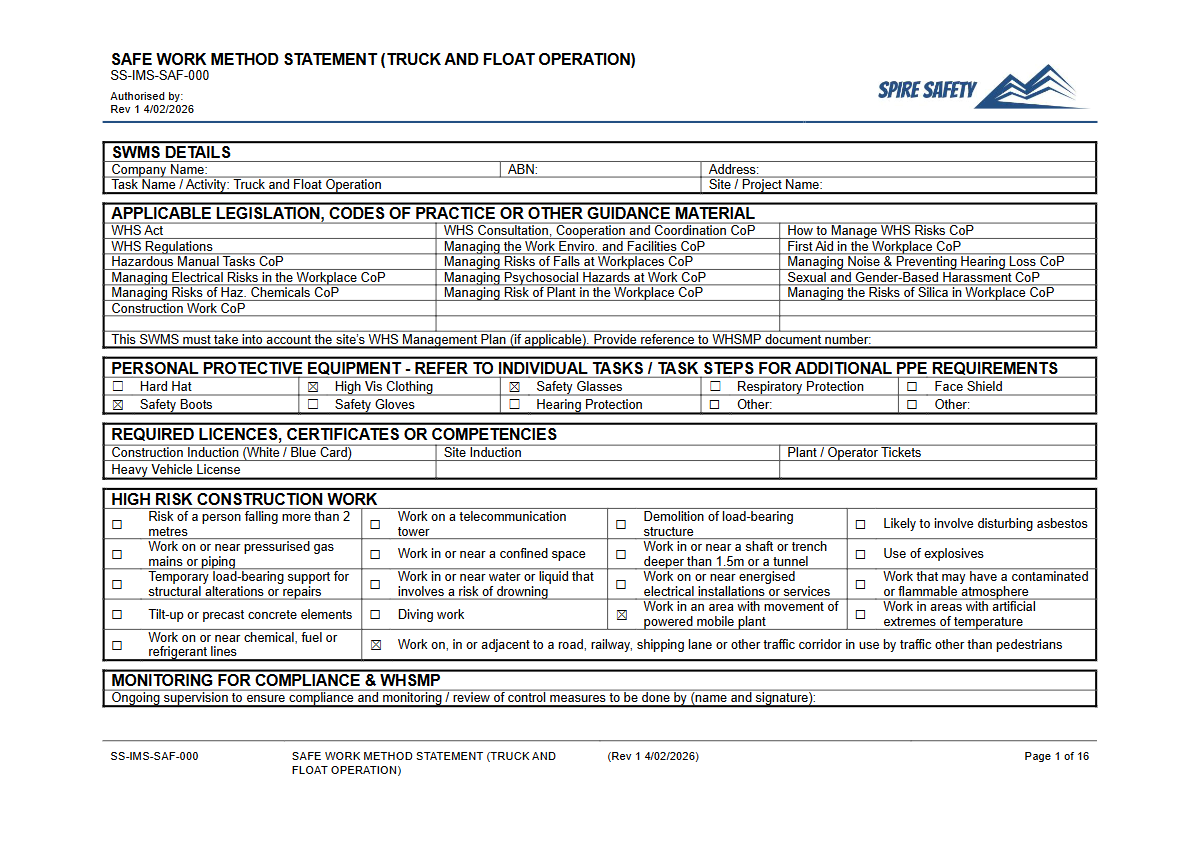
Download your free Safe Work Method Statement for Truck and Float Operation. A structured template to assist with WHS risk management. Get started today!
Safe Work Method Statement (Truck and Float Operation) Template
DOCX • 165 KB + PDF
Updated Oct 2026
No signup required
Purpose of the Safe Work Method Statement (Truck and Float Operation) Template
This free Safe Work Method Statement (SWMS) template provides a structured starting point for identifying hazards and controlling risks associated with truck and float operations in Australian workplaces. Effectively managing risks for heavy vehicle movements, loading, unloading, and transport is crucial to prevent serious incidents, injuries, and fatalities.
This template helps organisations document safe work procedures, ensuring all personnel involved understand their responsibilities and the necessary precautions.
Using a well-developed SWMS is an integral part of an effective WHS management system. It demonstrates a commitment to workplace safety and assists in meeting WHS obligations by detailing how high-risk work activities will be performed safely.
Video walkthrough
How to use the Safe Work Method Statement (Truck and Float Operation) Template
This Safe Work Method Statement (Truck and Float Operation) template is a downloadable DOCX file designed for customisation. After downloading, you will need to complete it with specific details relevant to your workplace, the trucks and floats used, and the particular tasks being undertaken. This includes:
- Identifying all specific hazards associated with your unique truck and float operations.
- Assessing the risks posed by those hazards.
- Developing and documenting site-specific control measures to eliminate or minimise identified risks.
- Specifying the responsible persons for implementing and monitoring these controls.
- Detailing required training, qualifications, and personal protective equipment (PPE).
- Outlining emergency procedures relevant to truck and float operations.
Important: This template is a general guide only and must be customised to your specific workplace conditions, equipment, and tasks to be effective. Failure to adequately customise this document may result in non-compliance with WHS requirements. Regularly review and update your SWMS to reflect any changes in equipment, personnel, or work processes.
When to use it
A Safe Work Method Statement for truck and float operations should be developed and implemented whenever these activities are classified as high-risk construction work or involve other significant risks that require formal documentation. This includes, but is not limited to, transporting heavy plant, machinery, or oversized loads, operating in public spaces, or working near powerlines or other structures.
It's also essential to use this document during planning phases for new projects involving such activities, before commencing work, and whenever there are significant changes to existing operations.
Who should use it
This template is invaluable for a range of roles within organisations that conduct truck and float operations. This includes supervisors, team leaders, WHS managers, project managers, and anyone responsible for planning, executing, or overseeing high-risk work.
Workers involved in truck and float operations should also familiarise themselves with the completed SWMS before commencing work to understand the safe operating procedures and control measures. It's a key tool for ensuring everyone is on the same page regarding safety protocols.
Legal references
Legal considerations
The following legal requirements may be relevant to this type of work.
- Work Health and Safety Act (Harmonised) — Provides the primary duties for protecting workers and other people from work health and safety risks.
- Work Health and Safety Regulations (Harmonised) — Sets out requirements supporting the management of workplace hazards and risks.
The following codes may be relevant to this type of work.
- Managing WHS Risks Code of Practice — Provides practical guidance on identifying hazards, assessing risks and applying effective controls.
- Work Health and Safety Consultation, Cooperation and Coordination Code of Practice — Provides practical guidance on consulting workers and coordinating with other duty holders.
- Managing the Work Environment and Facilities Code of Practice — Provides practical guidance on safe work environments, workplace facilities and related controls.
Share this resource
Safe Work Method Statement (Truck and Float Operation) Template
Browse Categories
How To Use It
- 1Download and open in Word or PDF.
- 2Replace the placeholders with your business details.
- 3Get it reviewed by a WHS specialist before rollout.
Need it customised?
Our WHS consultants can adapt this template to your site, run a gap analysis, or audit what you already have in place.
Book a Free Consultation WHS consulting servicesor call 1300 156 382
Related templates
- Safe Work Method Statement (Truck Operation)
- Safe Work Method Statement (Vacuum Truck Operation) Template
- Safe Work Method Statement (Vehicle Loading Crane Operation) Template
- Safe Work Method Statement (Water Cart Operation) Template
- Safe Work Method Statement (Wheel Loader Operation) Template
- Free Angle Grinder SWMS (Safe Work Method Statement) Template