
Traffic Management Toolbox Talk Template
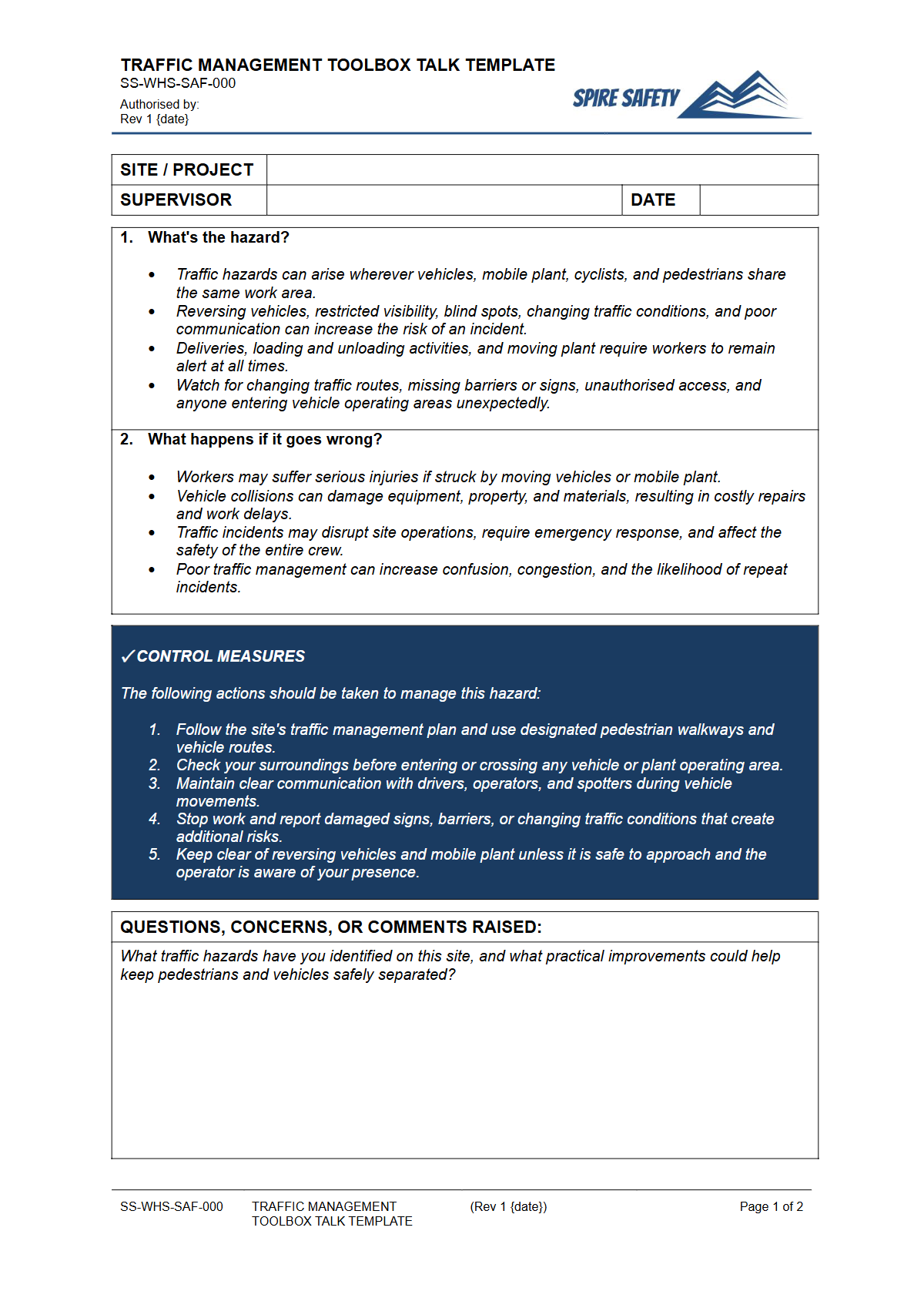
Download our free Traffic Management Toolbox Talk Template. A structured starting point for discussing site-specific traffic hazards and controls.
Traffic Management Toolbox Talk Template
DOCX • 140 KB + PDF
Updated Oct 2026
No signup required
Purpose of this document
This free Traffic Management Toolbox Talk Template provides a structured starting point for conducting essential safety discussions on controlling vehicle and pedestrian interactions in the workplace. Effective traffic management is critical for preventing serious incidents, injuries, and fatalities.
This template helps facilitate regular, consistent communication about specific traffic hazards, risk control measures, and expected safe work behaviours.
Using this template supports an organisation's commitment to worker safety by ensuring that all personnel, including new hires and contractors, understand the traffic rules and procedures relevant to their work environment. It encourages proactive hazard identification and reinforces the importance of WHS management systems that address site-specific risks.
Regular toolbox talks, such as those facilitated by this template, are a key component of maintaining a strong safety culture and fulfilling obligations to provide a safe working environment.
Video walkthrough
How to use this Toolbox Talk
Our Traffic Management Toolbox Talk Template is designed to be highly adaptable. Download it as a DOCX file to easily customise it for your specific workplace.
The template includes sections for discussing common traffic hazards like vehicle movements, pedestrian-vehicle interfaces, blind spots, loading/unloading zones, and reversing operations. It also prompts discussion on control measures such as designated pathways, speed limits, signage, communication protocols, and the use of spotters or banksmen.
Crucially, this template must be customised to your workplace's unique risks, operations, and site layout. Insert details about your specific plant, equipment, traffic routes, and personnel. Encourage active participation from your team by asking open-ended questions about their experiences and observations.
Record attendee names and any discussion points or actions identified to maintain an accurate record of safety briefings.
When to use it
This Traffic Management Toolbox Talk Template should be used regularly as part of your ongoing WHS program. It is particularly relevant:
- Before commencing work activities where vehicle and pedestrian interactions are present or likely.
- Following any changes to site layout, traffic routes, or work procedures that impact traffic flow.
- After any traffic-related incidents, near misses, or observations of unsafe traffic behaviour.
- When new plant or equipment that affects traffic management is introduced to the workplace.
- As part of induction for new workers or contractors who will be working in areas with traffic.
- During routine safety meetings to refresh knowledge and reinforce safe practices.
Who should use it
This Traffic Management Toolbox Talk Template is an invaluable resource for anyone responsible for WHS within an organisation, especially those involved in operations where vehicles and pedestrians share space. Key users include:
- Supervisors and Team Leaders who conduct daily pre-start or safety briefings.
- WHS Managers and Coordinators overseeing overall workplace safety.
- Project Managers on construction sites or large operational facilities.
- Site Managers and Foremen directing day-to-day activities.
- Safety Committee members who wish to promote specific topics.
It is suitable for a wide range of industries including construction, logistics, manufacturing, warehousing, transport, and any other sector where internal or external traffic poses a risk. This template supports your broader commitment to WHS, complementing efforts in ISO 45001 consulting or general WHS consulting.
Common mistakes
Common mistakes to avoid
- Not customising the template to specific site conditions and risks.
- Presenting the talk as a lecture instead of an interactive discussion.
- Failing to record attendance or discussion points.
- Not following up on actions or concerns raised during the talk.
Legal references
Legal considerations
The following legal requirements may be relevant to this type of work.
- Work Health and Safety Act (Harmonised) — Provides the primary duties for protecting workers and other people from work health and safety risks.
- Work Health and Safety Regulations (Harmonised) — Sets out requirements supporting the management of workplace hazards and risks.
The following codes may be relevant to this type of work.
- Managing WHS Risks Code of Practice — Provides practical guidance on identifying hazards, assessing risks and applying effective controls.
- Work Health and Safety Consultation, Cooperation and Coordination Code of Practice — Provides practical guidance on consulting workers and coordinating with other duty holders.
- Managing the Work Environment and Facilities Code of Practice — Provides practical guidance on safe work environments, workplace facilities and related controls.
Did you know
Road Incidents at Work
Work-related road traffic incidents are a leading cause of work-related fatalities and serious injuries in Australia, highlighting the critical need for effective traffic management.
Pedestrian Safety Focus
Many serious incidents involve interactions between moving vehicles and pedestrians. Clear separation and communication are key controls to minimise this risk.
FAQ
Frequently asked questions
01What is a traffic management toolbox talk?
02How often should traffic management toolbox talks be held?
03What information should be included in a traffic management toolbox talk?
04Can this template replace a formal traffic management plan?
Share this resource
Traffic Management Toolbox Talk Template
Browse Categories
How To Use It
- 1Download and open in Word or PDF.
- 2Replace the placeholders with your business details.
- 3Get it reviewed by a WHS specialist before rollout.
Need it customised?
Our WHS consultants can adapt this template to your site, run a gap analysis, or audit what you already have in place.
Book a Free Consultation WHS consulting servicesor call 1300 156 382
Related templates
- Trolleys and Stock Handling Toolbox Talk Template
- Underground Services Awareness Toolbox Talk Template
- Vibration - Hand Arm and Whole Body Toolbox Talk Template
- Visitor Safety Responsibilities Toolbox Talk Template
- Waste Management and Recycling Toolbox Talk Template
- Waterproofing Safety Toolbox Talk Template