
Confined Space Awareness Toolbox Talk Template
Download our Confined Space Awareness Toolbox Talk Template for Australian workplaces. A structured starting point for WHS discussions.
Confined Space Awareness Toolbox Talk Template
DOCX • 139 KB + PDF
Updated Oct 2026
No signup required
Purpose of this document
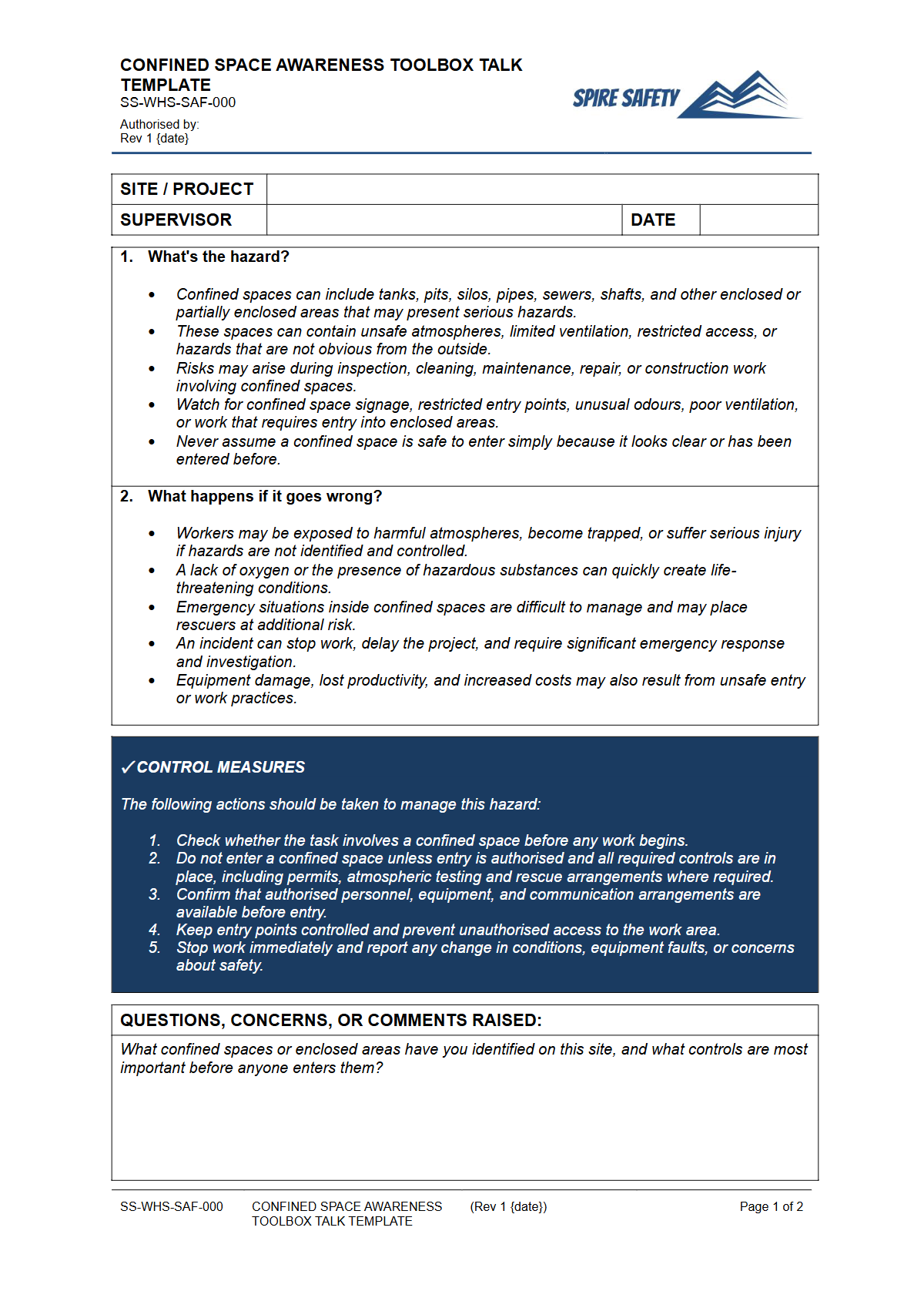
Our Confined Space Awareness Toolbox Talk Template provides a structured framework for conducting essential safety discussions in Australian workplaces. This Toolbox Talk is designed to raise awareness about the hazards associated with confined spaces and the critical controls required to manage these risks effectively. It serves as a foundational tool for teams, enabling them to recognise potential dangers, understand safe entry procedures, and implement preventative measures.
By utilising this template, organisations can foster a proactive safety culture, ensuring that all workers involved in or near confined space operations are informed about their responsibilities and the necessary precautions. It helps in reinforcing key safety messages and encouraging open dialogue about site-specific confined space challenges and solutions.
Video walkthrough
How to use this Toolbox Talk
This Toolbox Talk template is provided as a starting point. To be effective and aligned with Australian WHS practice, it must be customised to your workplace’s specific confined spaces, risk assessments, safe work procedures, and emergency response plans.
Download the DOCX version to easily edit and adapt the content to reflect your organisation’s unique operational context. Include details such as:
- Specific examples of confined spaces at your worksite.
- Details of your confined space entry permit system.
- Discussion points on your specific control measures, including ventilation, gas monitoring, and isolation procedures.
- Information on emergency contacts and rescue plans relevant to your site.
- References to your internal policies and procedures for confined space entry.
Lead the discussion by encouraging worker participation. Ask questions, solicit feedback, and ensure everyone understands the information presented. Document attendance and any actions or follow-ups required.
When to use it
This Confined Space Awareness Toolbox Talk Template is suitable for a variety of scenarios within your workplace:
- Before commencing any work involving or near confined spaces.
- As part of, or following, mandatory confined space training refreshers.
- After any incidents or near misses related to confined spaces to reinforce lessons learned.
- During regular safety meetings to maintain awareness and discuss emerging issues.
- When new equipment, procedures, or personnel are introduced that may impact confined space safety.
Regular communication through Toolbox Talks is a vital component of robust WHS management systems, helping to keep safety front of mind for all workers.
Who should use it
This resource is invaluable for a broad range of roles and organisations committed to WHS excellence:
- WHS Managers and Advisors: To facilitate consistent messaging and education on confined space safety.
- Team Leaders and Supervisors: To lead impactful discussions with their teams before work commences.
- Workers: As participants, to gain essential knowledge and contribute to a safer work environment.
- Site Managers: To ensure adherence to safety protocols across all project areas.
Any Australian organisation that has confined spaces, or whose workers may interact with them, can benefit from integrating this Confined Space Awareness Toolbox Talk Template into their regular safety program. For additional resources and templates, please explore our free WHS resources library at Spire Safety.
Common mistakes
Common mistakes to avoid
- Failing to conduct a thorough risk assessment before entry.
- Not ensuring adequate ventilation or atmospheric monitoring.
- Lack of effective communication between entry and standby personnel.
- Inadequate rescue plans or untrained rescue personnel.
Legal references
Legal considerations
The following legal requirements may be relevant to this type of work.
- Work Health and Safety Act (Harmonised) — Provides the primary duties for protecting workers and other people from work health and safety risks.
- Work Health and Safety Regulations (Harmonised) — Sets out requirements supporting the management of workplace hazards and risks.
The following codes may be relevant to this type of work.
- Managing WHS Risks Code of Practice — Provides practical guidance on identifying hazards, assessing risks and applying effective controls.
- Work Health and Safety Consultation, Cooperation and Coordination Code of Practice — Provides practical guidance on consulting workers and coordinating with other duty holders.
- Managing the Work Environment and Facilities Code of Practice — Provides practical guidance on safe work environments, workplace facilities and related controls.
Did you know
Hidden Dangers
Many confined spaces appear harmless, but even brief entry without proper precautions can lead to serious injury or fatality due to unseen atmospheric hazards or other risks.
Permit System Mandatory
For many confined space entries in Australia, a Confined Space Entry Permit is legally required, outlining specific procedures, controls, and responsibilities before work can begin.
FAQ
Frequently asked questions
01What is a confined space according to Australian WHS regulations?
02Why are Toolbox Talks important for confined space safety?
03What are common hazards in confined spaces?
04Who needs to be involved in confined space entry planning?
Share this resource
Confined Space Awareness Toolbox Talk Template
Browse Categories
How To Use It
- 1Download and open in Word or PDF.
- 2Replace the placeholders with your business details.
- 3Get it reviewed by a WHS specialist before rollout.
Need it customised?
Our WHS consultants can adapt this template to your site, run a gap analysis, or audit what you already have in place.
Book a Free Consultation WHS consulting servicesor call 1300 156 382