
Free Pre-Start Checklist (Backpack Spray) Template
Ensure safe operation of backpack sprayers with our free pre-start checklist. This DOCX & PDF template helps identify faults and supports WHS diligence.
Free Pre-Start Checklist (Backpack Spray) Template
DOCX • 125 KB + PDF
Updated Oct 2026
No signup required
Purpose of the Free Pre-Start Checklist (Backpack Spray) Template
Using a backpack sprayer, whether for herbicides, pesticides, or fertilisers, involves significant risks, including chemical exposure and ergonomic strain. A systematic pre-start inspection is a fundamental safety measure to ensure the equipment is in safe working order before use.
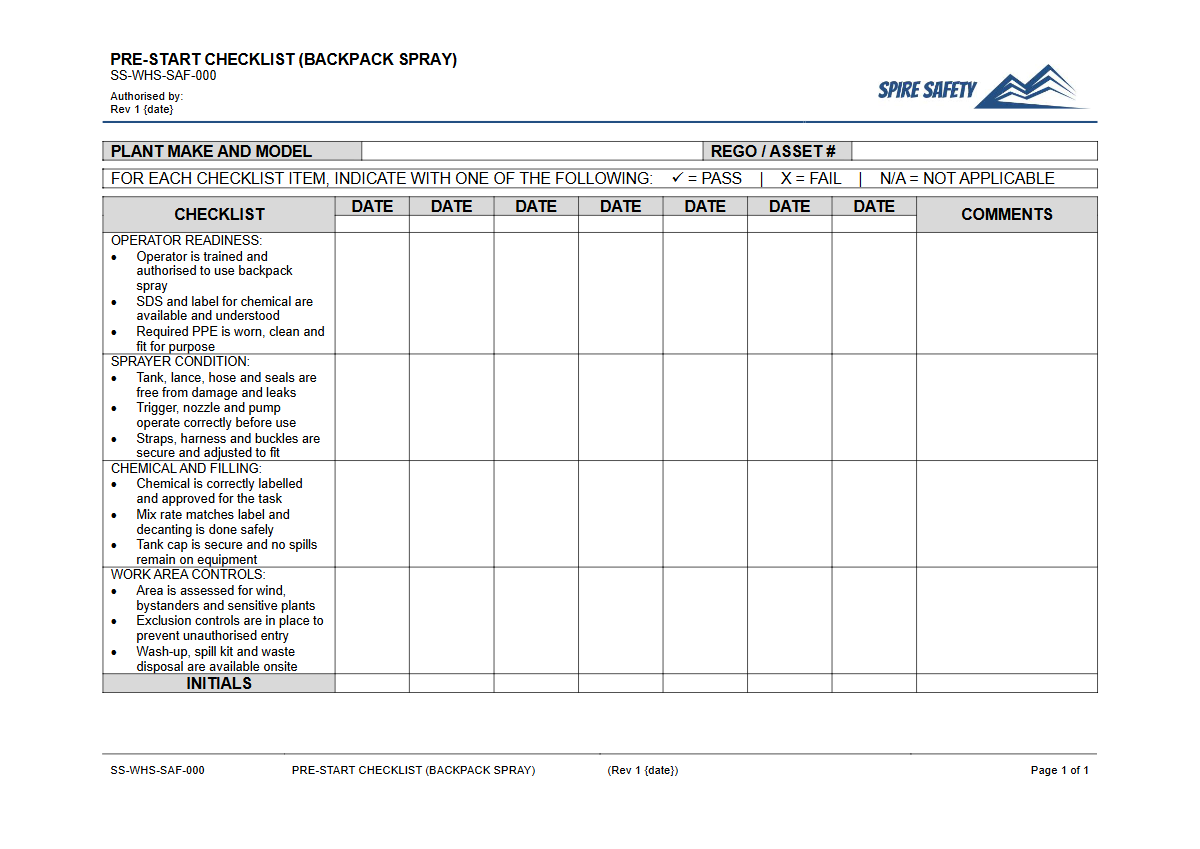
Our Free Pre-Start Checklist (Backpack Spray) Template provides a structured framework for these essential checks. Its purpose is to help operators formally verify the condition of the sprayer, identifying potential faults like leaks, cracks, or damaged straps that could lead to injury or environmental contamination.
Regularly completing this checklist demonstrates proactive hazard management and helps create a consistent safety routine across your team.
By documenting these inspections, your organisation creates a record of due diligence, showing that plant is being maintained and monitored. This process is a key part of any practical safety system, helping to prevent incidents before they occur.
To further embed this practice, you can reinforce the importance of inspections with our toolbox talk on pre-start checks and plant maintenance, which helps explain the 'why' behind the task.
Video walkthrough
How to Use the Free Pre-Start Checklist (Backpack Spray) Template
This template is provided as a starting point in both DOCX and PDF formats. The DOCX file is fully editable, allowing you to tailor it to your specific workplace requirements. To effectively implement the checklist, follow these steps:
- Customise: Add your company branding and modify the checklist items to reflect the specific models of backpack sprayers you use and the types of chemicals being handled. Different units may have unique features or common failure points that should be included.
- Train: Ensure all operators are trained not just on how to use the backpack sprayer, but also on how to properly complete the pre-start checklist. They must understand what each item means and what to do if a fault is found.
- Integrate: Make the checklist a mandatory, non-negotiable step before every use. Store completed checklists in a designated location as part of your safety records.
Note: This document is a template and must be customised to suit your specific business needs. We have provided a solid foundation based on Australian WHS principles, but it is your responsibility to ensure it covers all risks associated with your plant, substances, and operating environment.
Properly integrated, this checklist becomes a valuable tool within your overall safety framework. For guidance on incorporating such documents into a holistic program, consider how it supports your WHS management system.
When to use it
The pre-start checklist should be completed before every use of a backpack sprayer. This frequency ensures that any damage or faults that may have occurred during previous use or storage are identified before the equipment is filled with chemicals and pressurised.
It is a quick but critical task that should be a fixed part of an operator's daily routine.
Who should use it
The checklist is designed to be completed by the person operating the equipment. The operator has the most direct interaction with the plant and is best positioned to notice small changes or potential issues.
Supervisors should also be familiar with the checklist to conduct spot-checks and verify that inspections are being completed correctly and consistently. If you require assistance developing implementation strategies or training materials, engaging with specialist WHS consulting can provide tailored support for your business.
Ultimately, a pre-start checklist is only effective if it is used consistently and its findings are acted upon. Verifying that these processes are followed is a key part of ensuring workplace safety.
This can be reviewed as part of routine internal checks or more formal WHS compliance auditing activities. For more templates to support your safety processes, explore our complete free WHS resources library.
Common mistakes
Common mistakes to avoid
- Ignoring small drips or leaks, which can worsen under pressure and cause chemical burns.
- "Pencil-whipping" the checklist without physically touching and inspecting each component.
- Failing to check that the pressure relief valve is present and appears functional.
- Using the same sprayer for incompatible chemicals (e.g., herbicides and fungicides) without triple-rinsing, leading to cross-contamination.
Legal references
Legal considerations
The following legal requirements may be relevant to this type of work.
- Work Health and Safety Act (Harmonised) — Provides the primary duties for protecting workers and other people from work health and safety risks.
- Work Health and Safety Regulations (Harmonised) — Sets out requirements supporting the management of workplace hazards and risks.
The following codes may be relevant to this type of work.
- Managing WHS Risks Code of Practice — Provides practical guidance on identifying hazards, assessing risks and applying effective controls.
- Work Health and Safety Consultation, Cooperation and Coordination Code of Practice — Provides practical guidance on consulting workers and coordinating with other duty holders.
- Managing the Work Environment and Facilities Code of Practice — Provides practical guidance on safe work environments, workplace facilities and related controls.
Did you know
Ergonomic Strain
A full 15-litre backpack sprayer can weigh nearly 20kg. A thorough pre-start check of the harness, straps, and back padding is crucial for preventing serious musculoskeletal injuries.
Chemical Exposure
According to numerous safety studies, a significant number of chemical exposure incidents for operators are linked to equipment failure. Leaking hoses, faulty seals, and cracked tanks are common culprits that a pre-start check is designed to find.
FAQ
Frequently asked questions
01Is a pre-start checklist for a backpack sprayer legally required in Australia?
02What are the most critical items on a backpack sprayer checklist?
03How often should our backpack sprayer checklist be reviewed?
04Can this template be used digitally on a tablet?
Share this resource
Free Pre-Start Checklist (Backpack Spray) Template
Browse Categories
How To Use It
- 1Download and open in Word or PDF.
- 2Replace the placeholders with your business details.
- 3Get it reviewed by a WHS specialist before rollout.
Need it customised?
Our WHS consultants can adapt this template to your site, run a gap analysis, or audit what you already have in place.
Book a Free Consultation WHS consulting servicesor call 1300 156 382