
Free Pre-Start Checklist (Calf Feeder) Template
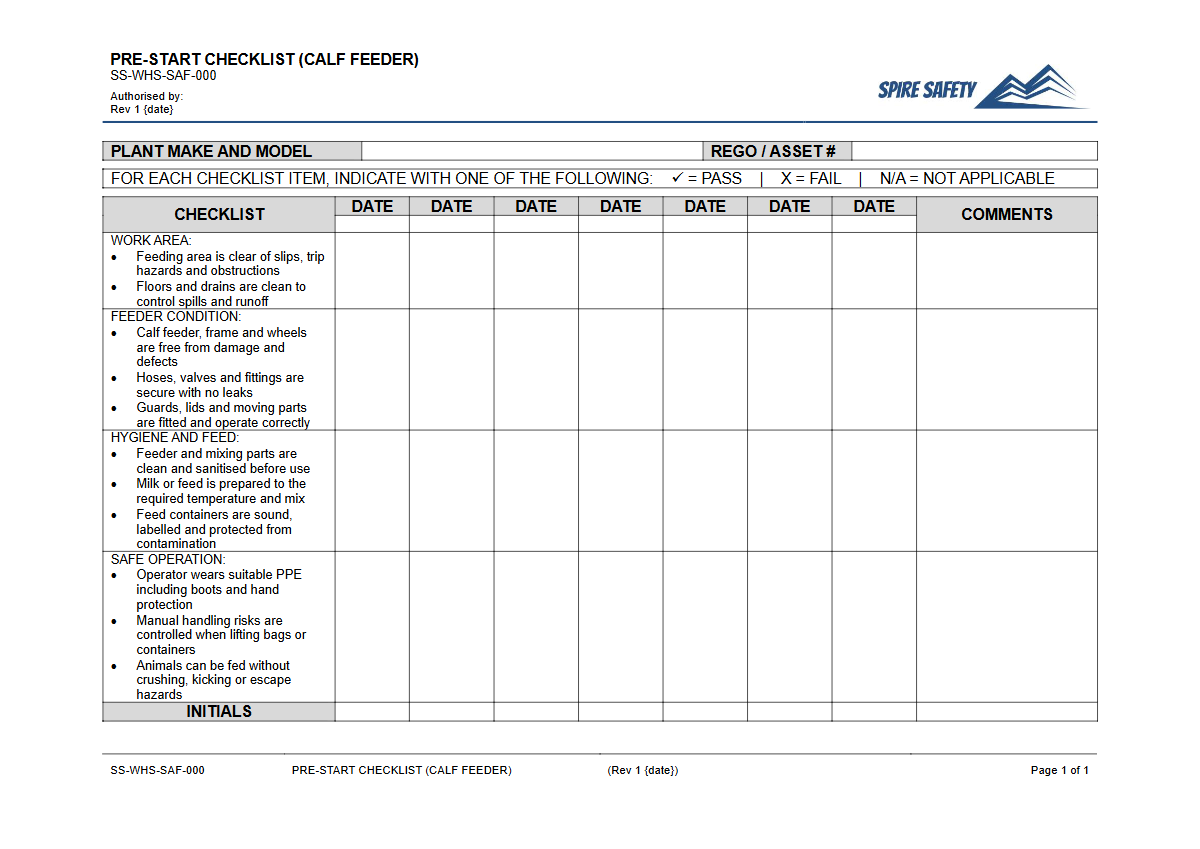
Download our free Pre-Start Checklist (Calf Feeder) Template for Australian agricultural businesses. Formalise your daily equipment inspections. Get it now.
Free Pre-Start Checklist (Calf Feeder) Template
DOCX • 125 KB + PDF
Updated Oct 2026
No signup required
Purpose of the Free Pre-Start Checklist (Calf Feeder) Template
An automated calf feeder is a critical piece of equipment on any modern dairy or cattle farm, but its complexity brings inherent risks. This free Pre-Start Checklist (Calf Feeder) Template provides a structured framework for operators to conduct consistent, thorough inspections before each use.
Using this checklist helps identify potential mechanical, electrical, or hygiene issues before they can cause harm to operators, compromise animal welfare, or lead to costly breakdowns and downtime. It formalises the process of checking critical components such as guards, emergency stops, mixing mechanisms, and cleaning systems.
Integrating regular, documented checks into your daily routine is a cornerstone of effective safety management on farms. It demonstrates a proactive approach to risk management and forms a key part of your farm's broader WHS management systems. By systematically recording that equipment is safe to operate, you create an auditable trail that supports your commitment to workplace health and safety. You can reinforce these principles with staff by using our Pre-Start Checks and Plant Maintenance Toolbox Talk.
Video walkthrough
How to use the Free Pre-Start Checklist (Calf Feeder) Template
This template is available in both DOCX and PDF formats. We recommend using the DOCX file to tailor the checklist to your specific operational needs. The process is straightforward:
- Download the template using the links on this page.
- Open the DOCX file and add your company logo and details.
- Walk through the operation of your specific calf feeder, adding, removing, or modifying checklist items to match its make and model. Pay special attention to unique features, known weak points, and manufacturer recommendations. Consider components like mixing bowls or tanks, which might have their own inspection needs similar to a standalone checklist for an agitator.
- Save your customised version and print copies for use on-site, or integrate it into a digital records system.
- Train all operators on how to properly complete the checklist and what to do if they identify a fault.
Important: This document is a template only. It is essential that you customise it to reflect the specific equipment in use at your workplace, your unique site conditions, and your internal procedures.
We are not liable for any incidents arising from the use of this template. If you need assistance developing customised, site-specific safety documentation, consider engaging professional WHS consulting services.
When to use a Pre-Start Checklist
A pre-start inspection should be completed before the calf feeder is used for the first time each day or at the beginning of each operator's shift. This ensures the equipment is in a safe condition before any feeding cycle begins.
Consistency is key; a check performed routinely becomes a powerful habit that significantly reduces risk. This practice is not unique to feeders; a similar daily discipline should be applied to all powered farm equipment, such as when using a pre-start checklist for an air seeder before planting.
Who should use this Pre-Start Checklist
The pre-start check must be conducted by a person who is competent and authorised to operate the calf feeder. This is typically the farmhand or manager responsible for the morning and evening feeding rounds.
They must be trained not only in the feeder's operation but also in how to identify the hazards listed on the checklist. A supervisor should periodically review completed checklists to ensure they are being filled out correctly and to follow up on any reported defects or maintenance requests. These records can be invaluable during internal reviews or formal WHS compliance audits.
By implementing and consistently using this Pre-Start Checklist, you take a significant step toward a safer, more productive, and more organised agricultural operation. Explore our free WHS resources library for more tools to support your safety management efforts.
Common mistakes
Common mistakes to avoid
- Forgetting to check calibration settings, leading to incorrect feed portions.
- Overlooking hygiene checks of milk lines, nipples, and mixing bowls, leading to bacterial growth.
- "Pencil-whipping" the checklist without physically inspecting each component.
- Failing to isolate and tag out the machine when a fault is found, allowing someone else to use it unknowingly.
Legal references
Legal considerations
The following legal requirements may be relevant to this type of work.
- Work Health and Safety Act (Harmonised) — Provides the primary duties for protecting workers and other people from work health and safety risks.
- Work Health and Safety Regulations (Harmonised) — Sets out requirements supporting the management of workplace hazards and risks.
The following codes may be relevant to this type of work.
- Managing WHS Risks Code of Practice — Provides practical guidance on identifying hazards, assessing risks and applying effective controls.
- Work Health and Safety Consultation, Cooperation and Coordination Code of Practice — Provides practical guidance on consulting workers and coordinating with other duty holders.
- Managing the Work Environment and Facilities Code of Practice — Provides practical guidance on safe work environments, workplace facilities and related controls.
Did you know
Health and Growth
Consistent and accurate feeding, verified by pre-start checks on the feeder's calibration and hygiene, is directly linked to improved calf health, better growth rates, and reduced instances of scours.
Mechanisation Risks
While automated feeders reduce manual handling, they introduce new risks like entanglement in moving parts, electrical hazards, and hygiene issues if not properly inspected and maintained.
FAQ
Frequently asked questions
01Why are pre-start checks for a calf feeder necessary?
02Can I use this template for any brand of calf feeder?
03Who is responsible for completing the calf feeder pre-start?
04What happens if a fault is found during the check?
Share this resource
Free Pre-Start Checklist (Calf Feeder) Template
Browse Categories
How To Use It
- 1Download and open in Word or PDF.
- 2Replace the placeholders with your business details.
- 3Get it reviewed by a WHS specialist before rollout.
Need it customised?
Our WHS consultants can adapt this template to your site, run a gap analysis, or audit what you already have in place.
Book a Free Consultation WHS consulting servicesor call 1300 156 382