
Free Pre-Start Checklist (Cattle Ramp) Template
Download our free Pre-Start Checklist (Cattle Ramp) Template in DOCX & PDF.
Free Pre-Start Checklist (Cattle Ramp) Template
DOCX • 125 KB + PDF
Updated Oct 2026
No signup required
Purpose of the Free Pre-Start Checklist (Cattle Ramp) Template
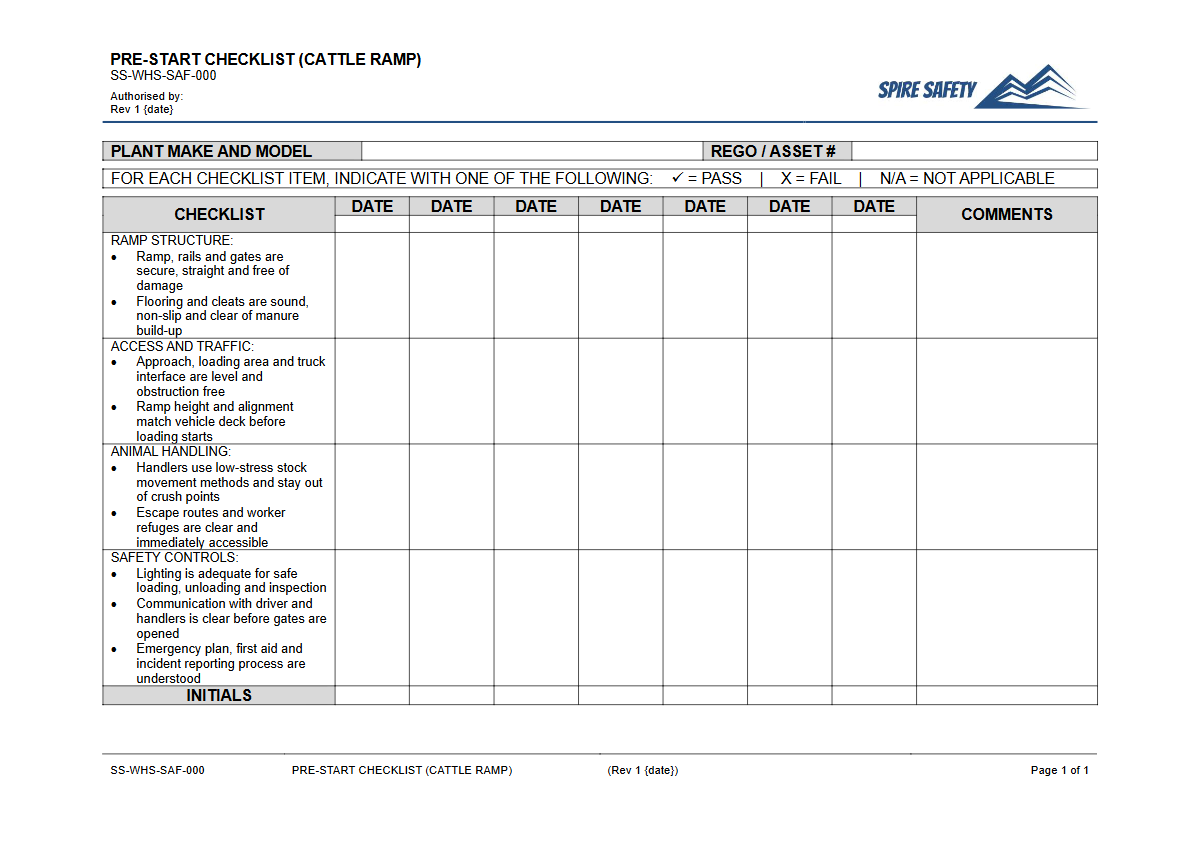
Ensuring the safety of workers and the welfare of animals is paramount in any livestock handling operation. This free Pre-Start Checklist (Cattle Ramp) Template provides a structured starting point for formalising your daily safety inspections.
Using a checklist helps operators systematically identify potential hazards such as structural damage, slippery surfaces, or malfunctioning gates before they lead to an incident. Regular inspections are a fundamental part of a proactive approach to safety, helping your organisation meet its duty of care obligations under Australian WHS laws.
For businesses looking to integrate such procedures into a broader framework, our WHS consulting services can provide expert guidance.
This template is designed to be clear and practical, focusing on the critical components of both fixed and mobile cattle ramps. By documenting checks, you create a record of due diligence, which is essential for incident investigation and continuous improvement.
It encourages a safety-first mindset among stock handlers and yard staff, reinforcing the importance of inspecting equipment before every use. This process not only minimises the risk of human injury from slips, trips, falls, or crushing, but also reduces stress and potential harm to livestock.
Video walkthrough
How to use the Free Pre-Start Checklist (Cattle Ramp) Template
This checklist is a fully editable document, available for download in both DOCX and PDF formats. To use it effectively, first download the file and adapt it to the specific cattle ramps used in your workplace.
Different designs—whether permanent yard ramps, portable ramps, or adjustable multi-deck ramps—have unique features and failure points that your checklist must address. You can add, remove, or modify checklist items to ensure they are relevant to your equipment and operational risks.
Important: This is a template only. We are not familiar with your unique operational context.
You MUST customise this document to suit the specific equipment, personnel, and risks present in your workplace. It should be integrated into your overall safety management system and reviewed regularly.
Once customised, provide the checklist to all relevant personnel, such as stock handlers, farm managers, and maintenance staff. Ensure they are trained not only on how to complete the form but, more importantly, on how to conduct a thorough physical inspection of the ramp.
This training can be delivered effectively through a Pre-Start Checks and Plant Maintenance Toolbox Talk to reinforce procedures and discuss specific hazards.
When to use a Cattle Ramp Pre-Start Checklist
A pre-start inspection should be conducted before the first use of the cattle ramp each day or at the beginning of each work shift. It is particularly important to perform checks after extreme weather events, after maintenance has been performed, or if the ramp has been moved (in the case of portable units).
Integrating this check into your daily routine ensures that any damage or developing issues are identified early, before the ramp is put under load. Documenting these checks helps form a critical part of your overall WHS management systems, providing a clear record of safety practices.
Who should use this Pre-Start Checklist
This checklist is intended for use by any person responsible for operating or overseeing livestock handling activities. This includes, but is not limited to, farm owners, station managers, livestock agents, transport operators, and yard staff.
A designated competent person should be responsible for carrying out the inspection and signing off on the checklist. Supervisors should also use the completed forms to verify that inspections are being performed correctly and to action any reported defects or maintenance requirements promptly. This process ensures accountability and a clear line of communication regarding the safety status of critical equipment like a cattle ramp or an articulated loader.
While this resource is focused on cattle ramps, similar principles apply to other agricultural machinery. For example, if your operations involve cropping, you might also benefit from our free Pre-Start Checklist (Air Seeder) Template. Consistently applying pre-start checks across all plant and structures is a hallmark of a mature safety culture. You can find more templates like this one in our comprehensive free WHS resources library.
Common mistakes
Common mistakes to avoid
- Ignoring minor structural damage like bent rails or rust, which can worsen under load.
- Failing to check the ramp surface for slipperiness, especially after rain or cleaning.
- Treating the checklist as a 'tick-and-flick' exercise without a genuine physical inspection.
- Not training new workers on the specific hazards of the ramp they are using.
Legal references
Legal considerations
The following legal requirements may be relevant to this type of work.
- Work Health and Safety Act (Harmonised) — Provides the primary duties for protecting workers and other people from work health and safety risks.
- Work Health and Safety Regulations (Harmonised) — Sets out requirements supporting the management of workplace hazards and risks.
The following codes may be relevant to this type of work.
- Managing WHS Risks Code of Practice — Provides practical guidance on identifying hazards, assessing risks and applying effective controls.
- Work Health and Safety Consultation, Cooperation and Coordination Code of Practice — Provides practical guidance on consulting workers and coordinating with other duty holders.
- Managing the Work Environment and Facilities Code of Practice — Provides practical guidance on safe work environments, workplace facilities and related controls.
Did you know
Livestock Handling Risks
Slips, trips, and falls are a leading cause of injury in the livestock industry, with poorly maintained ramps and yards being a significant contributing factor.
Animal Welfare
A well-maintained, non-slip cattle ramp not only protects workers but also reduces stress and potential injury to animals, a key component of animal welfare codes of practice.
FAQ
Frequently asked questions
01Why are pre-start checks for cattle ramps important?
02What key areas should be checked on a cattle ramp?
03How often should a cattle ramp pre-start check be performed?
04Do I need to change this cattle ramp checklist template?
Share this resource
Free Pre-Start Checklist (Cattle Ramp) Template
Browse Categories
How To Use It
- 1Download and open in Word or PDF.
- 2Replace the placeholders with your business details.
- 3Get it reviewed by a WHS specialist before rollout.
Need it customised?
Our WHS consultants can adapt this template to your site, run a gap analysis, or audit what you already have in place.
Book a Free Consultation WHS consulting servicesor call 1300 156 382