
Free Pre-Start Checklist (Change Table) Template
Download our free Pre-Start Checklist for change tables. This template helps formalise safety checks for infant care equipment. Download your DOCX & PDF now.
Free Pre-Start Checklist (Change Table) Template
DOCX • 125 KB + PDF
Updated Oct 2026
No signup required
Purpose of the Free Pre-Start Checklist (Change Table) Template
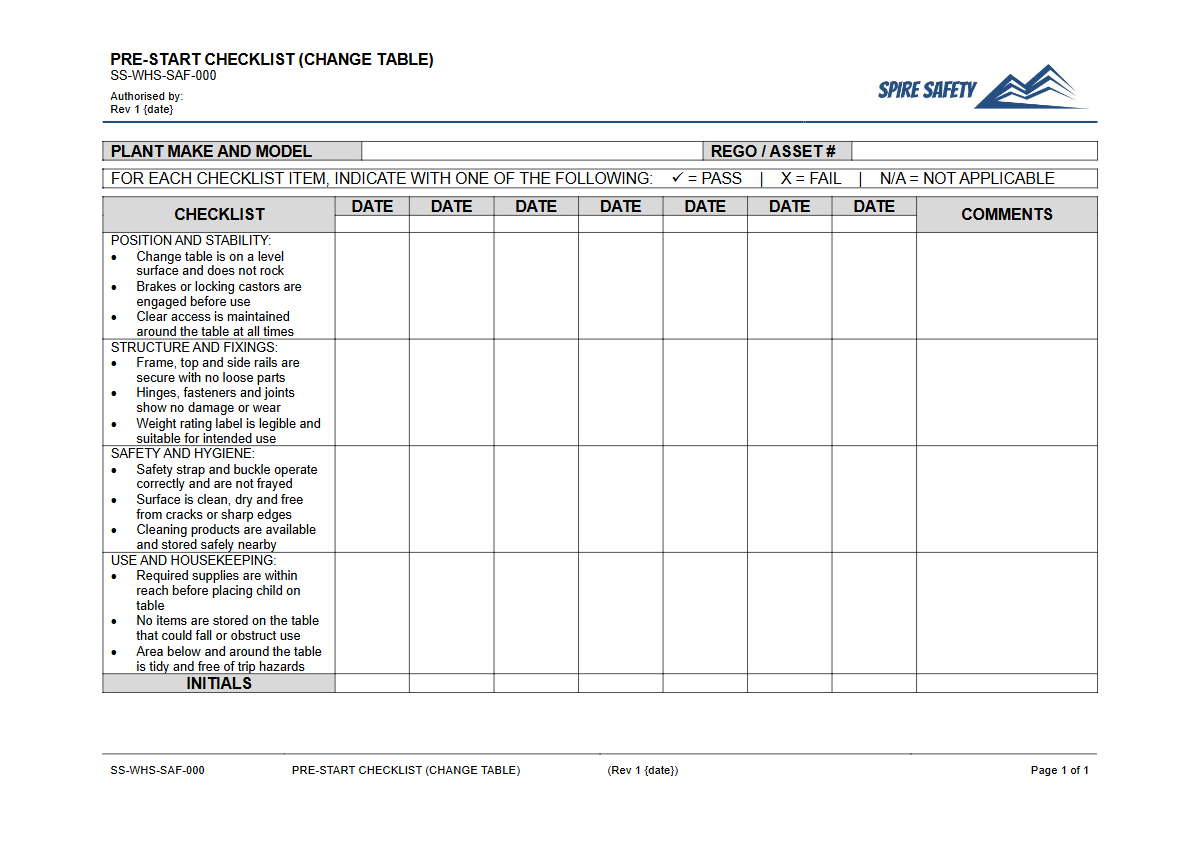
Ensuring the safety of infants and caregivers is a primary concern in childcare, healthcare, and aged care settings. Our Free Pre-Start Checklist (Change Table) Template provides a structured framework for verifying that infant change tables are safe for use before they are needed.
While seemingly simple, a change table can present significant hazards if it is unstable, damaged, or unhygienic. This checklist helps formalise daily or pre-shift inspections, focusing on structural integrity, cleanliness, stability, and the availability of necessary supplies.
Regular use of this checklist helps a Person Conducting a Business or Undertaking (PCBU) meet their primary duty of care. It creates a documented record of safety checks, demonstrating proactive risk management.
For caregivers, performing these checks mitigates risks associated with equipment failure and addresses ergonomic hazards from improper setup. Reinforcing correct procedures around equipment use is critical, a topic covered in our Aged Care Manual Handling Toolbox Talk.
Video walkthrough
How to use the Free Pre-Start Checklist (Change Table) Template
This template is designed for straightforward implementation. First, download the document in your preferred format (DOCX for easy editing or PDF for immediate printing).
The next step is crucial for its effectiveness and relevance to your specific operational needs.
Important: This template provides a starting point. We recommend you customise it to reflect the specific change table models, tasks, and environment at your workplace.
You may need to add or remove items based on the manufacturer's instructions and a site-specific risk assessment.
Once customised, train all relevant personnel on how to complete the checklist correctly. This includes understanding what each checkpoint means and the procedure for reporting any identified faults or deficiencies.
Documented procedures like this are a core component of effective WHS management systems, turning safety from an afterthought into an organised, routine activity.
When to use it
The frequency of pre-start checks should be determined by a risk assessment, considering factors like the level of use, the environment, and the manufacturer’s recommendations. For high-traffic environments such as childcare centres or hospital nurseries, completing the checklist at the beginning of each shift is best practice.
In lower-use settings, a daily check before the first use of the day may be sufficient. The goal is to identify potential issues before they can cause harm.
Using a tool like a Pre-Start Checks and Plant Maintenance toolbox talk can help communicate the importance and required frequency of these inspections to your team. Consistent application ensures that safety standards are maintained day-to-day, rather than only being assessed periodically.
Who should use it
This checklist should be used by the individuals directly responsible for using the change table. This typically includes childcare educators, nurses, aged care workers, and other caregivers.
Empowering frontline workers to conduct these checks gives them ownership of safety in their immediate work area. Supervisors or team leaders should also be familiar with the checklist to verify its completion and follow up on any reported issues.
WHS managers and coordinators can use the completed checklists as part of their broader safety assurance activities. If your organisation is introducing new equipment, a formal process is essential.
Our free Change Management Form Template can help assess the risks before implementation. Periodically reviewing these records during safety walk-throughs or audits ensures the system is functioning as intended.
Regular verification of safety processes is a key part of maintaining a safe workplace. An external perspective can be valuable in identifying gaps, which is a key function of professional WHS compliance auditing services. For more templates and tools to support your safety management system, explore our complete free WHS resources library.
Common mistakes
Common mistakes to avoid
- Failing to customise the checklist for specific change table models and workplace risks.
- Treating the check as a 'tick and flick' exercise without physically inspecting each item.
- Not training staff on what to look for or the procedure for reporting faults.
- Forgetting to document and take corrective action on identified issues in a timely manner.
Legal references
Legal considerations
The following legal requirements may be relevant to this type of work.
- Work Health and Safety Act (Harmonised) — Provides the primary duties for protecting workers and other people from work health and safety risks.
- Work Health and Safety Regulations (Harmonised) — Sets out requirements supporting the management of workplace hazards and risks.
The following codes may be relevant to this type of work.
- Managing WHS Risks Code of Practice — Provides practical guidance on identifying hazards, assessing risks and applying effective controls.
- Work Health and Safety Consultation, Cooperation and Coordination Code of Practice — Provides practical guidance on consulting workers and coordinating with other duty holders.
- Managing the Work Environment and Facilities Code of Practice — Provides practical guidance on safe work environments, workplace facilities and related controls.
Did you know
Manual Handling Risk
Manual handling injuries are a leading cause of workers' compensation claims in the healthcare and social assistance industry. Regular equipment checks, including for ergonomic hazards, are a key part of mitigating this risk.
FAQ
Frequently asked questions
01Why is a pre-start checklist needed for a simple change table?
02How often should a change table pre-start check be performed?
03What are the key hazards associated with infant change tables?
04Can this template be used for any brand of change table?
Share this resource
Free Pre-Start Checklist (Change Table) Template
Browse Categories
How To Use It
- 1Download and open in Word or PDF.
- 2Replace the placeholders with your business details.
- 3Get it reviewed by a WHS specialist before rollout.
Need it customised?
Our WHS consultants can adapt this template to your site, run a gap analysis, or audit what you already have in place.
Book a Free Consultation WHS consulting servicesor call 1300 156 382