
Free Pre-Start Checklist (Chiller) Template
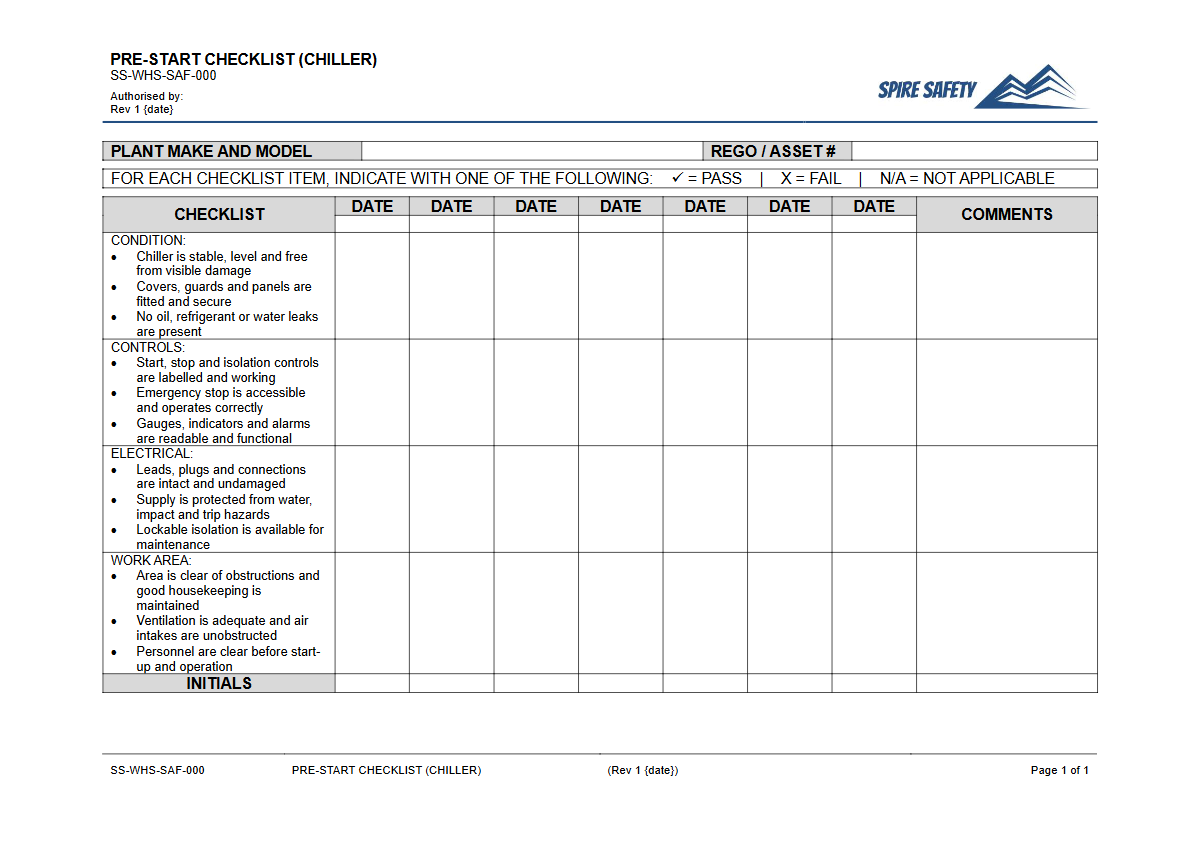
Download our Free Pre-Start Checklist (Chiller) Template. This structured Word & PDF document helps formalise daily equipment safety inspections.
Free Pre-Start Checklist (Chiller) Template
DOCX • 125 KB + PDF
Updated Oct 2026
No signup required
Purpose of the Free Pre-Start Checklist (Chiller) Template
A chiller is a critical piece of plant in many industrial, commercial, and HVAC applications. Ensuring its safe and efficient operation is paramount.
This Free Pre-Start Checklist (Chiller) Template provides a structured framework for operators to conduct thorough inspections before use. Regular checks help identify potential hazards such as refrigerant leaks, electrical faults, or mechanical blockages, preventing equipment failure, costly downtime, and serious workplace incidents.
By formalising this process, your organisation can demonstrate a proactive approach to risk management and uphold its duty of care.
Integrating these checks into your daily routine is a fundamental aspect of plant safety. To reinforce this behaviour with your team, consider using our Pre-Start Checks and Plant Maintenance Toolbox Talk to facilitate discussion and underscore the importance of these inspections.
Video walkthrough
How to use the Free Pre-Start Checklist (Chiller) Template
Our template is available in both DOCX and PDF formats for your convenience. The DOCX file is fully editable, allowing you to tailor it to the specific requirements of your workplace.
It is crucial to adapt the checklist to the make, model, and operational context of your chiller systems, as generic checklists may overlook unique hazards. The PDF version is ready for immediate printing and use.
Important Note: We have designed this template as a comprehensive starting point based on general safety principles. It is essential that you customise it to reflect the specific equipment in your workplace, your unique operational risks, and any manufacturer-specific recommendations.
This customisation is a key step in developing an effective safety procedure.
The checklist guides the user through several key inspection areas, including:
- General Area Inspection: Checking for clear access, slip/trip hazards, and adequate lighting around the unit.
- Visual & Structural Checks: Looking for signs of damage, corrosion, fluid leaks (oil or refrigerant), and secure mounting.
- Operational Checks: Verifying correct pressure and temperature readings on gauges, listening for unusual noises, and ensuring control panels are functioning correctly.
- Safety Systems: Confirming that emergency stops are accessible, safety guards are in place, and alarm systems are operational.
These individual checks form part of a holistic safety strategy. For organisations looking to formalise their safety procedures on a larger scale, implementing comprehensive WHS management systems can provide the structure needed to ensure consistency and continuous improvement.
When to Conduct Chiller Pre-Start Checks
A pre-start inspection should be completed at the beginning of every shift or before the first use of the day. This frequency ensures that any issues that may have developed overnight or between shifts are caught before the equipment is put into operation.
Additionally, a check should be performed after any significant maintenance, repair, or modification to verify that the chiller has been returned to a safe operational state.
Documenting these checks consistently provides valuable evidence of your safety processes. This documentation can be a critical component during a WHS compliance audit, demonstrating that your organisation is actively managing plant-related risks.
Who Should Use This Pre-Start Checklist
The checklist should be completed by a person who is trained, competent, and authorised to operate the specific chiller unit. This typically includes plant operators, HVAC technicians, or maintenance personnel.
It is vital that these individuals understand not only how to fill out the form but also what each check entails and the potential hazards they are looking for. Supervisors should periodically review completed checklists to ensure they are being filled out correctly and that any reported issues are being addressed promptly.
If you need assistance in developing competency frameworks or training programs for your operators, seeking expert WHS consulting can help align your procedures with industry best practice and regulatory expectations.
After customising this document for your business, you may find other useful templates in our extensive library of free WHS resources, which covers a wide range of equipment and safety procedures.
Common mistakes
Common mistakes to avoid
- Using a generic checklist that doesn't match the specific chiller model and its unique risks.
- "Pencil-whipping" the form without physically performing the checks.
- Failing to immediately tag out and report equipment when a fault is found.
- Inadequate record-keeping, which prevents tracking of recurring faults or demonstrating due diligence.
Legal references
Legal considerations
The following legal requirements may be relevant to this type of work.
- Work Health and Safety Act (Harmonised) — Provides the primary duties for protecting workers and other people from work health and safety risks.
- Work Health and Safety Regulations (Harmonised) — Sets out requirements supporting the management of workplace hazards and risks.
The following codes may be relevant to this type of work.
- Managing WHS Risks Code of Practice — Provides practical guidance on identifying hazards, assessing risks and applying effective controls.
- Work Health and Safety Consultation, Cooperation and Coordination Code of Practice — Provides practical guidance on consulting workers and coordinating with other duty holders.
- Managing the Work Environment and Facilities Code of Practice — Provides practical guidance on safe work environments, workplace facilities and related controls.
Did you know
Energy Efficiency
A poorly maintained chiller can consume up to 30% more energy than a well-maintained one. Regular pre-start checks contribute to optimal performance, lower energy costs, and a reduced carbon footprint.
Refrigerant Hazards
Even minor refrigerant leaks can significantly reduce a chiller's efficiency and pose environmental risks. Certain refrigerants are also asphyxiants in confined spaces, making early detection through checks critical for safety.
FAQ
Frequently asked questions
01What is a chiller pre-start checklist?
02Is it a legal requirement to use a pre-start checklist for a chiller?
03What should happen if a fault is found during a pre-start check?
04How often should our chiller pre-start checklist be reviewed and updated?
Share this resource
Free Pre-Start Checklist (Chiller) Template
Browse Categories
How To Use It
- 1Download and open in Word or PDF.
- 2Replace the placeholders with your business details.
- 3Get it reviewed by a WHS specialist before rollout.
Need it customised?
Our WHS consultants can adapt this template to your site, run a gap analysis, or audit what you already have in place.
Book a Free Consultation WHS consulting servicesor call 1300 156 382