
Free Pre-Start Checklist (Checkweigher) Template
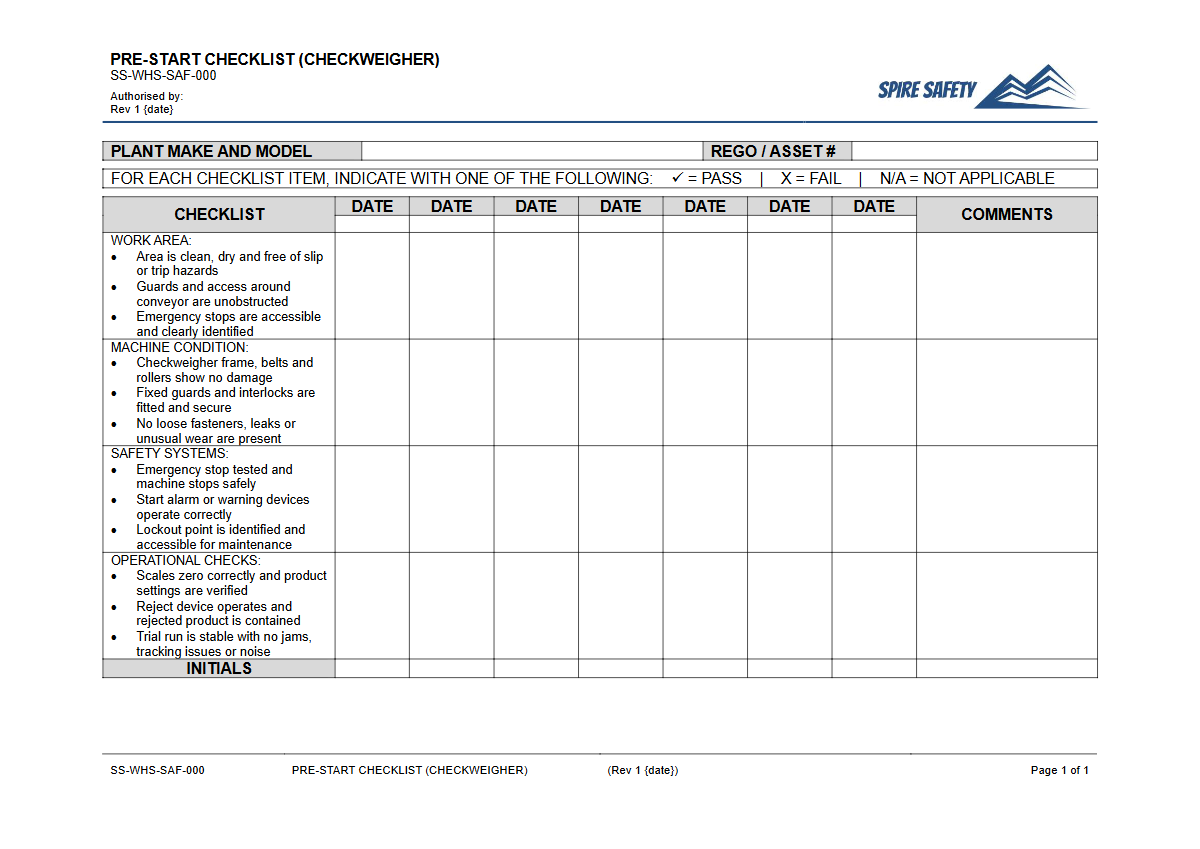
Download our free Pre-Start Checklist (Checkweigher) Template. This structured DOCX & PDF resource helps formalise daily equipment checks.
Free Pre-Start Checklist (Checkweigher) Template
DOCX • 125 KB + PDF
Updated Oct 2026
No signup required
Purpose of the Free Pre-Start Checklist (Checkweigher) Template
A checkweigher is a critical control point in many production and packaging lines, ensuring product weight accuracy and compliance with trade measurement laws. However, it also presents mechanical, electrical, and ergonomic hazards.
This Free Pre-Start Checklist (Checkweigher) Template provides a structured starting point for developing a robust inspection process. Formalising these checks helps your organisation identify potential faults or hazards before the equipment is used, preventing incidents, minimising downtime, and ensuring product quality.
By documenting these inspections, you create a clear record of due diligence and proactive safety management.
A consistent pre-start routine is a vital part of your overall plant maintenance strategy. You can reinforce these principles with our Pre-Start Checks and Plant Maintenance Toolbox Talk to ensure all team members understand their importance.
Video walkthrough
How to use the Free Pre-Start Checklist (Checkweigher) Template
This Pre-Start Checklist is designed for ease of use. First, download the template in your preferred format (DOCX for easy customisation or PDF for immediate printing).
The next step is the most critical: tailoring the document to your specific needs.
Please note: this template is a starting point aligned with general Australian WHS principles. We cannot know the specific hazards of your workplace or the exact model of your checkweigher.
You must customise this document to reflect your unique operational environment, the specific equipment in use, and your legal obligations. This may involve adding or removing checklist items, specifying locations, and referencing internal procedures.
Once customised, the checklist should be integrated into your daily operating procedures. Train all relevant operators and supervisors on how to complete it correctly and what actions to take if a fault is found.
Integrating this process into your existing WHS management systems is crucial for consistent application and record-keeping.
Key Inspection Areas
While your specific checkweigher model will have unique features, a thorough pre-start inspection should generally cover the following areas:
- Guarding: Ensure all physical guards are in place, secure, and free from damage. Check that any interlocked guards function correctly.
- Emergency Stops: Test all E-stop buttons to confirm they immediately and safely halt the machine.
- Conveyor System: Inspect belts for wear, tear, or fraying. Check that rollers and drives are clear of debris.
- Sensors & Scanners: Verify that photo-eye sensors are clean and correctly aligned.
- Reject Mechanism: Test the function of the reject system (e.g., air blast, pusher arm, drop-flap) to ensure it correctly diverts non-conforming products.
- Display & Controls: Check that the Human-Machine Interface (HMI) or display is functioning, legible, and free from error messages.
- General Condition: Look for leaks, loose wiring, damage to the frame, and ensure the area around the machine is clean and free of trip hazards.
When to use it
A pre-start check for a checkweigher should be completed:
- Before the start of every shift or operating day.
- After a change of operator.
- Following any maintenance, cleaning, or adjustment.
- If the machine has been moved or inactive for an extended period.
Consistent use creates a valuable data log that can highlight recurring issues and inform your maintenance schedule. These documented records are also essential evidence of proactive hazard management during a WHS compliance audit.
Who should use it
This Pre-Start Checklist should be used by personnel who are competent and authorised to operate the specific checkweigher. This typically includes:
- Machine Operators: They are the primary users responsible for conducting the check before they begin their work.
- Supervisors/Team Leaders: They are responsible for ensuring the checks are being completed correctly and for signing off on any required actions or escalations.
- Maintenance Personnel: They may use the checklist to verify the machine's safe state before and after performing maintenance tasks.
Ultimately, the Person Conducting a Business or Undertaking (PCBU) holds the primary duty of care to ensure safe systems of work, including the provision and maintenance of safe plant. The same principles of operator checks apply to other common production machinery, such as those detailed in our Free Pre-Start Checklist (Agitator) Template. This document is one of many practical tools available in our comprehensive free WHS resources library.
Common mistakes
Common mistakes to avoid
- Using a generic checklist that doesn't match the specific checkweigher model.
- "Pencil-whipping" the form without physically inspecting each item.
- Failing to report and immediately tag out equipment when a critical fault (like a failed E-stop) is found.
- Not retaining completed checklists as a record of inspection and maintenance history.
Legal references
Legal considerations
The following legal requirements may be relevant to this type of work.
- Work Health and Safety Act (Harmonised) — Provides the primary duties for protecting workers and other people from work health and safety risks.
- Work Health and Safety Regulations (Harmonised) — Sets out requirements supporting the management of workplace hazards and risks.
The following codes may be relevant to this type of work.
- Managing WHS Risks Code of Practice — Provides practical guidance on identifying hazards, assessing risks and applying effective controls.
- Work Health and Safety Consultation, Cooperation and Coordination Code of Practice — Provides practical guidance on consulting workers and coordinating with other duty holders.
- Managing the Work Environment and Facilities Code of Practice — Provides practical guidance on safe work environments, workplace facilities and related controls.
Did you know
Operational Efficiency
Regular pre-start checks do more than just improve safety. They can reduce equipment downtime by over 70% by catching minor faults before they escalate into major, costly breakdowns.
Cost of Inaccuracy
For food and beverage manufacturers, an inaccurate checkweigher can lead to significant financial penalties under trade measurement laws or trigger expensive product recalls if giveaway becomes excessive.
FAQ
Frequently asked questions
01What is the difference between a pre-start check and calibration?
02How often should a checkweigher pre-start inspection be completed?
03Is this digital checklist template suitable for our business?
04Who is responsible for ensuring pre-start checks are completed?
Share this resource
Free Pre-Start Checklist (Checkweigher) Template
Browse Categories
How To Use It
- 1Download and open in Word or PDF.
- 2Replace the placeholders with your business details.
- 3Get it reviewed by a WHS specialist before rollout.
Need it customised?
Our WHS consultants can adapt this template to your site, run a gap analysis, or audit what you already have in place.
Book a Free Consultation WHS consulting servicesor call 1300 156 382