
Free Pre-Start Checklist (Centrifuge) Template
Download our free Pre-Start Checklist (Centrifuge) Template for Australian workplaces. This DOCX and PDF resource helps formalise daily equipment checks.
Free Pre-Start Checklist (Centrifuge) Template
DOCX • 125 KB + PDF
Updated Oct 2026
No signup required
Purpose of the Free Pre-Start Checklist (Centrifuge) Template
Operating a centrifuge involves significant risks due to high rotational speeds. A failure during operation can lead to catastrophic damage and serious injury.
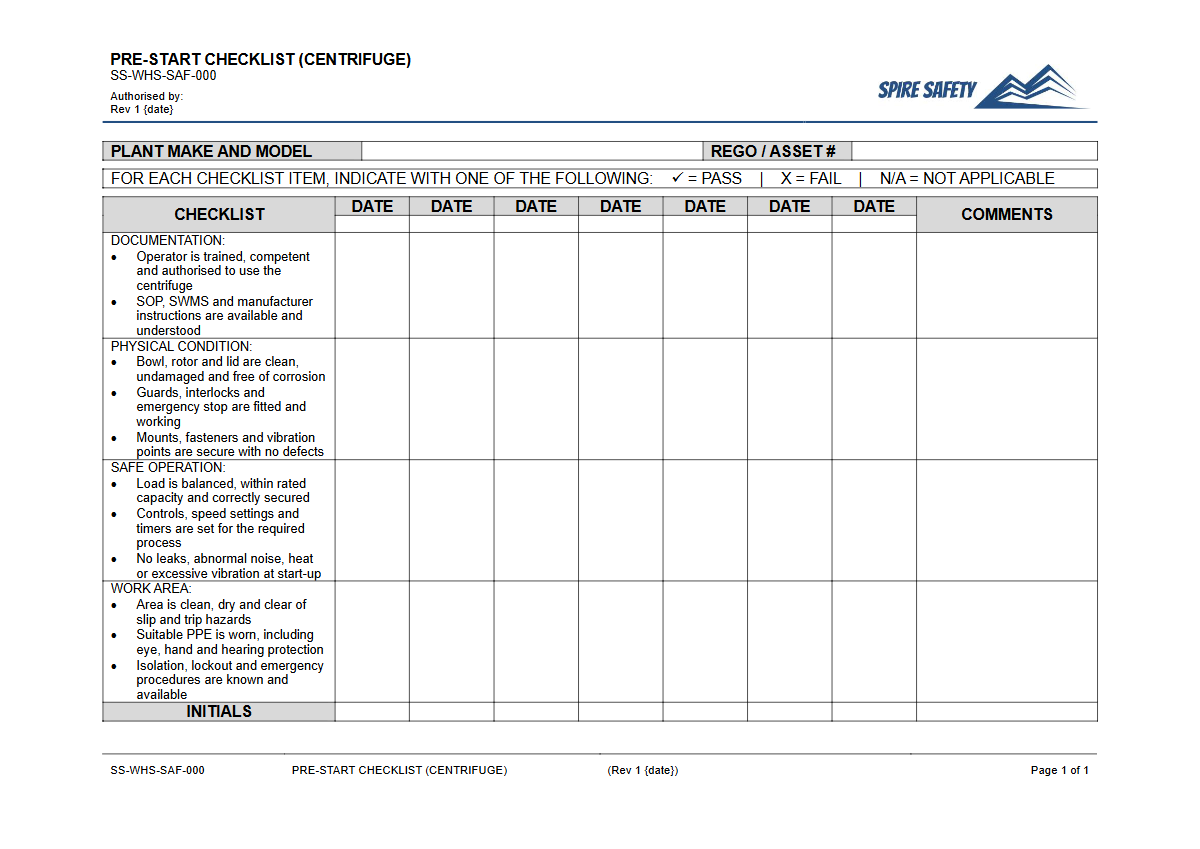
This Free Pre-Start Checklist (Centrifuge) Template provides a structured framework for operators to inspect the equipment before use, helping to identify potential faults that could compromise safety. Formalising this process is a key step in managing plant and equipment risks within a broader WHS management system.
Using a dedicated checklist ensures that critical safety components are consistently verified. This includes checking for signs of corrosion or damage, ensuring safety interlocks are functional, and confirming the unit is stable and free from obstruction.
Regular pre-start inspections help maintain the mechanical integrity of the centrifuge, reduce the likelihood of incidents, and provide a documented record of safety diligence. It also encourages a proactive safety culture where equipment care is a shared responsibility.
Video walkthrough
How to use the Free Pre-Start Checklist (Centrifuge) Template
This checklist is designed as a starting point. It's crucial to adapt it to the specific makes and models of centrifuges used in your workplace, as well as the substances being processed.
Start by downloading the DOCX version and adding your company branding. Next, review the checklist against the manufacturer’s operating manual and your internal risk assessments, adding or removing checks to ensure they are relevant and comprehensive.
Important: We are not a law firm. This document is a template and must be customised to suit the specific needs of your business and the unique risks associated with your workplace.
You should integrate this checklist with your existing safety procedures and seek professional advice if you are unsure about your WHS obligations. Once customised, ensure all operators are trained on how to complete the checklist correctly.
The process should be a practical check, not just a paperwork exercise. We offer a similar Pre-Start Checklist (Agitator) Template for other types of rotating equipment.
Completed checklists should be reviewed periodically by supervisors to identify recurring issues or patterns of wear. These records can be invaluable during safety investigations, maintenance planning, and when demonstrating procedural compliance during WHS compliance auditing.
When to use this Pre-Start Checklist
A pre-start check should be completed by the operator before the first use of the centrifuge on any given shift. If the equipment is used intermittently throughout the day by different people, a new check should be considered for each new operator.
It is also good practice to perform a pre-start check after any maintenance, cleaning, or adjustment to ensure the centrifuge has been returned to a safe operational state. Running a quick Pre-Start Checks and Plant Maintenance Toolbox Talk can help reinforce this frequency with your team.
Who should use this Pre-Start Checklist
This checklist should be used by any person who is trained, competent, and authorised to operate a centrifuge. Competency means they not only know how to run the equipment but also understand its specific hazards, such as the critical importance of a balanced load and the function of safety interlocks.
Supervisors and managers also have a role in ensuring the pre-start check system is being used effectively. They are responsible for reviewing completed forms, following up on any reported defects, and ensuring operators are adequately trained. You can find more templates to assist with your safety obligations in our free WHS resources library.
Common mistakes
Common mistakes to avoid
- Failing to ensure the load is properly balanced before every run.
- Ignoring minor vibrations, unusual noises, or error codes during operation.
- Using rotors, buckets, or adapters that are not compatible with the centrifuge model.
- Neglecting to clean spills promptly, leading to corrosion and potential rotor failure.
Legal references
Legal considerations
The following legal requirements may be relevant to this type of work.
- Work Health and Safety Act (Harmonised) — Provides the primary duties for protecting workers and other people from work health and safety risks.
- Work Health and Safety Regulations (Harmonised) — Sets out requirements supporting the management of workplace hazards and risks.
The following codes may be relevant to this type of work.
- Managing WHS Risks Code of Practice — Provides practical guidance on identifying hazards, assessing risks and applying effective controls.
- Work Health and Safety Consultation, Cooperation and Coordination Code of Practice — Provides practical guidance on consulting workers and coordinating with other duty holders.
- Managing the Work Environment and Facilities Code of Practice — Provides practical guidance on safe work environments, workplace facilities and related controls.
Did you know
The G-Force Factor
A small benchtop centrifuge spinning at 15,000 RPM can generate a relative centrifugal force (RCF) over 20,000 times that of Earth's gravity (20,000 x g).
Rotor Lifespan
Centrifuge rotors have a finite lifespan, even if no visible damage is present. The immense forces of repeated use cause metal fatigue, and most manufacturers specify a retirement date based on years or cycles of use.
FAQ
Frequently asked questions
01Why are pre-start checks for centrifuges so important?
02Can I use this template for any type of centrifuge?
03What is the difference between a pre-start check and scheduled maintenance?
04What should an operator do if they find a fault during a pre-start check?
Share this resource
Free Pre-Start Checklist (Centrifuge) Template
Browse Categories
How To Use It
- 1Download and open in Word or PDF.
- 2Replace the placeholders with your business details.
- 3Get it reviewed by a WHS specialist before rollout.
Need it customised?
Our WHS consultants can adapt this template to your site, run a gap analysis, or audit what you already have in place.
Book a Free Consultation WHS consulting servicesor call 1300 156 382