
Free Pre-Start Checklist (Dental Suction) Template
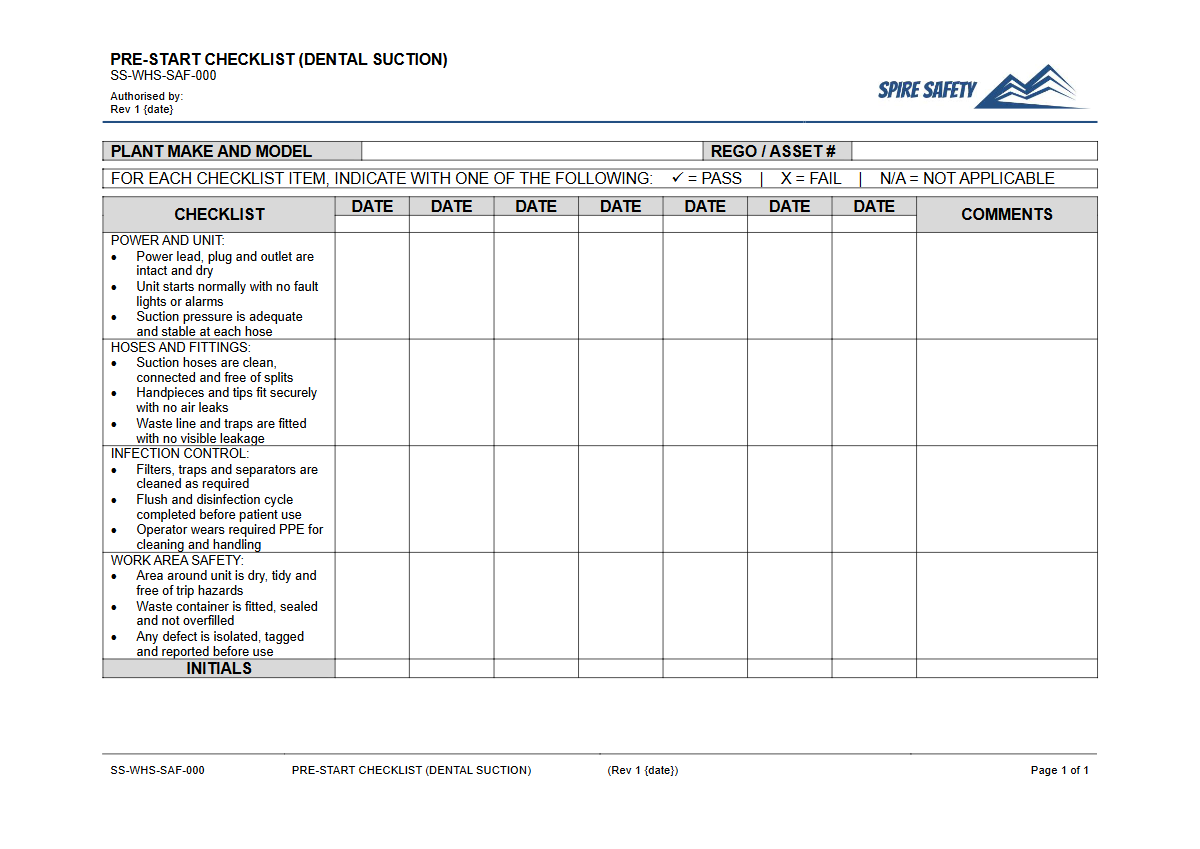
Download our Free Pre-Start Checklist for Dental Suction systems. This template helps dental clinics formalise equipment safety checks. Get your DOCX & PDF.
Free Pre-Start Checklist (Dental Suction) Template
DOCX • 125 KB + PDF
Updated Oct 2026
No signup required
Purpose of the Free Pre-Start Checklist (Dental Suction) Template
A dental suction system is critical for patient safety, infection control, and procedural efficiency. This Free Pre-Start Checklist (Dental Suction) Template provides a structured starting point for dental practices to formalise daily equipment inspections.
Regular checks help identify potential faults, prevent unexpected breakdowns, and ensure the system operates at optimal capacity, effectively managing aerosols and fluids. By documenting these checks, you create a consistent record of due diligence, demonstrating a commitment to workplace health and safety.
Integrating these inspections into your clinic's daily routine is a key part of a proactive safety culture.
Using a standardised checklist ensures that all essential components are inspected systematically every time, reducing the risk of human error. This process not only supports the longevity and reliability of expensive equipment but also forms a crucial element of your overall safety framework. Formalising this procedure helps embed safety-conscious behaviour within the team and is a foundational component for organisations building out their WHS management system.
Video walkthrough
How to use the Free Pre-Start Checklist (Dental Suction) Template
This template is provided in both DOCX and PDF formats for your convenience. To use it effectively, download the DOCX file and adapt it to the specific make and model of the suction units used in your practice.
It is crucial that you tailor the checklist to your operational environment and the specific risks present in your clinic.
Important: This is a template only. We have provided a solid foundation based on common Australian WHS practice, but it is not a complete, out-of-the-box solution.
You must customise this document by adding, removing, or modifying checklist items to reflect your specific equipment, workplace policies, and the relevant Australian Standards for dental practice. For complex customisations or implementing new safety procedures, seeking expert WHS consulting can provide clarity and ensure your documentation is robust.
- Step 1: Customise the Checklist: Review the manufacturer’s operating manual for your suction unit. Add specific check items related to its unique features, such as particular filters, indicators, or cleaning cycles.
- Step 2: Train Your Team: Ensure all dental assistants and relevant personnel are trained on how to properly conduct the checks, what each item means, and the procedure for reporting any identified faults or issues.
- Step 3: Implement and Monitor: Integrate the checklist into the daily opening procedures for your clinic. Practice managers should periodically review completed checklists to ensure they are being filled out correctly and that any reported issues are being addressed promptly.
Regular reviews and training sessions can be supported by clear, concise communication aids. Our Pre-Start Checks and Plant Maintenance Toolbox Talk provides a useful resource for reinforcing the importance of these inspections with your team.
When to use it
The dental suction pre-start checklist should be completed at the beginning of each day or shift before the first patient is seen. This ensures the equipment is safe and fully functional for the day's procedures.
It should also be used after any significant maintenance or if there is reason to suspect the unit is not performing correctly. Establishing this routine prevents issues from escalating and minimises clinical downtime.
Who should use it
This checklist is designed for use by the clinical staff responsible for preparing the treatment rooms. This typically includes Dental Assistants, Oral Health Therapists, or the dentists themselves.
The Practice Manager or a designated WHS officer should be responsible for overseeing the process, ensuring records are kept, and that any required maintenance or corrective actions are initiated and tracked to completion. Verifying that these checks are consistently performed can be a key finding in regular WHS compliance auditing.
In a healthcare setting, maintaining a safe environment for both patients and staff is paramount and extends beyond equipment checks. For another example of a WHS resource tailored to a clinical environment, see our Aged Care Manual Handling Toolbox Talk template. While the topic is different, it highlights the need for specific, role-based safety documentation.
Spire Safety offers many other templates in our free WHS resources library to help you build a comprehensive safety system.
Common mistakes
Common mistakes to avoid
- Assuming the unit is fine because it turns on, without checking suction power.
- Using a generic checklist that doesn't include manufacturer-specific maintenance points.
- Forgetting to check and clean essential components like filters, traps, and lines.
- Failing to document checks or report identified faults to the practice manager for action.
Legal references
Legal considerations
The following legal requirements may be relevant to this type of work.
- Work Health and Safety Act (Harmonised) — Provides the primary duties for protecting workers and other people from work health and safety risks.
- Work Health and Safety Regulations (Harmonised) — Sets out requirements supporting the management of workplace hazards and risks.
The following codes may be relevant to this type of work.
- Managing WHS Risks Code of Practice — Provides practical guidance on identifying hazards, assessing risks and applying effective controls.
- Work Health and Safety Consultation, Cooperation and Coordination Code of Practice — Provides practical guidance on consulting workers and coordinating with other duty holders.
- Managing the Work Environment and Facilities Code of Practice — Provides practical guidance on safe work environments, workplace facilities and related controls.
Did you know
Aerosol Control
High-volume dental suction can remove over 90% of the aerosols generated during a procedure. A poorly functioning system significantly increases the risk of airborne contaminants spreading throughout the clinic.
Performance Decline
A common cause of suction performance decline is a clogged or full amalgam separator filter. Regular checks as part of a pre-start routine can easily prevent this issue from impacting clinical procedures.
FAQ
Frequently asked questions
01Why is a pre-start check necessary for a dental suction unit?
02Who is responsible for completing the dental suction pre-start checklist?
03How often should a dental suction pre-start check be performed?
04Can this template be used for any brand of dental suction system?
Share this resource
Free Pre-Start Checklist (Dental Suction) Template
Browse Categories
How To Use It
- 1Download and open in Word or PDF.
- 2Replace the placeholders with your business details.
- 3Get it reviewed by a WHS specialist before rollout.
Need it customised?
Our WHS consultants can adapt this template to your site, run a gap analysis, or audit what you already have in place.
Book a Free Consultation WHS consulting servicesor call 1300 156 382