
Free Pre-Start Checklist (Dewater Pump) Template
Download our free Pre-Start Checklist (Dewater Pump) Template to formalise equipment inspections and manage WHS risks. A structured DOCX and PDF starting point.
Free Pre-Start Checklist (Dewater Pump) Template
DOCX • 125 KB + PDF
Updated Oct 2026
No signup required
Purpose of the Free Pre-Start Checklist (Dewater Pump) Template
Operating a dewatering pump, whether on a construction site, in a mine, or for flood control, involves significant risks. Using a structured pre-start checklist is a fundamental safety practice.
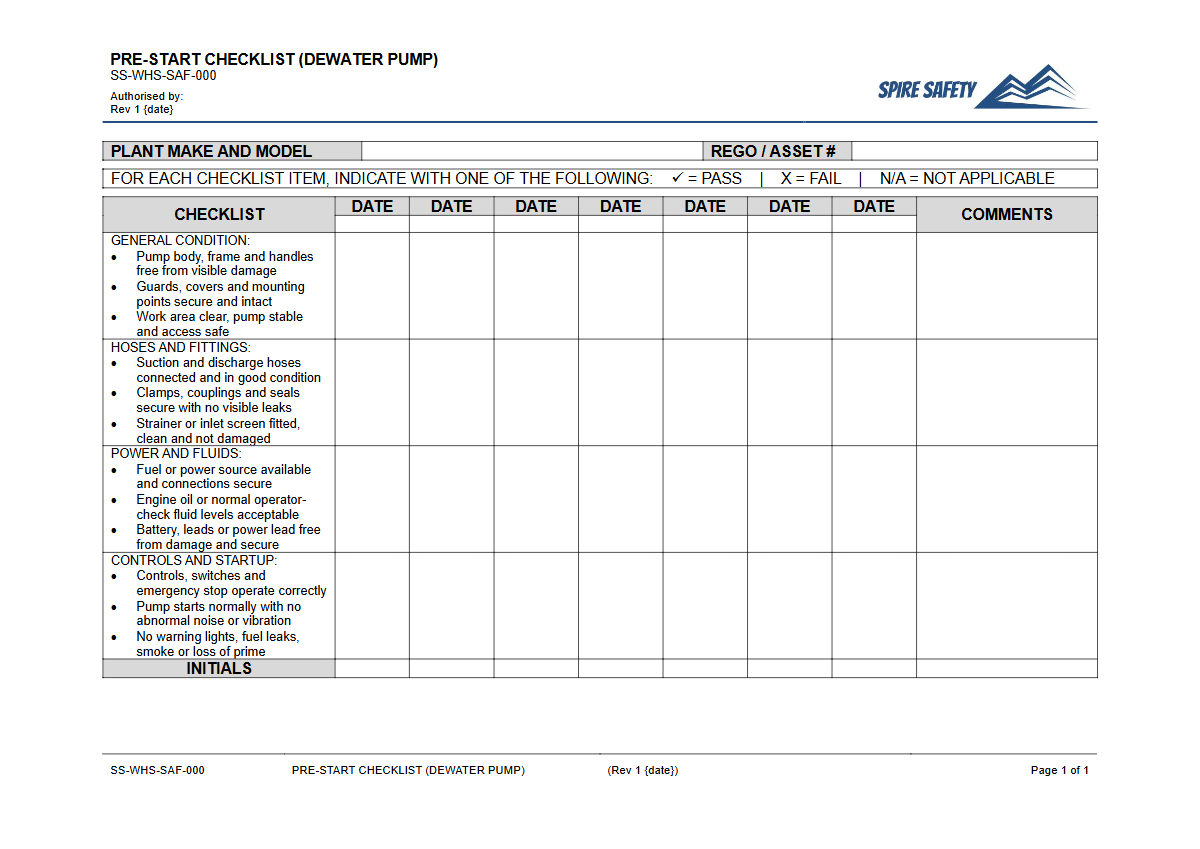
This free Pre-Start Checklist (Dewater Pump) Template provides a formalised process to ensure the equipment is inspected for potential faults or hazards before operation begins. Regular, documented inspections help identify issues like damaged electrical cords, blocked suction lines, or missing guards, which could lead to electric shock, equipment failure, or serious injury.
By integrating this checklist into your daily routine, you create a consistent record of due diligence, which is a core component of any effective WHS management system. This proactive approach helps prevent incidents, reduces equipment downtime, and promotes a stronger safety culture within your organisation.
Key Risks Addressed by a Dewater Pump Pre-Start Checklist
Dewatering pumps present a unique combination of mechanical, electrical, and environmental hazards. A thorough pre-start inspection helps to mitigate these risks by systematically checking critical components. Key areas of focus include:
- Electrical Hazards: Inspecting power cords, plugs, and connections for damage is vital, especially given the presence of water. Checks should also confirm the functionality of Residual Current Devices (RCDs) or Ground-Fault Circuit Interrupters (GFCIs).
- Mechanical Hazards: Checking that guards are in place over moving parts (like belts and pulleys), and that suction and discharge hoses are securely attached and free from damage, prevents entanglement and uncontrolled releases. This principle of guarding and integrity is common across many types of equipment, as seen in our Pre-Start Checklist for Fire Pumps.
- Environmental Hazards: For fuel-powered pumps, the pre-start should include checks for fuel or oil leaks that could contaminate the work area or nearby water sources. The checklist also prompts operators to ensure the pump is positioned on stable, level ground.
- Operational Integrity: Verifying that the suction strainer is clear of debris prevents blockages that can cause the pump to overheat or fail. Checking fluid levels ensures the pump can run efficiently without sustaining damage.
Video walkthrough
How to Use the Free Pre-Start Checklist (Dewater Pump) Template
This downloadable template is provided in both DOCX and PDF formats for your convenience. To integrate it effectively into your safety procedures, follow these steps:
- Download and Customise: Download the template and open the DOCX file. It is crucial to adapt the checklist to your specific circumstances. Add the make and model of your dewatering pumps, include site-specific hazards, and reference your organisation’s unique emergency procedures.
- Note on Customisation: This document is a template, not a finished procedure. As every workplace and piece of equipment is different, we must stress that you need to customise it to reflect your specific operational risks and legal obligations.
- Train Your Team: Ensure all operators and supervisors are trained on how to use the checklist correctly. This training should cover not just how to tick the boxes, but how to properly inspect each item and what to do if a fault is found. The process for similar equipment, like what's found in our cooling pump pre-start checklist, can serve as a useful reference point.
- Implement and Review: Make the pre-start check a non-negotiable part of the daily routine before any pump is started. Supervisors should periodically review completed checklists to ensure they are being filled out correctly and to spot recurring maintenance issues.
When to Use It
A dewatering pump pre-start checklist should be completed before every shift or before the first use of the day. If a pump is relocated during a shift, it is good practice to conduct another brief inspection to ensure connections are still secure and its new position is stable.
More frequent inspections may be necessary if the pump is operating in particularly harsh conditions, such as in highly abrasive or corrosive environments. These documented checks become valuable records for maintenance planning and for demonstrating procedural compliance during regular WHS compliance auditing.
Who Should Use It
The primary user of the dewatering pump pre-start checklist is the authorised and competent operator assigned to the equipment. They have the hands-on responsibility for ensuring the pump is safe to use.
Supervisors also play a key role; they are responsible for ensuring the checks are completed, reviewing the completed forms, and taking appropriate action when faults are reported (e.g., tagging the equipment out of service and arranging for repairs). Maintenance personnel may also use the checklist as a reference when diagnosing faults or conducting scheduled servicing. For more templates covering a wide range of plant and equipment, you can browse our library of free WHS resources.
Common mistakes
Common mistakes to avoid
- Ignoring minor leaks from hoses or pump casings, which can indicate a pending failure.
- Failing to check that the suction strainer is clear, leading to blockages and pump damage.
- Using the template without customising it for the specific pump model and work environment.
- Skipping electrical checks, particularly the physical inspection of cords and the function test of RCDs/GFCIs.
Legal references
Legal considerations
The following legal requirements may be relevant to this type of work.
- Work Health and Safety Act (Harmonised) — Provides the primary duties for protecting workers and other people from work health and safety risks.
- Work Health and Safety Regulations (Harmonised) — Sets out requirements supporting the management of workplace hazards and risks.
The following codes may be relevant to this type of work.
- Managing WHS Risks Code of Practice — Provides practical guidance on identifying hazards, assessing risks and applying effective controls.
- Work Health and Safety Consultation, Cooperation and Coordination Code of Practice — Provides practical guidance on consulting workers and coordinating with other duty holders.
- Managing the Work Environment and Facilities Code of Practice — Provides practical guidance on safe work environments, workplace facilities and related controls.
Did you know
The Danger of 'Dry Running'
Running a dewatering pump without fluid ('dry running') can cause the mechanical seal to overheat and fail within minutes, leading to costly repairs and potential safety hazards. Checking that the pump is properly primed and has a water source is a critical pre-start step.
Head Height Matters
The 'total dynamic head' of a pump—the vertical distance it can move water—is a key performance metric. Using a pump with an inadequate head height for the job can cause it to strain and fail, which is why matching the right pump to the site conditions is a crucial planning step.
FAQ
Frequently asked questions
01What should a dewater pump pre-start inspection include?
02Is a pre-start checklist a legal requirement in Australia?
03How do I customise this dewater pump checklist for my specific site?
04Can I use a digital pre-start checklist for a dewater pump?
Share this resource
Free Pre-Start Checklist (Dewater Pump) Template
Browse Categories
How To Use It
- 1Download and open in Word or PDF.
- 2Replace the placeholders with your business details.
- 3Get it reviewed by a WHS specialist before rollout.
Need it customised?
Our WHS consultants can adapt this template to your site, run a gap analysis, or audit what you already have in place.
Book a Free Consultation WHS consulting servicesor call 1300 156 382