
Free Pre-Start Checklist (Dock Ramp) Template
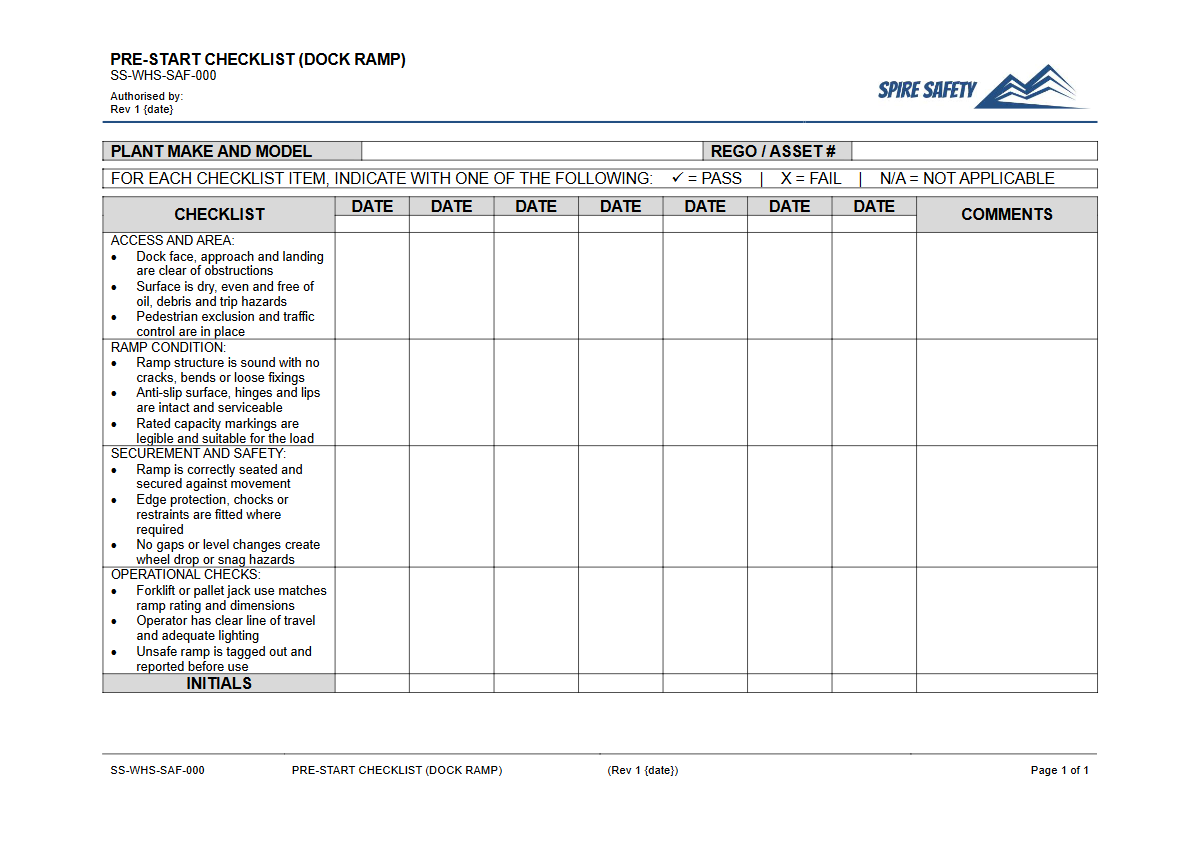
Download our Free Pre-Start Checklist (Dock Ramp) Template to formalise daily safety inspections.
Free Pre-Start Checklist (Dock Ramp) Template
DOCX • 125 KB + PDF
Updated Oct 2026
No signup required
Purpose of the Free Pre-Start Checklist (Dock Ramp) Template
A dock ramp is a critical piece of equipment in any loading bay, bridging the gap between a truck and the dock. Its failure can lead to catastrophic incidents, including falls, crush injuries, and significant property damage.
Using a structured Free Pre-Start Checklist (Dock Ramp) Template helps formalise the inspection process, ensuring the equipment is safe for use before every shift. This document provides a clear, consistent method for operators to check key safety components, such as the deck, lip, hydraulic systems, and safety legs.
It creates a verifiable record of due diligence, demonstrating a commitment to proactive risk management.
Regular, documented checks are a fundamental part of any effective safety program. They help identify and control hazards before they cause harm, reduce equipment downtime, and support a positive safety culture.
Integrating this simple check into your daily routine is a practical step towards fulfilling your WHS duties. To reinforce this behaviour across your teams, consider running a specific training session using a Pre-Start Checks and Plant Maintenance Toolbox Talk.
Video walkthrough
How to use the Free Pre-Start Checklist (Dock Ramp) Template
This template is provided in both DOCX and PDF formats to suit your operational needs. The DOCX version is fully editable, allowing for extensive customisation.
- Download: Select the DOCX or PDF file format and save it to your local system.
- Customise: Open the DOCX file and adapt the checklist items to match the specific make, model, and features of your dock ramps. Add your company branding and any site-specific safety rules.
- Train: Ensure all relevant workers (operators, supervisors) are trained on how to properly conduct the inspection using the finalised checklist. Explain what each item means and what constitutes a pass or fail.
- Implement: Integrate the checklist into your daily start-of-shift procedures. Store completed checklists in a central, accessible location for auditing and review.
- Review: Periodically review the checklist's effectiveness and update it following any incidents, changes in equipment, or updates to regulations.
Important Note: This document is a template and provides a structured starting point. We have designed it to be aligned with common Australian WHS practice, but it must be customised to your workplace. You must ensure it covers all hazards and control measures relevant to your specific dock ramps, traffic management plan, and operational context.
Integrating these checks is just one part of a comprehensive safety strategy. For operations involving vehicle movements and loading, these procedures should be documented within your overall WHS management systems, ensuring they align with broader site policies.
When to use the Pre-Start Checklist
Consistency is key to the effectiveness of any pre-start inspection. This checklist should be completed:
- At the beginning of each shift: Before the dock ramp is used for the first time that day or shift.
- If a new operator takes over: A hand-over inspection ensures continuity of safety.
- After maintenance or repairs: To verify that the equipment has been returned to a safe operational state.
- Following an incident or near miss: To help determine if equipment failure was a contributing factor.
For high-risk tasks involving vehicle-loading interactions, a simple checklist may be supported by higher-level controls. For instance, developing a Safe Work Method Statement (SWMS) for Concrete Truck Operations provides a model for how to document complex procedures that occur in and around loading areas.
Who should use it
The responsibility for completing the dock ramp pre-start check typically falls to the person operating the equipment. This ensures the individual directly exposed to the risk is the one verifying the controls are in place and effective. Those who should be involved include:
- Trained Equipment Operators: The primary users responsible for conducting the daily check.
- Supervisors and Team Leaders: Responsible for ensuring the checks are completed correctly, reviewing the completed forms, and taking appropriate action when defects are reported.
- Maintenance Personnel: To be notified immediately of any faults identified so they can schedule repairs and 'tag out' unsafe equipment.
Conducting these checks is also a physical task, and workers should be aware of safe work postures. While focused on a different industry, the principles in an Aged Care Manual Handling Toolbox Talk can help reinforce general awareness of manual handling risks.
Regularly reviewing the completion and quality of these checklists can be a key focus during a formal safety review. A third-party WHS compliance auditing process can help identify gaps in your system and opportunities for improvement.
This resource is just one of many tools designed to help you manage workplace safety. For more templates and guides, browse our complete free WHS resources library.
Common mistakes
Common mistakes to avoid
- "Pencil-whipping" the checklist without physically inspecting each item.
- Failing to remove a faulty or damaged dock ramp from service immediately.
- Overlooking 'minor' issues like debris on the deck or worn anti-slip surfaces.
- Using a generic checklist that doesn't match the specific make and model of the ramp.
Legal references
Legal considerations
The following legal requirements may be relevant to this type of work.
- Work Health and Safety Act (Harmonised) — Provides the primary duties for protecting workers and other people from work health and safety risks.
- Work Health and Safety Regulations (Harmonised) — Sets out requirements supporting the management of workplace hazards and risks.
The following codes may be relevant to this type of work.
- Managing WHS Risks Code of Practice — Provides practical guidance on identifying hazards, assessing risks and applying effective controls.
- Work Health and Safety Consultation, Cooperation and Coordination Code of Practice — Provides practical guidance on consulting workers and coordinating with other duty holders.
- Managing the Work Environment and Facilities Code of Practice — Provides practical guidance on safe work environments, workplace facilities and related controls.
Did you know
Loading Dock Dangers
According to international safety data, loading docks are one of the most hazardous areas in a workplace. A significant percentage of all reported warehouse and factory injuries occur in the loading dock area, often involving falls or being struck by equipment.
Hydraulic Pressure
The hydraulic systems that lift and position a dock ramp operate under immense pressure. A pinhole leak in a hydraulic line can release fluid at a velocity high enough to penetrate skin, causing severe injury.
FAQ
Frequently asked questions
01What is a dock ramp pre-start checklist?
02How often should a dock ramp be inspected?
03Who is responsible for completing the Pre-Start Checklist?
04What happens if a fault is found during the check?
Share this resource
Free Pre-Start Checklist (Dock Ramp) Template
Browse Categories
How To Use It
- 1Download and open in Word or PDF.
- 2Replace the placeholders with your business details.
- 3Get it reviewed by a WHS specialist before rollout.
Need it customised?
Our WHS consultants can adapt this template to your site, run a gap analysis, or audit what you already have in place.
Book a Free Consultation WHS consulting servicesor call 1300 156 382