
Free Pre-Start Checklist (Donut Fryer) Template
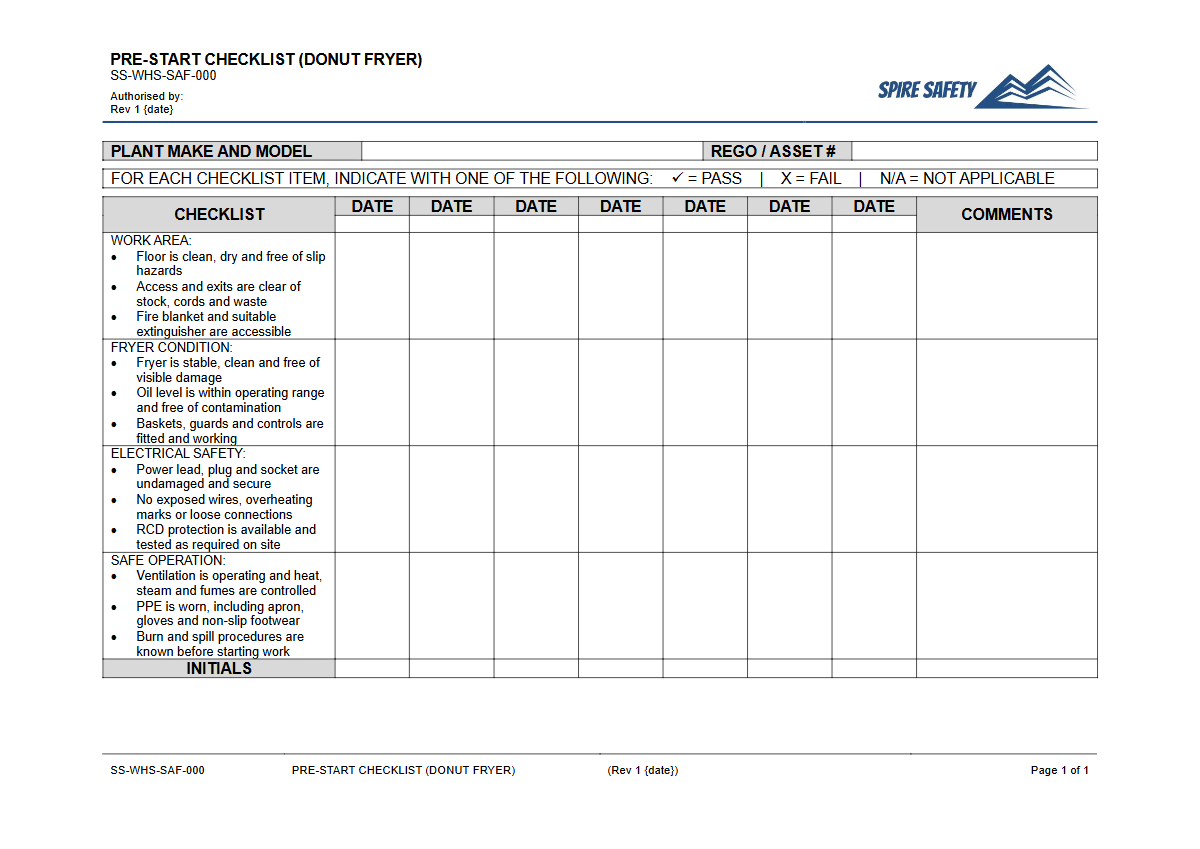
Download our free Pre-Start Checklist for Donut Fryers. This template helps formalise daily safety inspections for commercial kitchen equipment. Get yours now.
Free Pre-Start Checklist (Donut Fryer) Template
DOCX • 125 KB + PDF
Updated Oct 2026
No signup required
Purpose of the Free Pre-Start Checklist (Donut Fryer) Template
Commercial kitchens are high-risk environments, and equipment like donut fryers present significant hazards, including severe burns from hot oil, electrical faults, and fire. Implementing a structured inspection process is a critical control measure to manage these risks effectively.
This Free Pre-Start Checklist (Donut Fryer) Template provides a systematic framework for workers to verify that the equipment is safe to operate before they begin their shift. Using this checklist helps formalise safety procedures, reduce the likelihood of incidents, and demonstrate your organisation's commitment to WHS due diligence.
Regular checks also contribute to better equipment maintenance, preventing costly breakdowns and ensuring consistent product quality.
A consistent pre-start process is a cornerstone of a proactive safety culture. It moves safety from a passive idea to an active, daily behaviour.
Integrating these checks into a broader safety framework can significantly improve workplace safety outcomes. Periodically reviewing completed checklists and incident reports is also a key part of effective WHS management systems, allowing for continuous improvement of your safety procedures.
Video walkthrough
How to use the Free Pre-Start Checklist (Donut Fryer) Template
This template is provided in both DOCX and PDF formats to suit your operational needs. The DOCX file is fully editable, allowing for complete customisation.
To implement this Pre-Start Checklist effectively, follow these steps:
- Download: Choose the format that works best for you.
- Customise: It is crucial that you customise this template to reflect the specific make and model of your donut fryer, your kitchen's unique environment, and your organisation's safety procedures. We've provided a structured starting point, but you must make it your own to ensure it is relevant and effective.
- Train: Ensure all operators are trained not only on how to use the donut fryer safely but also on how to complete the pre-start checklist accurately. They must understand what each checkpoint means and what to do if a fault is identified.
- Implement: Integrate the checklist into your daily opening procedures. Store completed checklists for a set period as part of your safety records.
While this checklist is specific to donut fryers, the principle of pre-start inspections applies to all powered equipment in a commercial kitchen. For another example of a kitchen equipment checklist, you can review our Free Pre-Start Checklist (Coffee Grinder) Template.
Key Inspection Points for a Donut Fryer
Your customised checklist should cover critical safety and operational components. Key areas to inspect typically include:
- Surrounding Area: Check for slip hazards, ensure clear access, and verify fire suppression equipment is unobstructed and serviceable.
- Oil Management: Inspect the oil level and clarity. Check that the correct type of oil is being used and that filtration systems are clean.
- Controls and Guards: Ensure all dials, buttons, and emergency stops are functional and accessible. Verify any physical guards are in place and secure.
- Electrical Components: Visually inspect power cords and plugs for damage, fraying, or improper connections. Ensure the unit is properly grounded.
- Heating and Thermostat: Check that the thermostat is functioning correctly to prevent oil from overheating to its auto-ignition point.
- Ventilation: Ensure any overhead ventilation or exhaust hoods are clean and operating correctly to manage fumes and heat.
- General Cleanliness: A clean fryer is safer and more efficient. Check for build-up of grease on the unit and surrounding surfaces, which can be a fire hazard.
If your business requires expert assistance in developing customised safety documentation or conducting risk assessments for specific plant and equipment, consider engaging professional WHS consulting services.
When to use it
The Pre-Start Checklist for the donut fryer should be completed at the beginning of each day or shift before the equipment is used for the first time. It should also be used after the equipment has undergone maintenance or repairs, or if it has been out of service for an extended period.
This ensures that any changes have not introduced new hazards and that the equipment is returned to a safe operational state.
Who should use it
This checklist is designed for use by any worker who is tasked with operating the donut fryer. This includes kitchen hands, chefs, and apprentices.
It is essential that these individuals are properly trained and deemed competent to both operate the equipment and conduct the pre-start inspection. Supervisors and managers should also be familiar with the checklist so they can review completed forms and ensure the process is being followed correctly.
Regularly discussing pre-start checks is a valuable safety activity, and you can use a resource like our Pre-Start Checks and Plant Maintenance Toolbox Talk Template to facilitate these discussions.
By making this checklist a mandatory part of your daily routine, you empower workers to take ownership of their safety and the safety of their colleagues. For more tools to support your safety program, browse our full free WHS resources library.
Common mistakes
Common mistakes to avoid
- Failing to customise the template for the specific fryer model and workplace.
- "Pencil-whipping" the form without physically inspecting the equipment.
- Neglecting to train staff on what each checklist item means and the reporting procedure for faults.
- Continuing to use the equipment with a "minor" fault that could escalate into a serious failure.
Legal references
Legal considerations
The following legal requirements may be relevant to this type of work.
- Work Health and Safety Act (Harmonised) — Provides the primary duties for protecting workers and other people from work health and safety risks.
- Work Health and Safety Regulations (Harmonised) — Sets out requirements supporting the management of workplace hazards and risks.
The following codes may be relevant to this type of work.
- Managing WHS Risks Code of Practice — Provides practical guidance on identifying hazards, assessing risks and applying effective controls.
- Work Health and Safety Consultation, Cooperation and Coordination Code of Practice — Provides practical guidance on consulting workers and coordinating with other duty holders.
- Managing the Work Environment and Facilities Code of Practice — Provides practical guidance on safe work environments, workplace facilities and related controls.
Did you know
Cooking Oil Ignition
The auto-ignition temperature of common cooking oils like canola or vegetable oil is around 400-450°C. A faulty thermostat on a deep fryer can allow oil to reach this temperature, causing it to spontaneously combust without a direct flame.
Water and Oil Fires
Never use water to extinguish a grease fire. It will cause the burning oil to splash and spread the fire rapidly. Always use a Class F fire extinguisher, which is specifically designed for cooking oil fires.
FAQ
Frequently asked questions
01Why is a pre-start check for a donut fryer so important?
02How often should the donut fryer pre-start inspection be completed?
03What should a worker do if they find a fault during the check?
04Can I use this template for my combi oven or other kitchen equipment?
Share this resource
Free Pre-Start Checklist (Donut Fryer) Template
Browse Categories
How To Use It
- 1Download and open in Word or PDF.
- 2Replace the placeholders with your business details.
- 3Get it reviewed by a WHS specialist before rollout.
Need it customised?
Our WHS consultants can adapt this template to your site, run a gap analysis, or audit what you already have in place.
Book a Free Consultation WHS consulting servicesor call 1300 156 382