
Free Pre-Start Checklist (Dovetail Machine) Template
Download our free Pre-Start Checklist (Dovetail Machine) Template in Word and PDF.
Free Pre-Start Checklist (Dovetail Machine) Template
DOCX • 125 KB + PDF
Updated Oct 2026
No signup required
Purpose of the Free Pre-Start Checklist (Dovetail Machine) Template
Operating woodworking machinery like a dovetail machine presents significant risks if the equipment is not properly maintained and inspected. This Free Pre-Start Checklist (Dovetail Machine) Template provides a structured framework for operators to conduct consistent, documented safety checks before commencing work.
Regular pre-start inspections are a fundamental part of a proactive safety culture, helping to identify mechanical faults, damaged components, or missing guards before they can lead to an incident. By formalising this process, you create a reliable record of due diligence and demonstrate a commitment to plant safety.
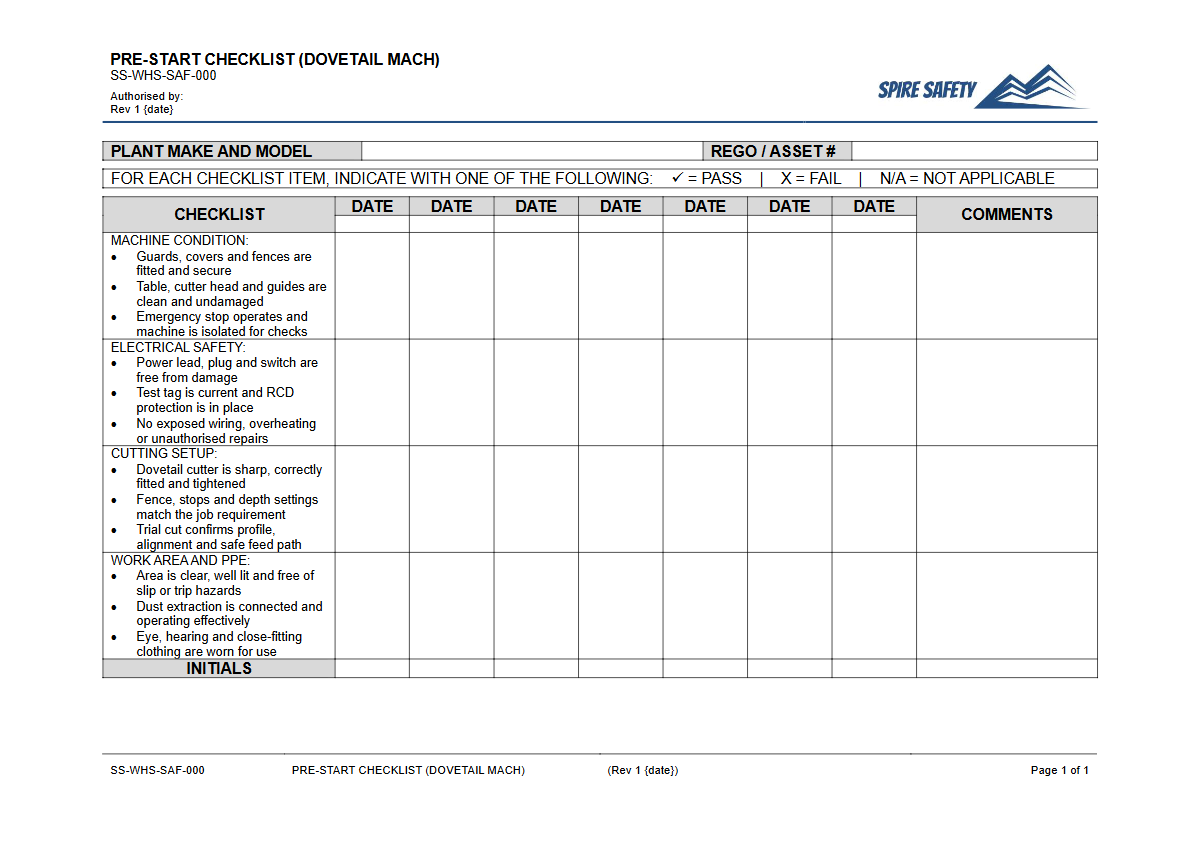
The checklist guides the user to examine critical safety features specific to dovetail machines, such as cutter condition, guarding, emergency stops, and dust extraction systems. Using this template helps ensure the machine is fit for use at the start of every shift, minimising the risk of operator injury and equipment downtime. To further embed this practice, consider discussing the importance of equipment checks in your site meetings using a Pre-Start Checks and Plant Maintenance Toolbox Talk.
Video walkthrough
How to use the Free Pre-Start Checklist (Dovetail Machine) Template
This template is provided in both DOCX and PDF formats, allowing for easy customisation and implementation. The DOCX file can be edited to align precisely with your specific machine models, workplace environment, and internal safety procedures.
A systematic approach ensures the checklist is effective and integrated into your daily operations.
Important: This template provides a solid foundation based on Australian WHS principles, but it is not a complete, out-of-the-box solution. We have not been to your site or seen your specific dovetail machine.
You must customise this document to reflect the unique hazards, controls, and operating procedures of your workplace. We recommend consulting directly with machine operators and supervisors during the customisation process to ensure the checklist is practical and comprehensive.
Key Inspection Points to Include
When customising your checklist, ensure it covers all critical safety components. This includes:
- Guarding: Check that all guards are in place, secure, and free from damage.
- Emergency Stops: Test all E-stops to ensure they function correctly and are unobstructed.
- Cutters/Bits: Inspect for sharpness, signs of damage, or incorrect installation.
- Dust Extraction: Verify that the dust extraction system is connected and operating effectively to control exposure to airborne wood dust.
- Electrical Components: Examine cords, plugs, and switches for any signs of wear, fraying, or damage.
- Work Area: Ensure the surrounding area is clear of trip hazards, spills, and obstructions.
Regularly reviewing the effectiveness of these checks is a key activity in maintaining safety standards. This process can be formalised through periodic WHS compliance auditing to verify that procedures are being followed correctly and are achieving their intended safety outcomes.
When to use it
A pre-start checklist for a dovetail machine should be completed by the operator before the first use on every shift. This routine establishes a baseline of safety for the day's work.
Additionally, a check should be performed if a new operator takes over mid-shift, or after any maintenance, adjustment, or repair work has been carried out on the machine. Consistency is crucial; making these checks a non-negotiable part of the daily workflow is essential for preventing incidents. This consistent practice is a core element of effective WHS management systems.
Who should use it
The primary user of the dovetail machine pre-start checklist is the trained and authorised operator. They have the hands-on responsibility for conducting the physical inspection and documenting the machine's condition.
It is vital that operators are not only trained on how to use the machine safely but also on the importance and correct procedure for completing the checklist. This can be confirmed with a specific competency assessment, similar to how one might use a free Dowelling Machine VOC to verify skills on related equipment.
Supervisors also have a key role. They are responsible for reviewing completed checklists, ensuring operators are completing them diligently, and initiating corrective actions for any reported faults.
Maintenance personnel will then be engaged to rectify any identified defects, ensuring the machine is safely returned to service. This process of check, report, and repair is fundamental to maintaining a safe system of work, which can be further detailed in a FREE Milling Machine SOP (Safe Operating Procedure) Template for other complex equipment.
Standardising your safety documentation across similar types of plant can improve consistency and training efficiency. For instance, workshops with a range of automated woodworking equipment may find our Free Pre-Start Checklist (CNC Router) Template useful. For a wider selection of safety documents, browse our complete free WHS resources library.
Common mistakes
Common mistakes to avoid
- Using a generic, non-customised checklist that misses machine-specific hazards.
- "Pencil-whipping" the form—ticking boxes without performing the physical checks.
- Failing to immediately report and isolate faulty equipment for repair.
- Poor record-keeping, making it difficult to track recurring faults or prove due diligence.
Legal references
Legal considerations
The following legal requirements may be relevant to this type of work.
- Work Health and Safety Act (Harmonised) — Provides the primary duties for protecting workers and other people from work health and safety risks.
- Work Health and Safety Regulations (Harmonised) — Sets out requirements supporting the management of workplace hazards and risks.
The following codes may be relevant to this type of work.
- Managing WHS Risks Code of Practice — Provides practical guidance on identifying hazards, assessing risks and applying effective controls.
- Work Health and Safety Consultation, Cooperation and Coordination Code of Practice — Provides practical guidance on consulting workers and coordinating with other duty holders.
- Managing the Work Environment and Facilities Code of Practice — Provides practical guidance on safe work environments, workplace facilities and related controls.
Did you know
Wood Dust Hazards
Wood dust is classified as a hazardous substance. Inhaling airborne dust from operations like dovetailing can cause serious health issues, including occupational asthma and nasal cancer, which is why effective dust extraction is a critical safety check.
FAQ
Frequently asked questions
01What should be included in a dovetail machine pre-start checklist?
02Why is it important to customise this dovetail machine checklist template?
03How often should a dovetail machine pre-start check be completed?
04Who is responsible for signing off on the pre-start checklist?
Share this resource
Free Pre-Start Checklist (Dovetail Machine) Template
Browse Categories
How To Use It
- 1Download and open in Word or PDF.
- 2Replace the placeholders with your business details.
- 3Get it reviewed by a WHS specialist before rollout.
Need it customised?
Our WHS consultants can adapt this template to your site, run a gap analysis, or audit what you already have in place.
Book a Free Consultation WHS consulting servicesor call 1300 156 382